
Non-surgical thyroid nodule treatment (RFA) in Kenya
Radiofrequency ablation shrinks benign thyroid nodules and goitre without surgery — no scar, no hospital stay, faster recovery. Awake, under local anaesthetic, and home within hours.
What RFA does to a nodule

A fine electrode is guided into the nodule by ultrasound. Controlled heat collapses it from within; your body clears the tissue over the following months.
Illustrative. Individual results vary and are confirmed at your review.
What is thyroid nodule RFA?
Radiofrequency ablation (RFA) is a non-surgical procedure that shrinks benign thyroid nodules using precisely targeted heat delivered through a thin needle. It's done while you're awake under local anaesthetic, takes about an hour, leaves no scar, and preserves your healthy thyroid — so most patients never need thyroid medication afterwards. Thyroid Care Kenya in Nairobi is currently the only centre in Kenya offering it.
The idea is simple: instead of cutting the nodule out, we switch it off from within. A fine electrode — thinner than most cannulas — is guided into the nodule under live ultrasound, and radiofrequency energy gently heats the tissue in small, controlled units. The treated tissue is then broken down and cleared by your own body over the following months, and the nodule shrinks steadily as it goes.
Because nothing is removed, nothing else changes. Your healthy thyroid keeps working, your neck keeps its appearance, and your life carries on — most patients are back to normal within a day or two. RFA has been used across South Korea, Europe and the United States for well over a decade, and is endorsed for appropriately selected benign nodules in international consensus guidance. If you've been living with a visible swelling, pressure, or the quiet dread of a neck operation, this page walks you through everything: who it suits, how it works, how safe it is, and what results to expect — honestly.
Is RFA right for your nodule?
The honest answer lives in your ultrasound and biopsy — and careful selection is what makes RFA both safe and effective. This is how we decide, using the same criteria as international guidance.
RFA is likely to suit you if
- A nodule proven benign on fine-needle biopsy — for solid nodules, usually two concordant benign results, in line with international guidance
- A nodule causing pressure, tightness, discomfort or difficulty swallowing
- A visible swelling or cosmetic concern you'd like resolved without a neck scar
- Recurrent thyroid cysts that refill after simple aspiration
- Selected overactive (autonomously functioning) nodules
- Patients who want to keep their thyroid — or who aren't fit for surgery
RFA is not used when
- Nodules that are cancerous or suspicious for cancer on biopsy — surgery remains the right treatment
- Indeterminate biopsy results, until they've been properly clarified
- Pregnancy — treatment is simply deferred until after delivery
- Certain implanted cardiac devices — assessed individually before any decision
- Significant untreated blood-clotting problems
If a nodule is cancerous or suspicious, surgery remains the right treatment — and we'll say so plainly. The reports review exists to protect you, not to sell a procedure.
Thyroid RFA vs surgery vs watchful waiting
For a benign, biopsy-proven thyroid nodule that causes swelling or pressure, radiofrequency ablation (RFA) is a non-surgical alternative to thyroid surgery: local instead of general anaesthetic, no scar, home the same day and the healthy thyroid preserved. Surgery remains the treatment for cancer, suspicious nodules and some very large goitres; small nodules without symptoms are usually just watched.
Radiofrequency ablation
- Local anaesthetic — you stay awake
- No incision, no scar
- Healthy thyroid preserved
- Rarely need thyroid medication after
- Home the same day; normal in 1–2 days
Traditional surgery
- General anaesthesia required
- Permanent neck scar
- Part or all of the thyroid removed
- Often lifelong hormone replacement
- Hospital stay and longer recovery
The full comparison
General information from published guidance (KSThR 2017, ETA 2020); individual results vary and are confirmed at your review. Related: can a thyroid nodule shrink without surgery? · how much thyroid RFA costs in Kenya · when thyroid surgery is the right choice.
Surgery still has a clear role — for cancer, for suspicious nodules, and for some very large goitres. Where a nodule is benign and symptomatic, though, international guidance now recognises ablation as an established alternative. Assessing a thyroid lump from scratch? Start with our thyroid nodules guide.
Your RFA day, step by step
No fasting, no gown drama, no ward. You'll be with us for about half a day — here's how it unfolds.
Numb
Local anaesthetic is applied to your neck. You stay fully awake and can talk throughout.
Guide
Using live ultrasound, a fine electrode is placed precisely into the nodule.
Treat
Controlled heat is delivered for about an hour, collapsing the nodule from within.
Home
A short rest, then home the same day. Most people return to normal life in 1–2 days.
The technique that keeps it precise
Good RFA looks uneventful from the outside. That calm is engineered — by four things happening on the ultrasound screen.
Trans-isthmic approach
The electrode enters through the middle of the gland — the safest, most stable path, keeping the delicate structures at the back of the neck constantly in view on ultrasound.
Hydrodissection
Where a nodule lies close to important structures, a thin cushion of protective fluid is placed between them and the treatment zone — an extra margin of safety.
Moving-shot technique
Rather than heating one spot, the nodule is treated in many small, precisely controlled units — every burst of energy stays inside the nodule and away from healthy tissue.
Continuous ultrasound guidance
The entire treatment happens under live ultrasound. The specialist watches the electrode and the tissue response in real time — nothing is done blind.
An honest picture of the risks
No procedure is entirely without risk — you deserve the full picture, not a sales pitch.
Why it's considered low-risk
No incision, no general anaesthetic, and live ultrasound guidance throughout. In large published series of benign nodules, serious complications are uncommon.
What you might feel
Mild pressure or warmth during treatment; some soreness, mild swelling or bruising for a few days afterwards. Most patients need only simple pain relief, if any.
Uncommon effects
A temporary voice change, minor bleeding or short-lived swelling can occur. These usually resolve on their own — and the techniques we use exist specifically to minimise them.
Your specialist will talk you through the risks that apply to your nodule — its size, position and neighbours — before you decide anything. Questions are welcome; consent is never rushed.
From the procedure room back to your life
The same day
A short observed rest and a cool compress if needed, then home. Most patients feel well within hours — having someone accompany you is sensible but rarely essential.
Days 1–2
Any soreness or sense of fullness settles quickly. Most people are back at work and their normal routine within a day or two.
Weeks 2–6
The nodule begins to soften and shrink as your body clears the treated tissue. Many patients notice the change in the mirror first.
Months 3–12
Shrinkage continues and is tracked with follow-up ultrasound. Published studies report volume roughly halving by six months, with further reduction beyond.
Travelling from abroad? Most international patients fly home the day after treatment, with follow-up coordinated remotely. See the international pathway →
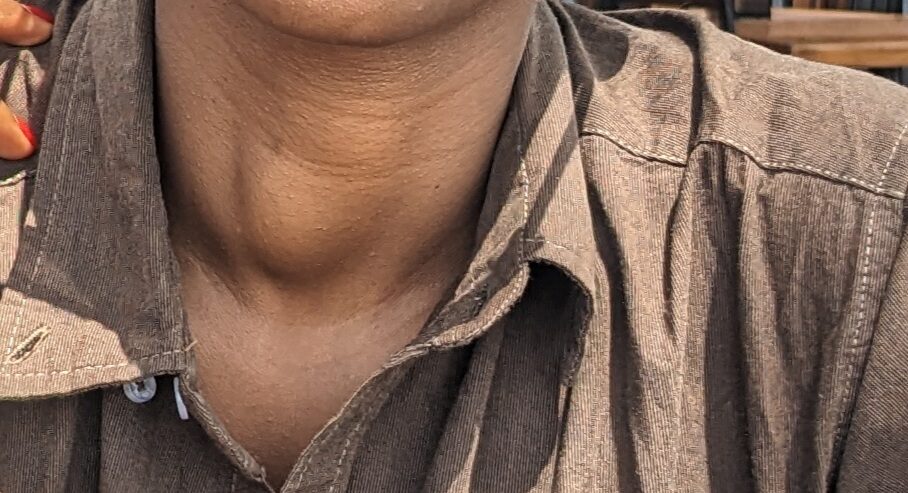
Before & after at our clinic
Two of our own cases — not stock photography. Photos are added with each patient's written consent, and more join them as patients agree to share.
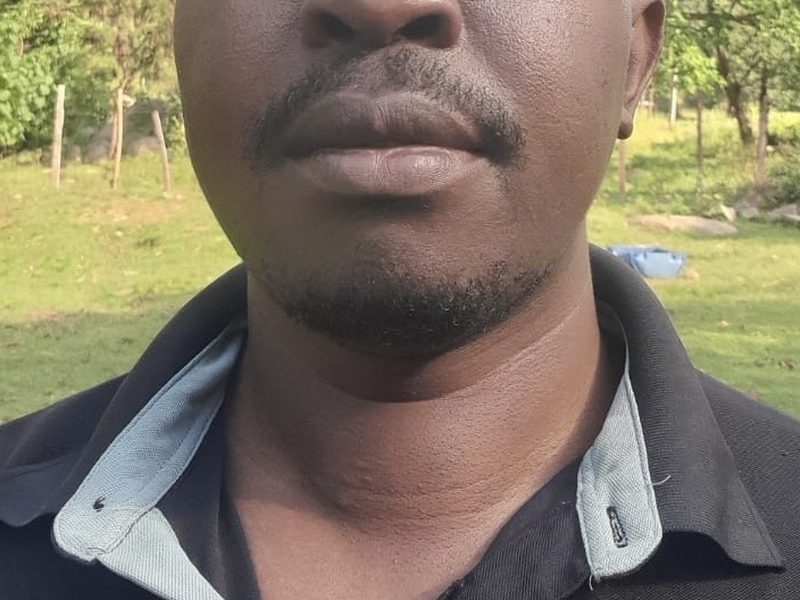 BEFORE
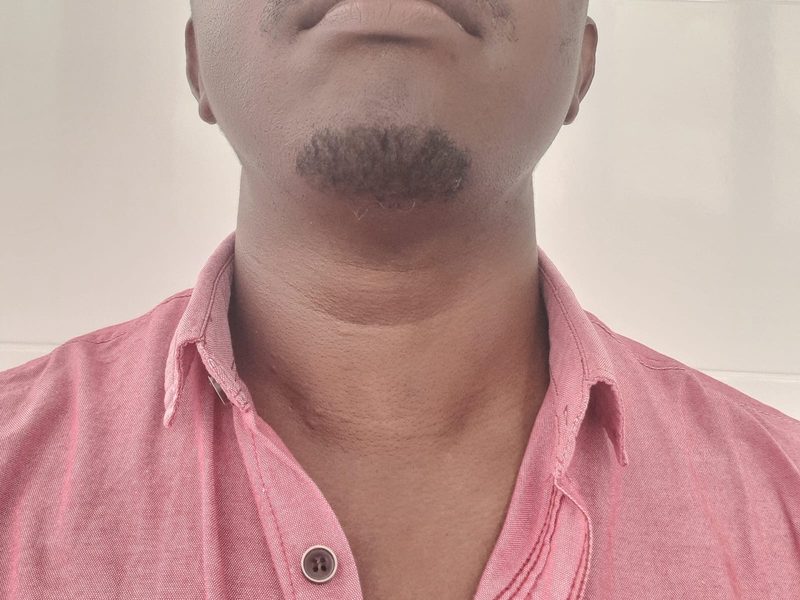 AFTER
AFTERA visible neck swelling from a benign nodule growing for three years. Treated in a single RFA session; the swelling steadily reduced over the following months without surgery.
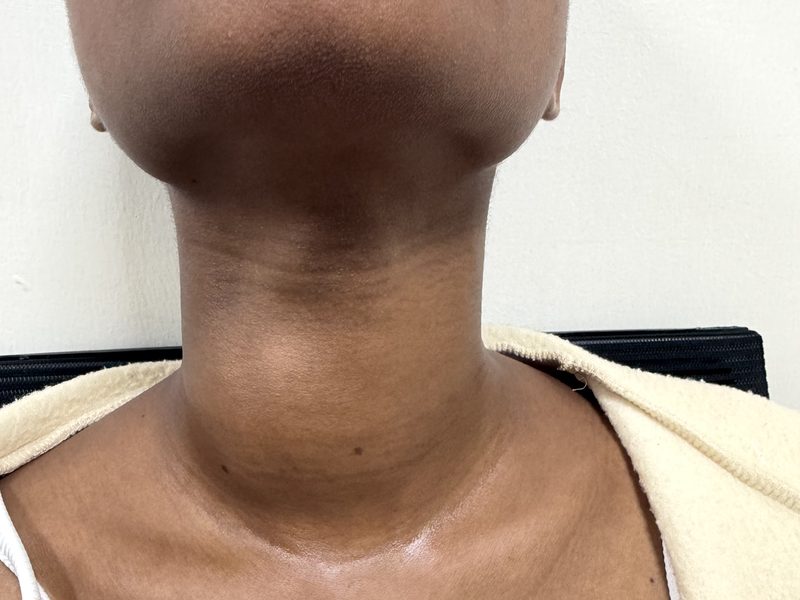 BEFORE
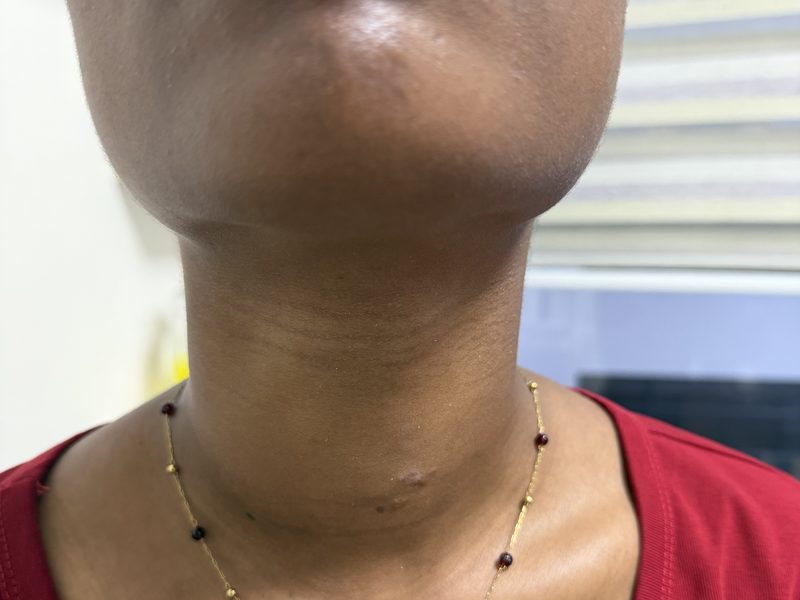 AFTER
AFTERA large benign nodule causing a visible neck swelling. Six months after RFA the nodule had shrunk and the swelling was gone — no thyroid medication, no scar.
 BEFORE
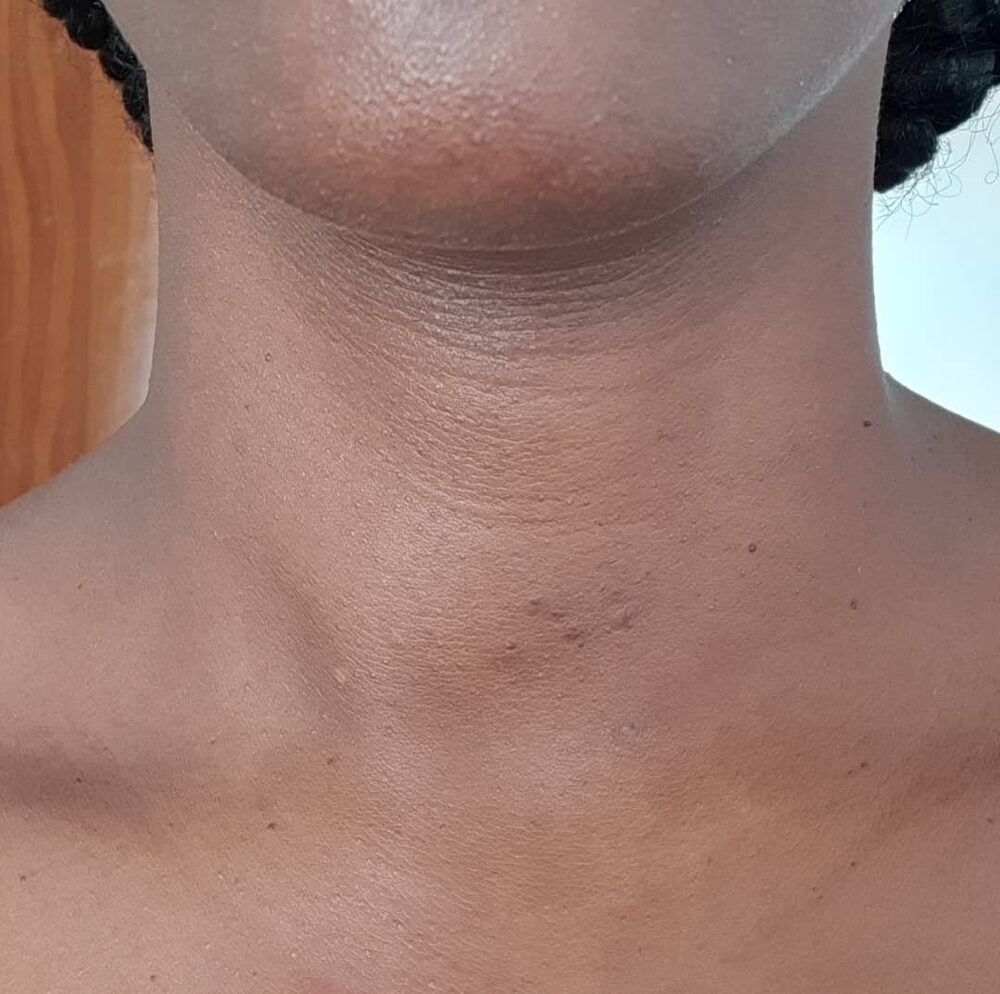 AFTER
AFTERA young woman from Kigali, Rwanda with an overactive (toxic) thyroid nodule and a visible neck swelling — on anti-thyroid medication for five years. One RFA session in Nairobi: two months later the swelling had all but gone, her thyroid function had settled and she was off medication.
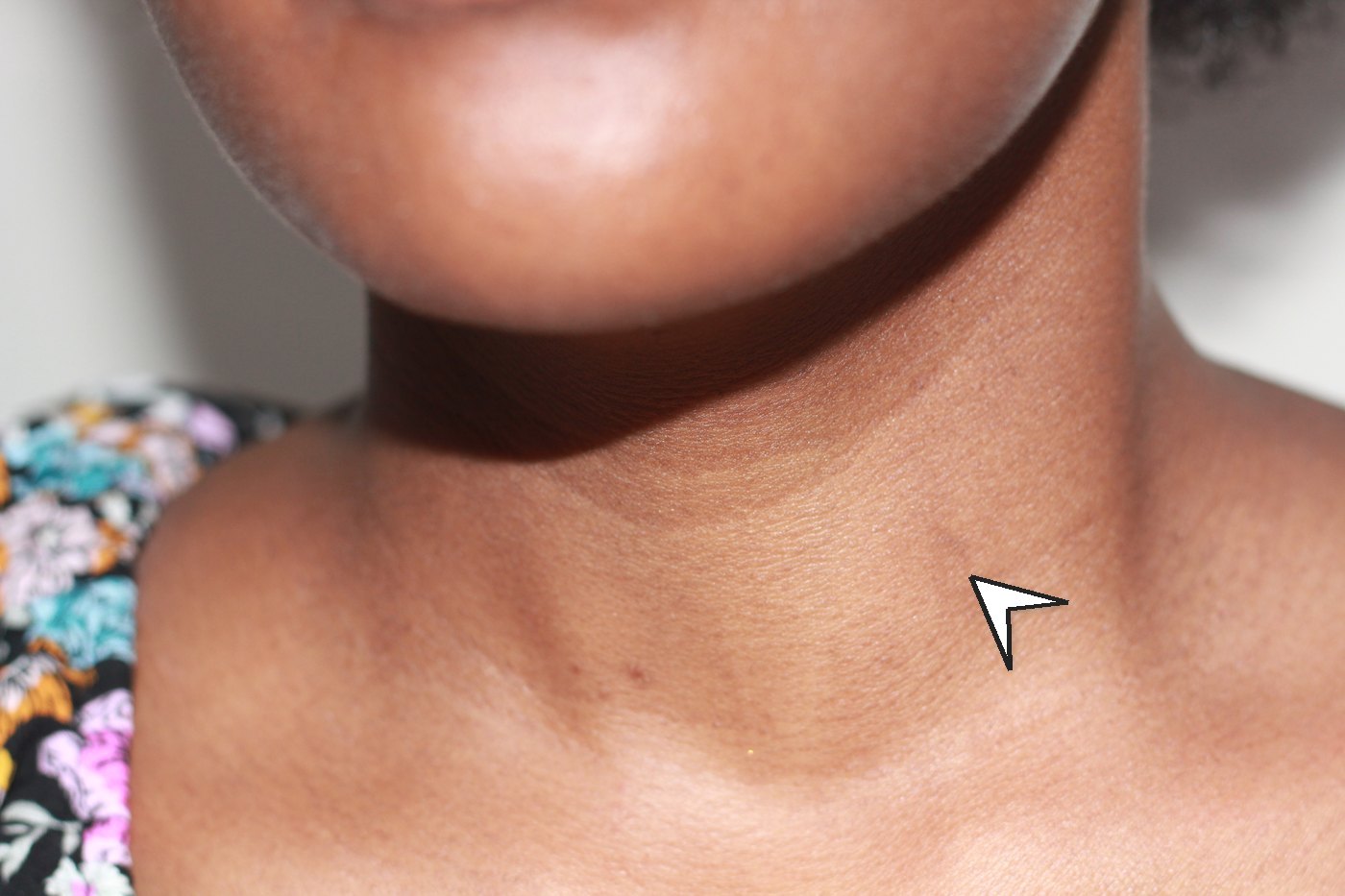 BEFORE
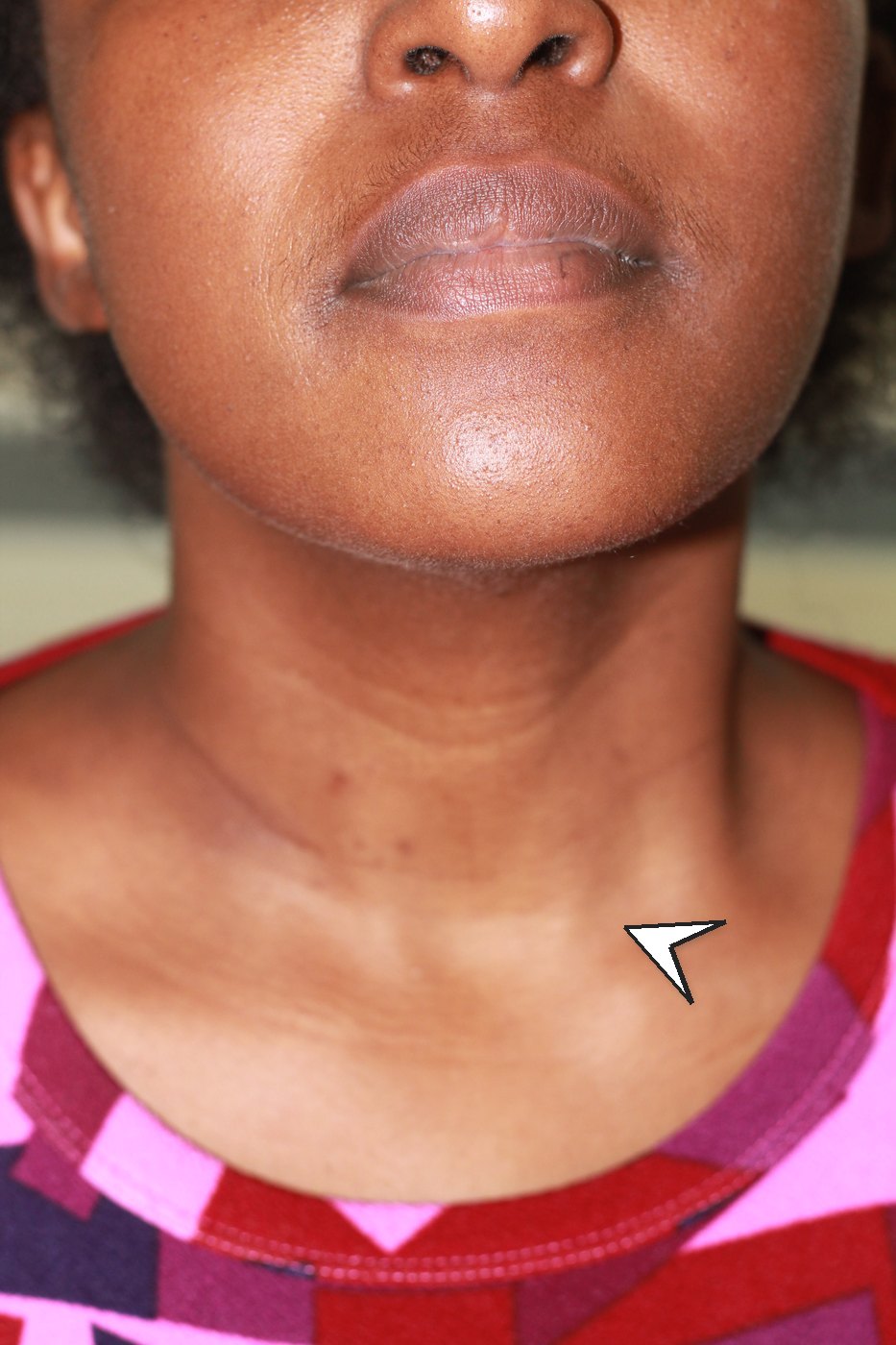 AFTER
AFTERA woman in Nairobi was advised to have the left side of her thyroid removed for a large benign nodule. She chose RFA instead — one month later the visible swelling had gone, her pressure symptoms had resolved, and an ultrasound confirmed a 54% reduction. No surgery, no scar.
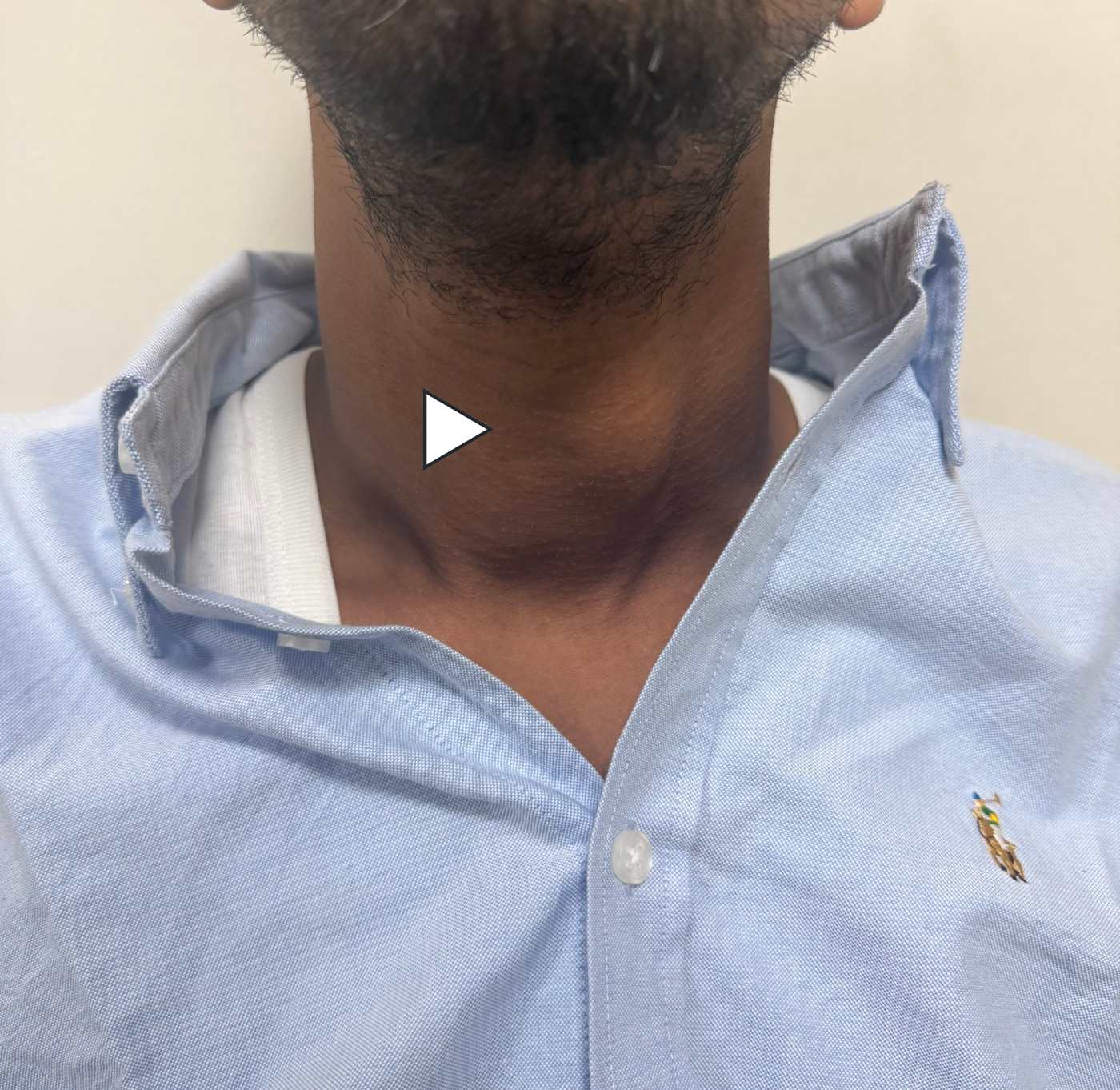 BEFORE
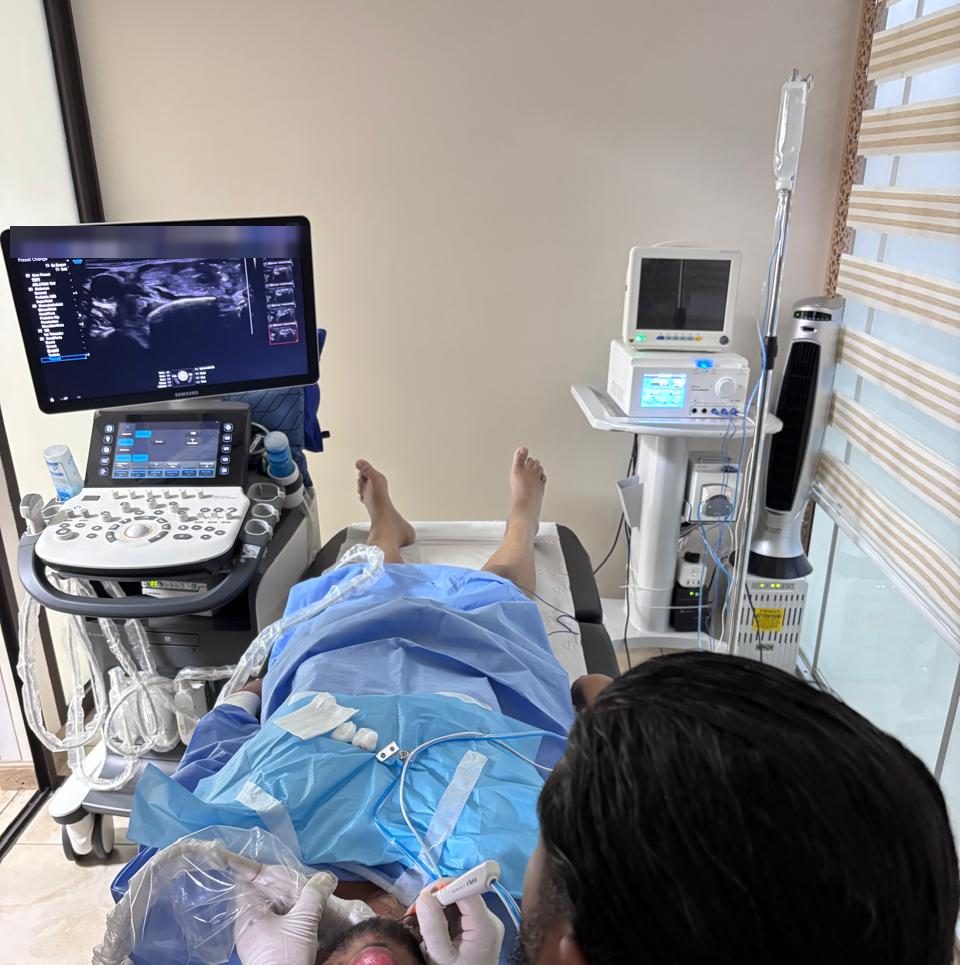 RFA DAY
A man from Somalia with a visible goitre and poorly controlled diabetes. We brought his blood sugar under control, checked his thyroid function, confirmed the nodule was benign with two biopsy samples, then treated it with RFA under local anaesthetic. Progress report — follow-up results to come.
Thyroid RFA — your questions answered
For a benign, biopsy-proven nodule causing swelling or pressure, RFA offers clear advantages: local instead of general anaesthetic, no scar, home the same day, back to normal in one to two days, and the healthy thyroid preserved. Surgery remains the right treatment for cancer, suspicious nodules and some very large goitres. A review of your ultrasound and biopsy decides which suits you.
Yes, if it is small, benign and causing no symptoms — watchful waiting with periodic ultrasound is often the best choice. Treatment is considered when a benign nodule causes a visible swelling, pressure, discomfort or an overactive thyroid.
Yes. Many benign thyroid nodules can be treated without surgery using radiofrequency ablation (RFA) — a minimally invasive, ultrasound-guided procedure that shrinks the nodule from within, with no incision and no scar. Whether RFA suits your nodule depends on the diagnosis, the ultrasound findings, and the size, position and symptoms of the nodule, so it is decided case by case after a reports review.
You're given local anaesthetic first, so most patients feel only mild pressure or warmth. You stay awake and can tell the doctor how you're feeling throughout.
RFA shrinks the nodule and most patients see lasting results. Occasionally a large nodule needs a second session. We monitor this at follow-up.
Because RFA preserves your healthy thyroid tissue, most patients do not need lifelong hormone replacement — unlike after surgery to remove the thyroid.
Shrinkage is gradual. Many patients notice a change within a few weeks, with the nodule continuing to reduce over several months.
RFA is for benign nodules. If a nodule is cancerous or suspicious, surgery is usually right. Your reports review checks this first.
Yes — that's exactly how it should work. Send your ultrasound and biopsy on WhatsApp and we'll confirm whether RFA suits you before you book any travel.
Every treatment plan is quoted individually — the cost depends on the size and number of nodules treated. Send your scans on WhatsApp for a reports review and you'll receive a clear written quote, with no obligation.
Yes. We regularly care for patients from Uganda, Somalia, Tanzania, Ethiopia and beyond, most completing treatment in a single 2–3 day visit.
Plan for a half-day at the clinic. The ablation itself usually takes 30–60 minutes depending on the nodule's size, with time either side for preparation, local anaesthetic and a short observed rest before you go home.
There's no general anaesthetic, so most patients eat and drink normally beforehand. Tell us about blood thinners and your regular medicines at your review — you'll receive clear individual instructions before your day.
Yes. Where several benign nodules need treatment, they can often be treated in a single session or staged across visits — your specialist plans this with you at your reports review.
The heated tissue is gradually broken down and cleared by your own body over the following months — which is why the nodule keeps shrinking long after the procedure day itself.
For most patients, no. RFA treats only the nodule and spares the surrounding gland, so normal thyroid function is preserved — one of its main advantages over surgery.
Yes. Because it doesn't remove the gland or leave surgical scarring in the neck, RFA can be safely repeated — occasionally useful for very large nodules or later regrowth.
Thyroid RFA is a recognised medical procedure and we work with major international and Kenyan insurers, with agreed costs for RFA at the clinic. Whether your particular plan covers it depends on your policy and its pre-authorisation rules — send us your insurer details and your scans on WhatsApp and we'll confirm your cover before you commit.
We work with leading international insurers including BUPA, Cigna, NOW Health International and VUMI, and local Kenyan insurers including Jubilee, UAP, APA, AON Minet and CIC. Cover for any individual patient still depends on their specific plan and pre-authorisation, which we confirm in writing before treatment.
Yes. Once we have your insurer details and reports, our team helps arrange the pre-authorisation with your insurer so your cover is confirmed in writing before your procedure day.
Why patients cross borders to come here
Choosing where to have a procedure matters as much as choosing the procedure.
- Kenya's first and only dedicated thyroid RFA centre
- Performed personally by a consultant interventional endocrinologist
- In-clinic high-resolution ultrasound and image-guided biopsy
- Care aligned with international thyroid guidance (ATA, ETA, KSThR)
- Real, consented before-and-after results from our own patients
- Remote review, a single-visit pathway and follow-up for patients across East Africa
Rated 5.0 by our patients
“My experience with Dr. Ebrahim has been nothing short of exceptional. His expertise really helped me keep things in check.”
— Lara Mbithi, Google review
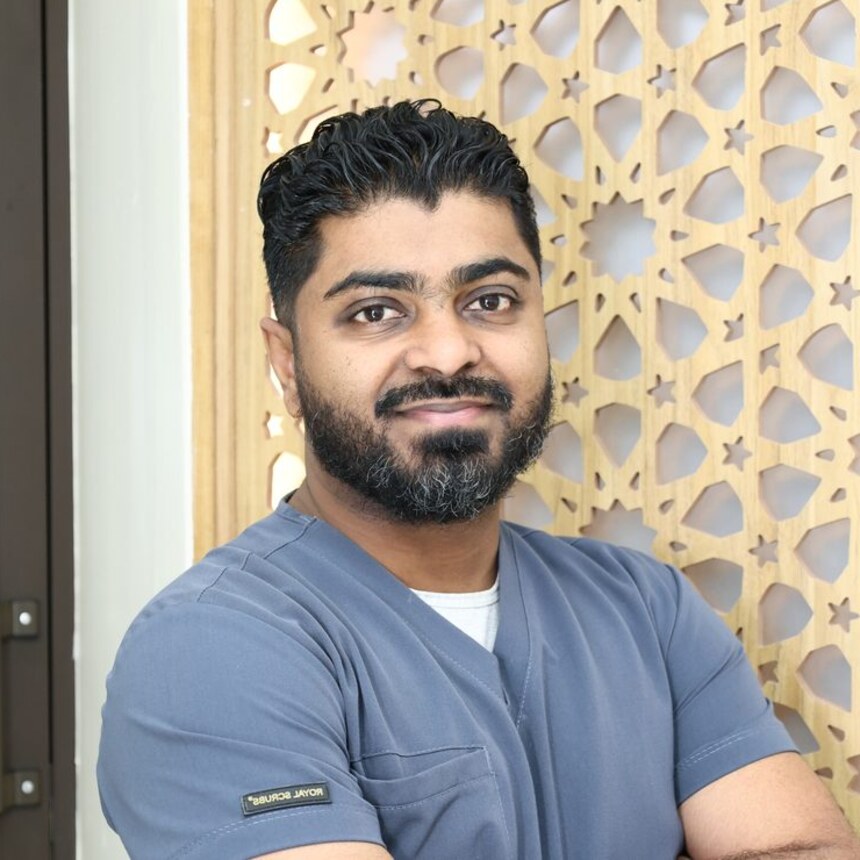
Dr. Ebrahim Yusuf Ebrahim
Consultant Physician · Interventional Endocrinologist & Diabetologist
One of the first doctors in Kenya to bring minimally invasive thermal ablation — microwave and radiofrequency — to the treatment of thyroid nodules and goitre, sparing patients from surgery. Every RFA at the clinic is performed by him personally — from your first scan review to your final follow-up ultrasound.
- MMed, Internal Medicine — University of Nairobi
- PG Diploma, Endocrinology & Diabetes — Royal College of Physicians, Ireland
- Fellowship, Endocrinology & Diabetes — University of Alexandria, Egypt
- Certificate in Interventional Thyroidology — Mumbai, India
- Special focus: thermal ablation (RFA & microwave) for thyroid nodules
Your RFA quote and insurance cover
Every treatment plan is quoted individually — the cost depends on the size and number of nodules being treated. Every quote is personal — confirmed in writing after your reports review, with no obligation. There are no hidden extras: your quote covers the consultation, the procedure and your follow-up plan.
Worried about affording treatment? Many of our patients are covered by medical insurance — see the insurers we work with.
Travelling from outside Kenya? Most international patients complete treatment in a single 2–3 day visit to Nairobi. See the international patients pathway →
- Send us your reports before you commit
- Single-visit treatment for most patients
- Remote follow-up after you travel home
Does medical insurance cover thyroid RFA in Kenya?
Thyroid RFA is a recognised medical procedure, and we work with leading international and local medical insurers — with agreed costs for RFA at the clinic. If you are insured, your policy may cover much or all of your treatment.
International insurers
- BUPA
- Cigna
- NOW Health International
- VUMI
Local (Kenya) insurers
- Jubilee
- UAP
- APA
- AON Minet
- CIC
Whether your specific plan covers RFA depends on your policy and its pre-authorisation rules. Send us your insurer details and your scans, and we will confirm your cover — and handle the pre-authorisation — before you commit to anything.
Four things have to be right
The literature is consistent: outcomes follow selection, technique, experience and follow-up. We hold ourselves to all four.
The right patient
Benign, biopsy-proven nodules selected against international criteria — the reports review is the gate, and it protects you.
The right technique
Trans-isthmic approach, hydrodissection and the moving-shot method, performed under continuous ultrasound guidance.
The right experience
Outcomes in RFA track operator experience. Your procedure is performed personally by the specialist who pioneered it in Kenya.
The right follow-up
Scheduled ultrasound reviews confirm the shrinkage and the result — coordinated remotely for patients who travelled to us.
A non-surgical option for your patients
We work alongside ENT surgeons, endocrinologists, radiologists and family physicians across the region. RFA is an option you can offer your patients without losing them — we treat the nodule; their ongoing care stays with you.
Your patient stays yours
We treat the nodule and return your patient to you with a full procedural report and follow-up plan. Ongoing thyroid care remains in your hands.
Clear referral criteria
Benign (Bethesda II) nodules causing symptoms, growth or cosmetic concern; recurrent cysts after aspiration; and selected autonomously functioning nodules.
Simple to refer
Share the ultrasound report and cytology with us on WhatsApp or email. We review and respond promptly — usually within 24 hours.
Honest triage of complex cases
Indeterminate cytology, retrosternal extension or suspicious features are discussed openly — and surgical candidates are directed to surgery, not ablation.
What our patients say
“Dr. Ebrahim is an excellent thyroid doctor. Excellent clinic location in Nairobi — and an amazing clinic design.”
“My experience with Dr. Ebrahim has been nothing short of exceptional. His expertise really helped me keep things in check.”
“Amazing team of doctors — Dr. Gaman and Dr. Ebrahim came highly recommended and I'm very impressed. Kudos.”
An established, well-studied technique
RFA isn't experimental — it's supported by more than a decade of published outcomes and by international thyroid society guidance. Our practice follows ATA, ETA and KSThR recommendations.
~50%
Typical nodule shrinkage within about six months in published studies of benign nodules.
up to ~90%
Volume reduction reported over several years of follow-up in longer-term studies.
2018
Year a dedicated thyroid RFA device received FDA clearance; the technique has been used across Korea & Europe for over a decade.
- Jung SL, Baek JH, et al. Efficacy and safety of radiofrequency ablation for benign thyroid nodules: a prospective multicenter study. Korean J Radiol, 2018.
- Deandrea M, et al. Long-term efficacy of a single session of RFA for benign thyroid nodules. J Clin Endocrinol Metab, 2019.
- Baek JH, et al. Complications encountered in the treatment of benign thyroid nodules with US-guided RFA: a multicenter study. Radiology, 2012.
- Citations to be verified and finalised by our clinicians before publication.
Medically reviewed by Dr. Ebrahim Yusuf Ebrahim, Consultant Physician & Interventional Endocrinologist. Clinical figures are ranges from peer-reviewed studies, provided for general education — individual results vary and are confirmed at your review.
Ready to find out if RFA can help you?
Whether you're in Nairobi or travelling from across the region, it starts the same way — a review of your scans.
