
From Kigali to Nairobi: a toxic thyroid nodule treated without surgery
A 28-year-old woman from Kigali, Rwanda lived for years with an overactive thyroid and a visible neck swelling. One minimally invasive radiofrequency ablation (RFA) session in Nairobi settled her thyroid and flattened the swelling — no operation, no scar.
Years of medication that controlled — but never cured
She had been taking an anti-thyroid medication (methimazole) twice a day to keep her overactive thyroid in check. It controlled her hormone levels, but it never treated the underlying cause. Alongside the overactivity she had long spells of irregular periods, including stretches of up to about six weeks with no period at all.
What troubled her most was the swelling on the left side of her neck, present for many years. It had begun to affect not just her health but her confidence: “I always tried to hide it whenever I took photos or selfies.”
Finding the real cause of the overactivity
When she arrived in Nairobi we carried out a full evaluation — thyroid function blood tests, a detailed thyroid ultrasound, and a specialist endocrinology consultation.
Ultrasound
The scan showed a nodule in the left side of the thyroid — but on its own it could not say whether that nodule was the cause of her overactive thyroid.
Thyroid uptake scan
A thyroid scintigraphy (uptake scan) answered the question: the left nodule was producing excess hormone, while the rest of the gland behaved normally.
The diagnosis
An autonomously functioning thyroid nodule (AFTN) — also called a toxic adenoma. One “hot” nodule was driving the whole problem.
Four options — and why she chose RFA
We discussed every route honestly: long-term anti-thyroid medication, thyroid surgery, radioactive iodine (I-131) therapy, and radiofrequency ablation. Each has its place, with real benefits and trade-offs.
After weighing them up, she chose radiofrequency ablation.
Why RFA suited her
- Minimally invasive — no removal of the thyroid gland
- Preserves normal, healthy thyroid tissue
- No surgical incision and no neck scar
- Low risk of permanent hypothyroidism
- Usually a same-day procedure — home the same day
- Treats the source of the excess hormone, not just the symptoms
About an hour, awake, and home the next day
Under continuous ultrasound guidance, a very fine electrode was placed directly into the overactive nodule. Controlled radiofrequency energy was delivered to heat and destroy the abnormal tissue, while the surrounding healthy thyroid was preserved.
Over the following weeks the body's natural healing gradually cleared the treated tissue, so the nodule shrank. The whole visit — preparation, procedure and observation — took about an hour, and she travelled safely back to Kigali the next day. For the first time in five years, she was able to stop her anti-thyroid medication.
What made her a candidate
- A single, benign, overactive (toxic) nodule
- The rest of the thyroid working normally
- A visible swelling she wanted resolved without surgery
- Keen to preserve her thyroid and avoid lifelong medication
Suitability is always confirmed on your own ultrasound, biopsy and blood tests.
From a visible swelling to a flat neck in two months
Every photograph and result below was shared by the patient with her written consent. Individual results vary.
-
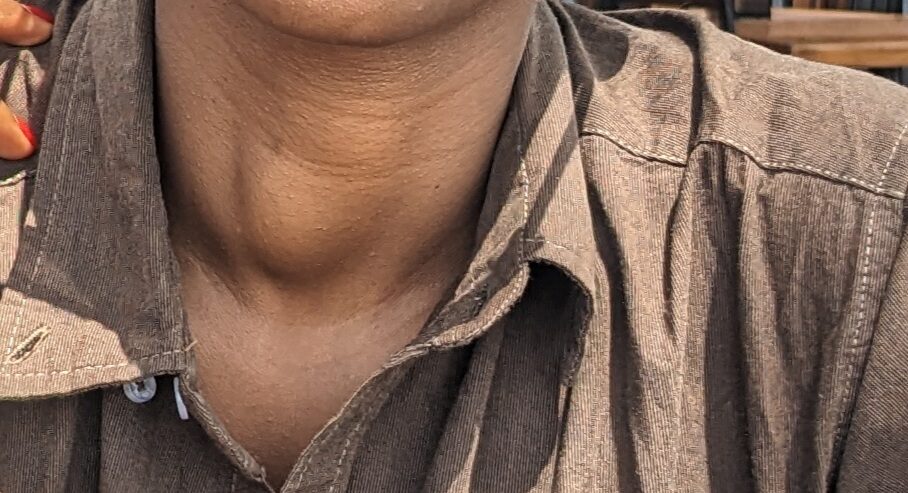
Before treatment
A visible swelling, and five years on medication
For years, a 28-year-old woman from Kigali had a visible swelling on the left side of her neck and an overactive thyroid controlled — but not cured — by anti-thyroid tablets twice a day. She sent us these photographs on WhatsApp before travelling to Nairobi. In her words: “I always tried to hide it whenever I took photos or selfies.”
-
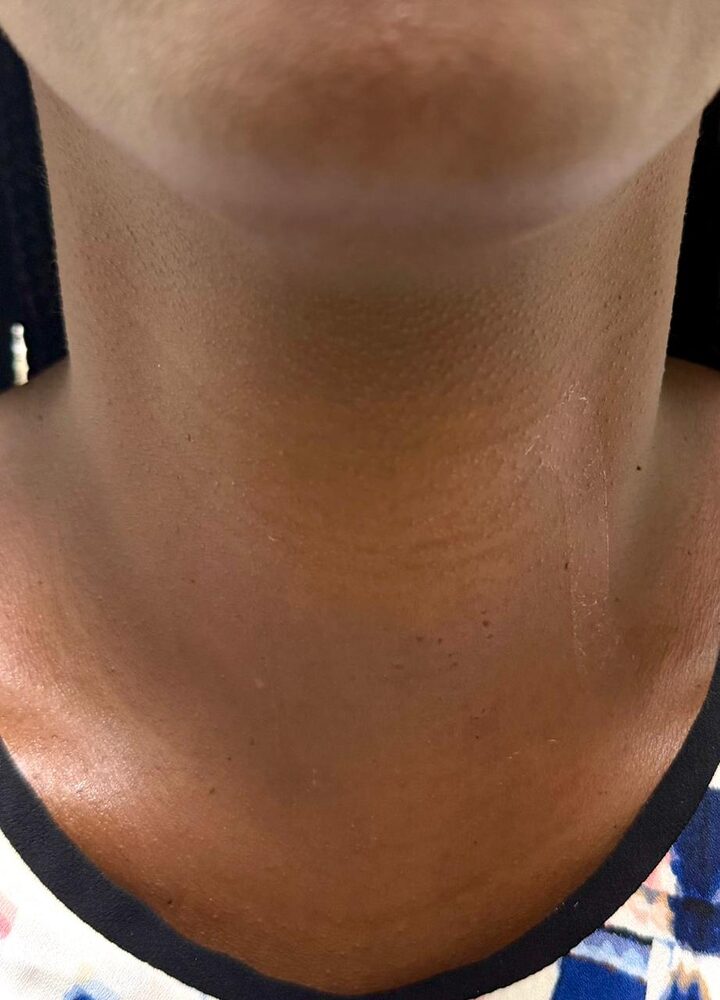
26 May 2026 · Procedure day
One hour, no surgery, no scar
She had ultrasound-guided radiofrequency ablation under local anaesthetic. A fine electrode delivered controlled heat inside the overactive nodule while the healthy thyroid was preserved. The whole visit took about an hour, and she flew home to Kigali the next day — stopping her anti-thyroid medication for the first time in five years.
-
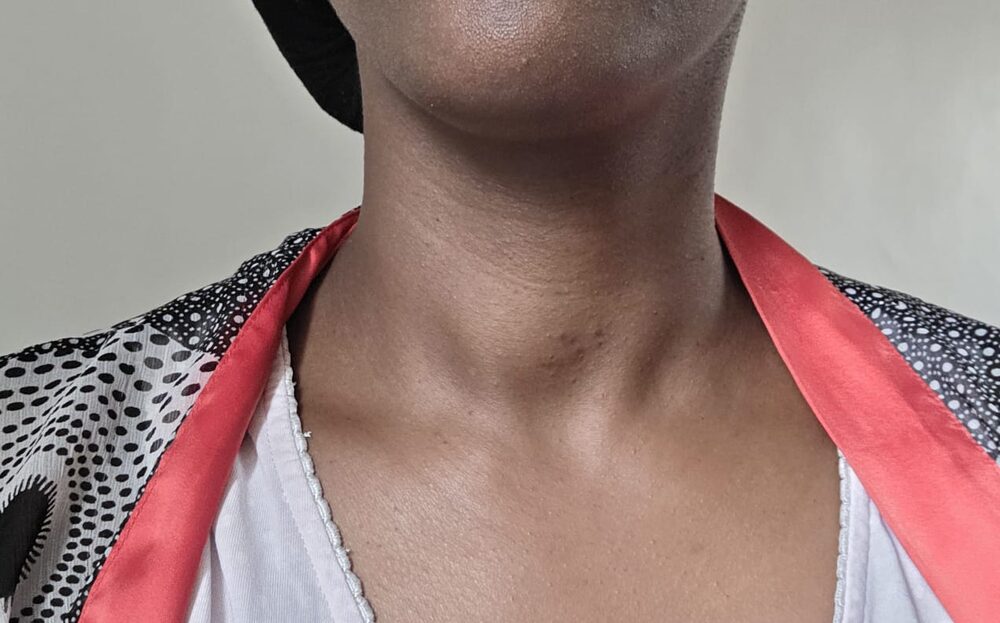
12 June 2026 · Two weeks
The swelling was already smaller
Just two weeks after the procedure she sent her first update from Rwanda: the swelling in her neck had visibly reduced, she was delighted with the early change, and she was recovering well with no complications.
-
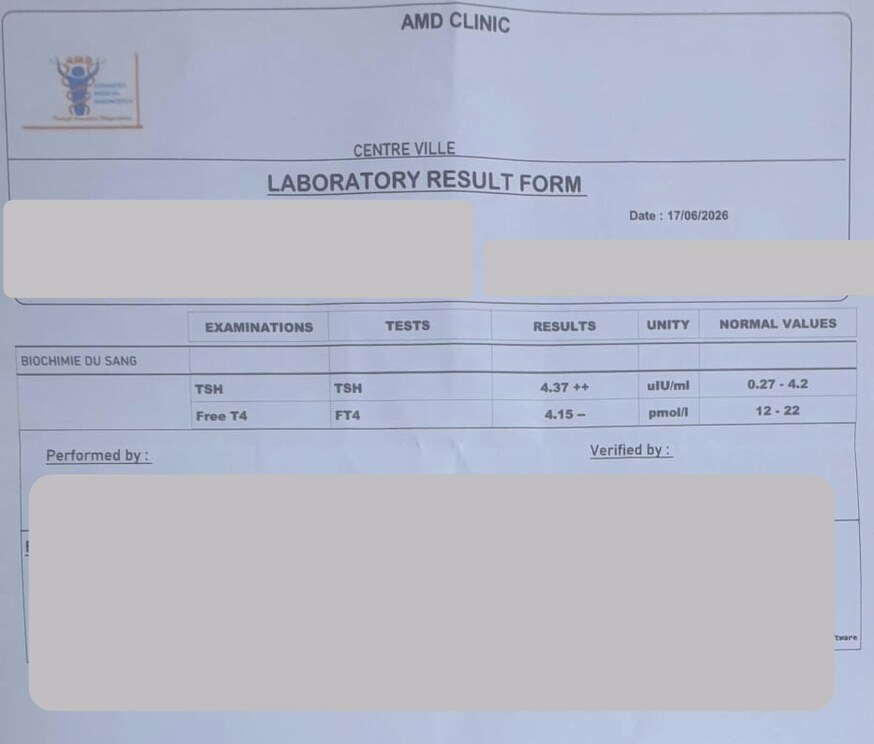
June 2026 · Follow-up bloods
Her thyroid was no longer overactive
A follow-up thyroid function test confirmed the overactivity had resolved — her TSH was back within the normal range for her age and local reference. The toxic nodule had stopped overproducing thyroid hormone.
-
25 June 2026 · One month
Settling further, still off medication
By one month the neck swelling had continued to shrink and she was enjoying life without anti-thyroid medication.
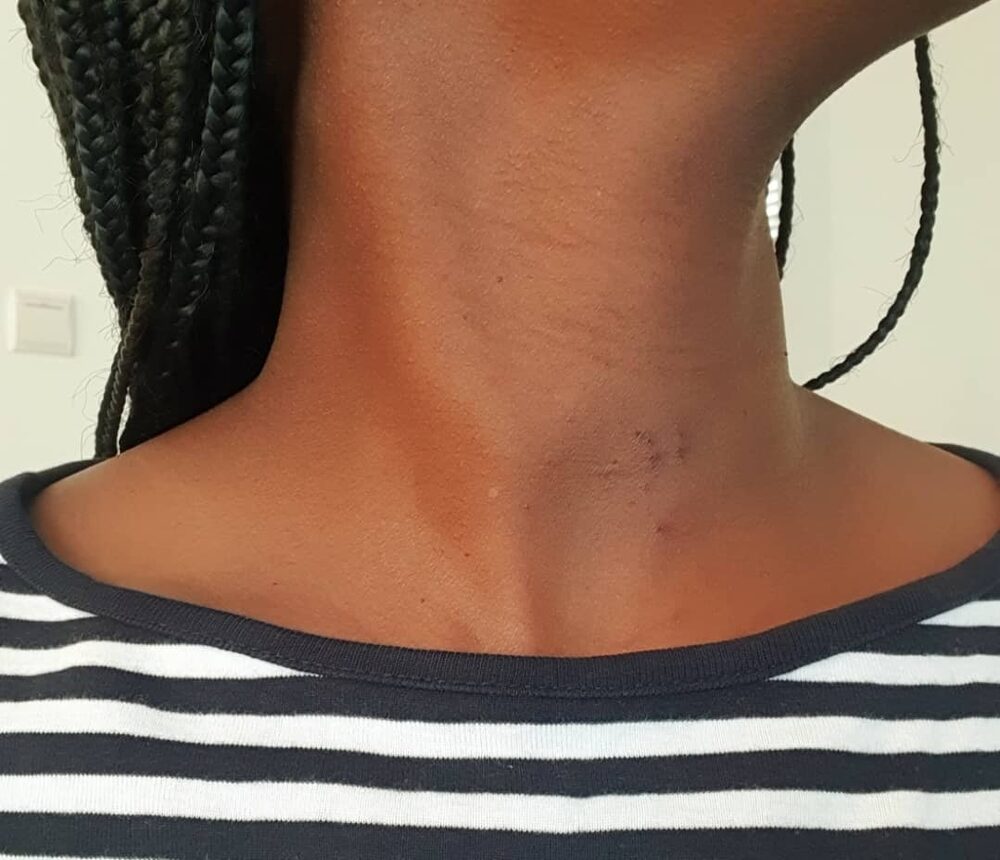
-
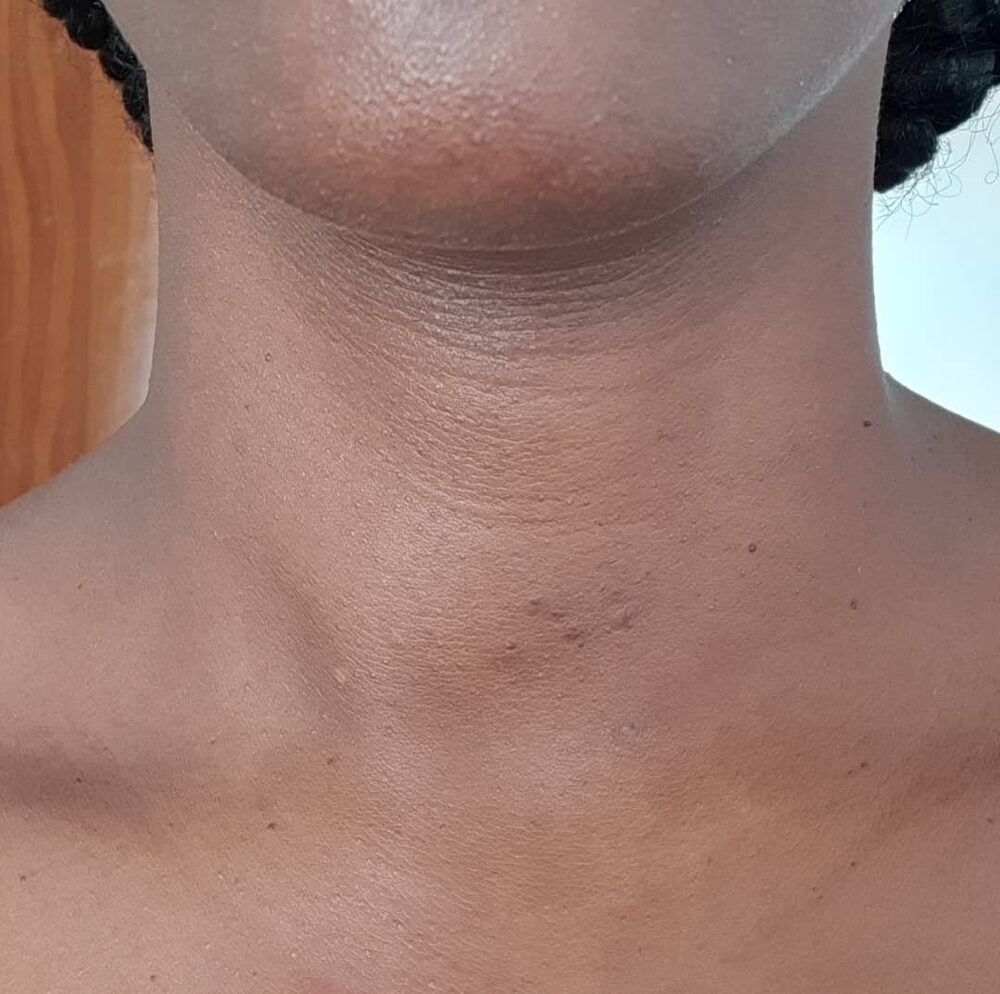
28 July 2026 · Two months
The swelling had all but gone
Two months after a single, minimally invasive procedure the swelling had almost completely flattened and was barely noticeable — with normal thyroid function and no daily tablets.
A single procedure instead of a lifetime of medication
For carefully selected patients whose hyperthyroidism is driven by one toxic nodule, RFA can treat the source of the problem in a single, minimally invasive session — preserving the thyroid and avoiding a scar.
Treats the cause
It targets the nodule producing the excess hormone — not just the symptoms — while preserving the healthy thyroid.
No scar, quick recovery
No incision and no neck scar, usually a same-day procedure, with most people back to normal life quickly.
Confidence restored
Beyond the blood results, the visible swelling settled — and with it, the self-consciousness she had lived with for years.
You may be a candidate for thyroid RFA if you have…
- A thyroid nodule
- Hyperthyroidism (an overactive thyroid)
- A toxic adenoma (a “hot” thyroid nodule)
- An autonomously functioning thyroid nodule (AFTN)
- A benign nodule causing cosmetic concern or pressure symptoms
Every patient is assessed individually with an ultrasound, thyroid blood tests and, where appropriate, a thyroid uptake scan to find the safest, most effective treatment.
Toxic nodules, RFA and travelling from Rwanda
Yes — when the overactivity comes from a single autonomously functioning (toxic) nodule. RFA targets and shrinks that one nodule so it stops overproducing thyroid hormone, while the rest of the thyroid is preserved. It is not used for whole-gland overactivity such as Graves' disease.
It is a single nodule that produces thyroid hormone on its own, outside the body's normal control — causing hyperthyroidism while the rest of the gland behaves normally. A thyroid uptake scan (scintigraphy) confirms the nodule is the source, as it was in this case.
No. RFA uses heat through a fine needle under local anaesthetic — there is no incision, no neck scar, and the thyroid gland is preserved. Most patients go home the same day.
The treated tissue is cleared by the body gradually, so the nodule shrinks over weeks and months. This patient noticed a smaller swelling within two weeks; by two months it had almost completely flattened. Individual results vary and are confirmed at your review.
You send your ultrasound, biopsy and thyroid blood tests on WhatsApp for a specialist review first. If RFA suits you, most Rwandan patients complete treatment in a single 2–3 day visit to Nairobi — Kigali is about a 1 hour 30 minute direct flight and no visa is needed. Follow-up is done remotely. See our Rwanda patients page.
Send your recent thyroid ultrasound, any biopsy report and your thyroid blood tests on WhatsApp for a free reports review. A specialist will tell you honestly whether RFA is the right option for your thyroid.
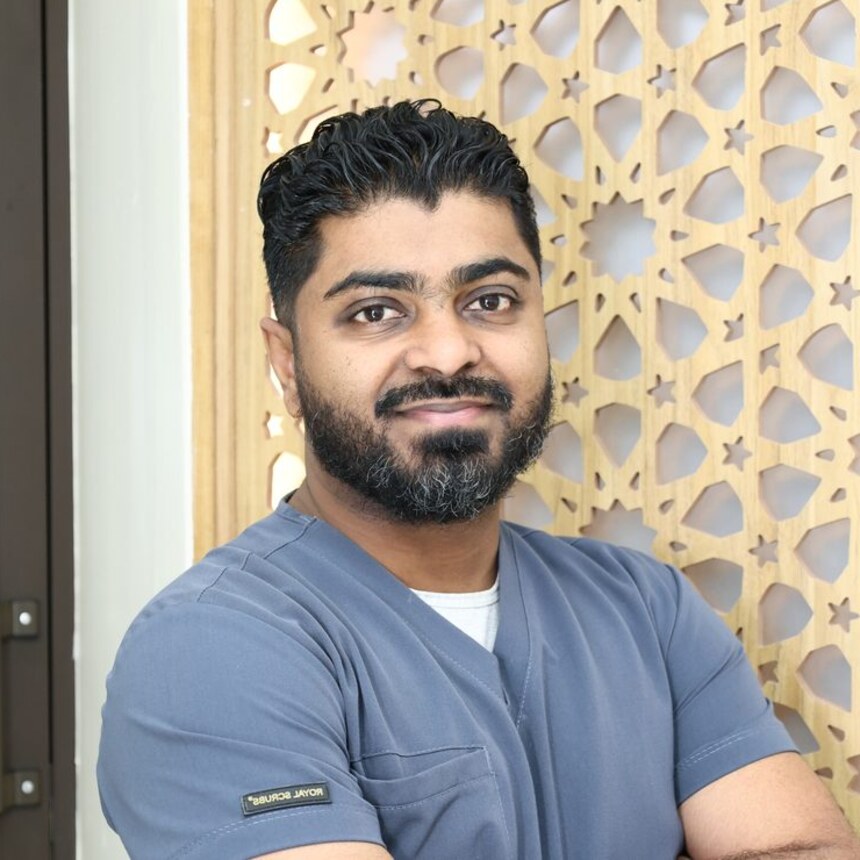
Dr. Ebrahim Yusuf Ebrahim
Consultant Physician · Interventional Endocrinologist & Diabetologist
One of the first doctors in Kenya to bring minimally invasive thermal ablation — microwave and radiofrequency — to the treatment of thyroid nodules and goitre, sparing patients from surgery. He personally performs each assessment, thyroid ultrasound and RFA procedure — the same care this patient from Kigali received.
- MMed, Internal Medicine — University of Nairobi
- PG Diploma, Endocrinology & Diabetes — Royal College of Physicians, Ireland
- Fellowship, Endocrinology & Diabetes — University of Alexandria, Egypt
- Certificate in Interventional Thyroidology — Mumbai, India
- Special focus: thermal ablation (RFA & microwave) for thyroid nodules
Medically reviewed by Dr. Ebrahim Yusuf Ebrahim, Consultant Physician & Interventional Endocrinologist. Clinical figures are ranges from peer-reviewed studies, provided for general education — individual results vary and are confirmed at your review.
Patient images and clinical information are shared with the patient's written permission. Individual results vary, and treatment recommendations are based on each patient's specific condition and clinical assessment.
Your story could be next
It starts with a simple review of your scans. Send your thyroid ultrasound, biopsy and blood tests on WhatsApp and find out honestly whether RFA can help you — wherever in East Africa you are.
