
Tired all the time, gaining weight, never quite warm?
These are classic signs of hypothyroidism — an underactive thyroid. It's one of the most common hormone conditions in the world, it develops quietly, and with an accurate diagnosis and carefully adjusted treatment, most people get their energy — and themselves — back.
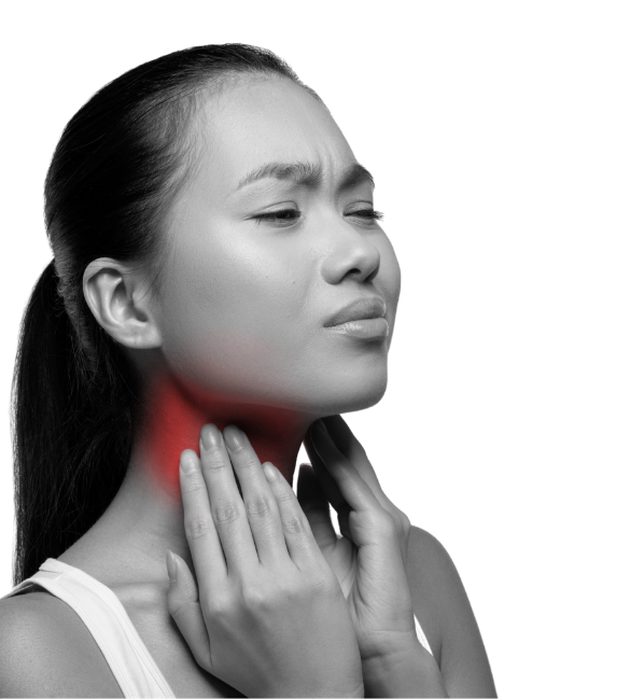
What is hypothyroidism?
Hypothyroidism means the thyroid gland isn't producing enough thyroid hormone. Thyroid hormone sets the pace of nearly every system in the body — energy, temperature, weight, heart rate, digestion, mood, skin and hair — so when levels fall, everything gradually slows down.
Because the slowdown is gradual, symptoms creep in over months and are easy to blame on stress, age or a busy life. That's exactly why a simple blood test matters: hypothyroidism is easy to confirm, and very treatable once found.
Worth knowing
Hypothyroidism is diagnosed with a simple blood test and treated with one small daily tablet. Left unrecognised, it quietly affects energy, weight, cholesterol, mood and fertility — none of which should be dismissed as 'just life'.
How an underactive thyroid shows itself
Energy & metabolism
- Persistent tiredness or exhaustion
- Weight gain despite no change in diet
- Feeling cold when others aren't
- Slowed heart rate
- Constipation
Mind & mood
- Low mood or flatness
- Poor concentration — 'brain fog'
- Forgetfulness
- Sleepiness despite a full night's sleep
- Loss of drive and motivation
Body & appearance
- Dry skin and brittle hair
- Hair thinning, including the outer eyebrows
- A puffy face or puffiness around the eyes
- A hoarse or deeper voice
- Heavy or irregular periods
- Muscle aches and cramps
No single symptom proves hypothyroidism — it's the pattern, developing gradually, that matters. If several of these feel familiar, a thyroid blood test is a simple way to get an answer.
Why a thyroid slows down
- Hashimoto's (autoimmune) thyroiditis — the most common cause worldwide
- Previous thyroid surgery
- Radioactive iodine treatment for an overactive thyroid
- Thyroiditis — temporary inflammation, sometimes after pregnancy or a viral illness
- Certain medicines — including amiodarone, lithium and some cancer immunotherapies
- Iodine deficiency
- Pituitary (central) causes — uncommon, but important to recognise
- Congenital hypothyroidism, present from birth
The most common culprit
In Hashimoto's thyroiditis, the immune system gradually reduces the gland's ability to make hormone. It often runs in families and can coexist with a goitre or nodules — which is why the whole gland, not just the hormone level, deserves assessment.
One blood test starts the answer
Diagnosis is refreshingly simple: a blood test. TSH — the pituitary's signal to the thyroid — rises when the thyroid underperforms, making it the most sensitive early marker. A low free T4 alongside a raised TSH confirms overt hypothyroidism.
Where TSH is mildly raised but free T4 remains normal — subclinical hypothyroidism — the right response depends on your symptoms, antibodies, age and plans such as pregnancy. Sometimes that means treating; often it means rechecking first. This judgement is exactly where specialist care earns its keep.
Before you're labelled
One abnormal TSH is not always a diagnosis. Levels shift with illness, medicines and even time of day — borderline results are usually confirmed before committing you to lifelong treatment.
What the thyroid blood tests mean
Your report doesn't need to be a mystery. Four tests do most of the work.
TSH
The pituitary's 'demand signal' to the thyroid. It rises when the thyroid underperforms — the most sensitive early marker of hypothyroidism.
Free T4
The main hormone the thyroid releases into your blood. Low free T4 with a raised TSH confirms overt hypothyroidism.
Free T3
The active form of thyroid hormone, converted from T4 in your tissues. Helpful in selected situations rather than routinely.
TPO antibodies
Antibodies against thyroid peroxidase point to Hashimoto's — useful for confirming the cause and predicting whether borderline results will progress.
For a fuller guide to each thyroid blood test and how the patterns read together, see our thyroid function blood tests explainer.
Replacing what's missing — carefully
Treatment replaces what's missing: levothyroxine, an exact copy of your body's own T4 hormone, taken as one small daily tablet. It isn't a drug that forces the body to do something new — it simply restores the level your body was designed to run on.
The dose is individual — it depends on your weight, age, heart health, other medicines and whether you're planning pregnancy. We start at the right dose for you, recheck bloods after 6–8 weeks, and adjust gently until your levels and — just as importantly — your symptoms have settled.
Our approach
There is no one-size-fits-all dose. The goal isn't a 'normal' number on paper — it's you, feeling well, on the dose your body actually needs.
Taking levothyroxine correctly
Levothyroxine works beautifully — when it's absorbed. Most "treatment failures" are really absorption problems, and they're fixable at the kitchen table.
- Take it on an empty stomach with water — ideally 30–60 minutes before breakfast
- Keep coffee, calcium, iron and multivitamins at least four hours away from your dose
- Same time every day — consistency matters more than perfection
- Missed a dose? Take it when you remember that day; don't routinely double up
- Don't stop when you feel better — feeling well means the dose is right, not that you're cured
- Tell us about any new medicines — several interact with levothyroxine absorption
Still feeling flat on treatment?
Don't adjust the dose yourself — and don't accept "your bloods are normal" as the end of the conversation. Timing, absorption, dose and other causes all deserve a proper look. That's what your reviews are for.
Life with a treated thyroid is just — life
Energy returns gradually
Most people feel noticeably better within a few weeks of reaching the right dose, with energy continuing to improve over two to three months. Be patient with your recovery.
Weight
Treatment restores your metabolism to its normal rate — it isn't a weight-loss drug. Expect modest change from treatment itself, supported by everyday diet and activity.
Food & supplements
No food or supplement treats hypothyroidism. Be cautious with high-dose iodine or kelp products — they can make autoimmune thyroid disease worse, not better.
Exercise & life
Fully encouraged. Once treatment is underway there are no restrictions — work, exercise, travel and fasting routines can all be planned around your tablet.
Protecting two people at once
Thyroid hormone is essential for fertility and for a baby's brain development, particularly in the first trimester — before the baby's own thyroid starts working. Untreated hypothyroidism raises the risk of miscarriage and complications, all of which good treatment largely removes.
Planning a pregnancy? Tell us — we optimise your TSH before conception. Once pregnant, levothyroxine requirements typically rise by around 25–30% early on, so the dose is increased promptly and bloods are checked each trimester.
After delivery, doses usually return to pre-pregnancy levels, and we recheck as you recover. Postpartum thyroiditis — temporary thyroid inflammation after childbirth — is also common and worth testing for if symptoms appear.
Planning a pregnancy?
Tell us early — optimising your thyroid before conception is one of the simplest, most effective things we can do for you and your baby.
Years of symptoms are not the price of being busy
Hypothyroidism is often diagnosed years after it began — years of tiredness, low mood and weight change explained away. Early assessment matters because the effects reach further than energy:
- Cholesterol and heart health — an untreated underactive thyroid raises cholesterol and, over time, cardiovascular risk
- Fertility and periods — hypothyroidism disrupts cycles and makes conception harder; treatment restores both
- Mood, memory and concentration — too easily blamed on stress when the thyroid is the real cause
- Pregnancy safety — treated early, risks to mother and baby largely disappear
- Rarely, severe untreated hypothyroidism can become a medical emergency — another reason not to ignore years of symptoms
The good news
Every one of these risks responds to treatment. A blood test today is how years of "just tired" become weeks from feeling like yourself again.
Subclinical vs overt hypothyroidism
Not every underactive thyroid needs the same answer. The difference between a mildly and a clearly underactive gland shapes whether — and when — treatment begins.
Subclinical hypothyroidism
A mildly raised TSH with a free T4 still in the normal range. The gland is underperforming, but the pituitary is compensating, and many people have few or no symptoms. Whether to treat depends on how high the TSH is, whether TPO antibodies are present, your age, your symptoms and any pregnancy plans — and often the right first step is simply to recheck in a few weeks.
Overt hypothyroidism
A raised TSH together with a low free T4. The thyroid can no longer keep up, symptoms are usually clearer, and treatment with levothyroxine is clearly indicated to restore your hormone levels — and how you feel.
The line between the two isn't just a number — it's the number read alongside your symptoms, your antibodies and your circumstances. Borderline results are usually confirmed on a repeat test before any decision about lifelong treatment.
Keeping a treated thyroid steady
Once your dose is right, hypothyroidism becomes a condition you barely notice — but it still deserves a light, regular check to keep it that way.
- After any dose change, thyroid bloods are rechecked at 6–8 weeks — long enough for levels to settle before judging the effect
- Once your dose is stable and you feel well, a thyroid function test about once a year is usually enough
- Test sooner if symptoms return, after significant weight change, when starting or stopping medicines that affect absorption, or if you become pregnant or are planning to
- Requirements can drift over the years as the underlying condition evolves — an annual check catches this early, long before symptoms return
- Every review looks at how you feel, not only the number on the report — the aim is you, well, on the dose your body actually needs
Set and check, not set and forget
Stable doesn't mean forgotten. One yearly blood test — and a specialist who knows your history — keeps a treated thyroid quietly in the background, where it belongs.
Thyroid care that doesn't stop at a prescription
- Consultant endocrinologist — hormone conditions are our daily work
- Same-visit thyroid blood testing and ultrasound where needed
- Careful, individualised levothyroxine titration — not a one-size dose
- Dedicated thyroid care in pregnancy and preconception
- The full picture assessed: gland, hormones, goitre and nodules together
- Long-term follow-up with one specialist who knows your history
Meet your specialist

Consultant Physician · Interventional Endocrinologist & Diabetologist — caring for the full range of thyroid conditions, from hormone disorders to nodules and RFA.
Hypothyroidism — your questions answered
The most common cause worldwide is Hashimoto's thyroiditis, where the immune system gradually slows the gland. Other causes include previous thyroid surgery, radioactive iodine treatment, certain medicines, temporary thyroiditis and iodine deficiency.
It depends on the cause. Hashimoto's is usually lifelong, and treatment manages it very well. Thyroiditis-related hypothyroidism — including after pregnancy — can be temporary, which is why we confirm the cause before assuming treatment is forever.
Often, yes — and that's less daunting than it sounds: one small daily tablet, identical to your own hormone, with blood tests to keep the dose right. Some causes are temporary, and we'll tell you honestly if yours may be.
First we check the dose and your TSH. Then how you take it — food, coffee, calcium and iron all block absorption. If your levels are right and you're still tired, we look properly for other causes rather than dismissing it.
Best not together. Coffee reduces its absorption — take your tablet with water 30–60 minutes before breakfast, and enjoy your coffee after that gap.
Yes, typically modest weight gain from a slowed metabolism and fluid retention. Treatment restores your metabolic rate; combined with everyday diet and activity, weight usually settles back gradually.
Yes — it's essential in pregnancy. It's identical to your own hormone, and keeping levels right protects your baby's development. Doses usually need to rise in pregnancy, so tell us as soon as you conceive or start planning.
A mildly raised TSH with normal free T4 — the earliest stage of an underperforming thyroid. Whether to treat depends on your symptoms, antibodies, age and pregnancy plans; sometimes the right answer is simply to recheck.
After any dose change, at 6–8 weeks. Once stable, usually once a year — sooner in pregnancy, after significant weight change, or if symptoms return.
Yes — Hashimoto's can enlarge the gland, and nodules commonly coexist. That's why we assess the gland itself, with ultrasound where needed, not just the hormone numbers.
Not without advice. Most patients in Kenya get adequate iodine from iodised salt, and high-dose iodine or kelp supplements can worsen autoimmune thyroid disease. 'Thyroid support' supplements are unregulated and some contain actual hormone.
Untreated, it raises cholesterol, slows the heart and over time increases cardiovascular risk. Treated properly, these effects reverse — one of the strongest reasons not to leave symptoms uninvestigated for years.
Keep reading
From first message to feeling yourself again
Book
Message us on WhatsApp or book online — with or without previous results.
Consult
An unhurried consultation about your symptoms and history.
Test
Thyroid blood tests — and an ultrasound if the gland needs a look.
Diagnose
A clear explanation of your results and what's causing them.
Treat
The right levothyroxine dose for you, started and titrated carefully.
Review
Bloods rechecked at 6–8 weeks and the dose fine-tuned.
Thrive
Stable, well, and reviewed just often enough to keep you that way.
Refer a patient with an underactive thyroid
We welcome referrals from GPs, physicians, obstetricians and surgeons across Kenya and the wider region for the diagnosis and long-term management of an underactive thyroid.
When to refer
A raised TSH needing interpretation, symptomatic or borderline subclinical hypothyroidism, difficulty stabilising levothyroxine, hypothyroidism in pregnancy or preconception, a coexisting goitre or nodule, or suspected central (pituitary) hypothyroidism.
What we provide
Consultant-led assessment, same-visit thyroid blood tests and ultrasound where the gland needs a look, careful levothyroxine titration, dedicated thyroid care in pregnancy, and a clear written report back to you.
Medically reviewed by Dr. Ebrahim Yusuf Ebrahim, Consultant Physician & Interventional Endocrinologist. Clinical figures are ranges from peer-reviewed studies, provided for general education — individual results vary and are confirmed at your review.
Related services
Stop guessing. Test.
A thyroid blood test takes minutes and settles the question. Book an assessment at the clinic in Parklands, or start the conversation on WhatsApp.
