
Specialist care for thyroid cancer in Nairobi
A thyroid cancer diagnosis is frightening — but most thyroid cancers are among the most treatable of all cancers, with an excellent long-term outlook. We assess a suspicious nodule thoroughly, explain what the findings mean in plain language, and guide you through diagnosis, treatment and follow-up with clarity and support.
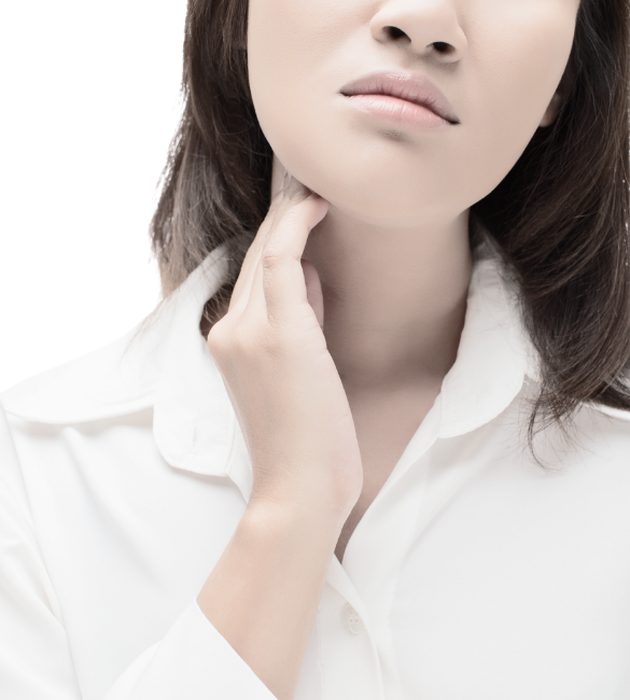
What is thyroid cancer?
Thyroid cancer is a growth of abnormal cells within the thyroid — the small butterfly-shaped gland at the front of the neck that regulates your metabolism. It usually shows up as a lump (a nodule) in the thyroid, or occasionally as a swollen lymph node in the neck. The single most important fact to hold on to is that the great majority of thyroid nodules are completely benign: only a small proportion — roughly one in twenty — turn out to be cancerous.
Even when a nodule is cancerous, thyroid cancer behaves very differently from many other cancers. The commonest types grow slowly, are usually confined to the neck when found, and respond extremely well to treatment. For most people, thyroid cancer is a highly curable condition — which is why careful, unhurried assessment matters far more than panic.
Worth knowing
Worth hearing first: the most common forms of thyroid cancer have among the highest survival rates of any cancer. Finding it early and treating it properly gives most people an excellent, normal-length life.
The types of thyroid cancer
"Thyroid cancer" is not one disease. There are several distinct types, and they differ enormously in how they behave and how they are treated — which is exactly why an accurate diagnosis comes first.
Papillary
By far the most common type (around eight in ten cases). It grows slowly, often affects younger people, and has an excellent outlook even when it has spread to neck lymph nodes.
Follicular
The second most common type. Also usually has a very good prognosis; it is more likely than papillary cancer to spread through the bloodstream, so treatment is tailored accordingly.
Medullary
A less common type arising from different (C) cells in the thyroid. It can run in families, so genetic testing and a check of related hormones are part of the assessment.
Anaplastic
A rare, fast-growing and aggressive type, usually in older adults. It needs urgent, specialised, multidisciplinary care — quite different from the common thyroid cancers.
Papillary and follicular cancers together are called "differentiated" thyroid cancer. They make up the vast majority of cases and are the reason thyroid cancer, as a whole, has such a reassuring outlook. Knowing the exact type shapes every treatment decision that follows.
What causes thyroid cancer?
In most people no single cause is ever identified — thyroid cancer usually develops without an obvious reason. A few factors are known to raise the risk, but having one does not mean you will develop it.
Radiation exposure
Radiation to the head or neck, particularly in childhood, is the best-established risk factor. Ordinary diagnostic scans carry a very small risk; historical high-dose exposure carries more.
Family history & genetics
A close relative with thyroid cancer raises your risk. Medullary cancer in particular can be inherited, so we consider genetic testing where relevant.
Age & sex
Thyroid cancer is more common in women and can occur at any age, including in younger adults — unusually for a cancer, it is not just a disease of later life.
Existing thyroid disease
Long-standing goitre, thyroid nodules and autoimmune thyroid conditions such as Hashimoto's are associated with a modest increase in risk, which is one reason nodules are assessed carefully.
Iodine intake
Both a marked deficiency and a marked excess of iodine have been linked to particular patterns of thyroid cancer — another reason a balanced approach to iodine matters.
It is important to be clear: most people who develop thyroid cancer have none of these risk factors, and most people with a risk factor never develop it. Risk factors guide how carefully we assess a nodule — they do not diagnose cancer.
Symptoms of thyroid cancer
Thyroid cancer often causes no symptoms at all and is found by chance on a scan done for another reason. When symptoms do appear, they are usually caused by the lump itself.
- A painless lump or swelling at the front of the neck
- A swollen lymph node in the neck that does not settle
- A hoarse voice or a change in your voice that persists
- Difficulty swallowing, or a feeling of something in the throat
- Difficulty breathing, or pressure in the neck (uncommon)
- A lump that is growing, firm or fixed rather than soft and mobile
When to get checked
None of these symptoms means you have cancer — the same lump is far more likely to be a benign nodule or goitre. But any new, persistent or growing neck lump, a lasting change in your voice, or a swollen neck gland that does not go away should always be assessed with an ultrasound. Getting it checked early is simple and reassuring.
How thyroid cancer is diagnosed
Diagnosing thyroid cancer is a careful, stepwise process — its whole purpose is to tell the small number of nodules that need treatment apart from the great majority that are harmless. It starts with a specialist assessment of your neck, your history and your thyroid function, and a high-resolution ultrasound.
The ultrasound scores each nodule for suspicious features using the ACR TI-RADS system, which guides whether a biopsy is needed. Where it is, an ultrasound-guided fine-needle aspiration (FNAC) samples cells from the nodule; results are reported on the Bethesda scale. If the FNAC is unclear or a tissue sample is needed, a core-needle biopsy provides more. In selected cases, molecular testing of the sample and further imaging help refine the picture before any treatment is planned.
From scan to answer
Because we perform the ultrasound and biopsy ourselves, we can move from a suspicious scan to a clear diagnosis quickly — and explain exactly what each result means for you at every step.
Can thyroid cancer be cured?
For most people, the honest answer is yes. The common (differentiated) thyroid cancers are highly curable, and their long-term survival rates are among the best of any cancer — for many patients with early papillary cancer, life expectancy is essentially normal. Even when the cancer has spread to lymph nodes in the neck, the outlook usually remains very good.
The outlook depends on the type of cancer, its size, whether it has spread and your age at diagnosis — which is why staging and an accurate diagnosis matter so much. The rarer aggressive types need more intensive treatment, but they are the exception. For the great majority of people, thyroid cancer is a treatable condition with an excellent prognosis.
Reason for reassurance
The word "cancer" is frightening, and that is completely understandable. But for the common thyroid cancers, the realistic expectation is treatment, cure and a long, normal life — not a life-limiting illness.
How thyroid cancer is staged
Staging describes how much cancer there is and whether it has spread. It uses the TNM system — Tumour, Nodes, Metastasis — and, uniquely for differentiated thyroid cancer, it also takes your age into account, because younger patients have such an excellent outlook.
T — Tumour
The size of the cancer within the thyroid and whether it has grown beyond the gland. Smaller tumours confined to the thyroid carry the best outlook.
N — Nodes
Whether cancer cells are found in the lymph nodes of the neck. Node involvement is common in papillary cancer and, importantly, still carries a very good prognosis.
M — Metastasis
Whether the cancer has spread to distant parts of the body, such as the lungs or bones. This is uncommon in the differentiated cancers found early.
Age
For differentiated thyroid cancer, age at diagnosis strongly influences the stage — patients under 55 are classified in the lowest stages even when nodes are involved, reflecting the excellent outcomes.
Because age counts, many younger people with thyroid cancer are — reassuringly — classified as early stage even if it has reached neck lymph nodes. Your specialist will explain your own stage and precisely what it means for your treatment and outlook.
Treatment options for thyroid cancer
Treatment is planned around the type and stage of your cancer, and around you. Most people need surgery, and some go on to have additional treatment; a small number with very low-risk cancer may be watched carefully instead. Each plan is individualised.
Surgery
The main treatment for almost all thyroid cancers — removing part or all of the thyroid, and any affected neck lymph nodes. It is highly effective and the foundation of cure.
Radioactive iodine
After surgery for some differentiated cancers, a radioiodine capsule targets and destroys any remaining thyroid or cancer cells anywhere in the body — a treatment unique to thyroid cancer.
Thyroid hormone therapy
A daily tablet replaces the hormone your thyroid made and, at a carefully judged dose, lowers TSH to reduce the chance of the cancer returning.
Active surveillance
For selected very small, low-risk papillary cancers, close monitoring with ultrasound may be a safe alternative to immediate surgery, avoiding or deferring an operation.
Rarely, for the aggressive types, additional treatments such as external radiotherapy or targeted drug therapy are used. For the common thyroid cancers, though, surgery — sometimes followed by radioactive iodine and hormone therapy — is the well-established path to cure.
Thyroid surgery for cancer
Surgery is the cornerstone of thyroid cancer treatment. Depending on the type, size and spread of the cancer, this may mean removing half of the thyroid (a lobectomy) or the whole gland (a total thyroidectomy). Where cancer has reached the lymph nodes, the affected nodes in the neck are removed at the same time.
Modern thyroid surgery is safe and well established. The main considerations your surgeon will discuss are the small risks to the nerves that control the voice and to the parathyroid glands that manage calcium, both of which sit close to the thyroid — and how choosing between a lobectomy and a total thyroidectomy affects whether you will need lifelong hormone replacement afterwards.
Coordinated care
We coordinate your care with experienced thyroid surgeons and stay involved throughout — so the decision about how much surgery you need is made carefully, with you, and the follow-up is seamless.
Radioactive iodine treatment
Radioactive iodine (RAI) is a treatment given after surgery for some differentiated thyroid cancers. Because thyroid cells — including thyroid cancer cells — are almost the only cells in the body that absorb iodine, a measured dose of radioactive iodine, taken as a capsule or drink, is taken up by any remaining thyroid or cancer cells and destroys them, while sparing the rest of the body.
Not everyone needs it — it is used where the type, size or spread of the cancer suggests a benefit. Preparation involves a low-iodine diet and raising TSH (either by pausing hormone tablets or with an injection) so the cells take up the iodine well. There are simple, temporary radiation-safety precautions for a few days afterwards, which your team will explain clearly.
A targeted treatment
Radioactive iodine is a long-established, targeted treatment. Whether you need it is decided from your surgery and pathology results — we make sure you understand the reasoning, the preparation and the practicalities before anything is arranged.
Thyroid hormone replacement & TSH suppression
After thyroid surgery, your body needs thyroid hormone replaced. This is done with levothyroxine — a daily tablet identical to the hormone your thyroid made. If your whole thyroid has been removed you will need it for life; after a lobectomy you may or may not, depending on how the remaining half performs.
In thyroid cancer this tablet does two jobs. It keeps your metabolism normal, and — at a carefully judged dose — it gently lowers TSH, the pituitary signal that can stimulate any remaining thyroid cells. Keeping TSH in the right range reduces the chance of the cancer returning. The target is individualised to your risk and reviewed over time, so the dose is neither too much nor too little.
Getting the dose right
Getting the levothyroxine dose right is a specialist job, especially in cancer follow-up where the TSH target is deliberately set. We monitor your levels and adjust carefully so you feel well and stay protected.
Follow-up after thyroid cancer
After treatment, follow-up is straightforward but important — its purpose is to confirm the cancer has gone and to catch the small chance of return early, when it is most easily treated. For most people this becomes a simple, reassuring routine over the years.
- Regular thyroid blood tests to keep your levothyroxine dose and TSH in the target range
- Thyroglobulin blood tests — a protein made by thyroid cells that acts as a sensitive marker after total thyroidectomy
- Neck ultrasound to check the thyroid bed and the lymph nodes
- Occasional whole-body or other imaging, where indicated by your type of cancer
- Review of how you are feeling, and adjustment of your hormone dose as needed
- A clear, individualised schedule — closer at first, then spaced further apart as your results stay clear
Follow-up is tailored to your risk. For most people the results are reassuring visit after visit, and the intervals lengthen over time — but the safety net stays in place for as long as it is useful.
Living with and beyond thyroid cancer
Life after thyroid cancer is, for most people, a return to normal — but it is normal to need time, information and support along the way. A few things genuinely help.
- Take your levothyroxine every day as prescribed — it protects you and keeps you well
- Keep your follow-up appointments and blood tests, even when you feel completely well
- Expect it to take a little time to settle on the right hormone dose after treatment
- Look after calcium and vitamin D if advised, particularly after total thyroidectomy
- Give yourself permission to feel anxious — a cancer diagnosis is a lot, and support helps
- Ask questions freely; understanding your own diagnosis and plan is part of recovery
The habit that matters most
If you take one thing from this page: take your levothyroxine every day and keep your follow-up appointments. Together they protect you and let any small chance of return be caught early.
Thyroid cancer — your questions answered
No — the great majority are completely benign. Only around one in twenty thyroid nodules turns out to be cancer. This is exactly why nodules are assessed carefully with ultrasound and, when needed, a biopsy: to reassure the many and identify the few that need treatment.
For most people, yes. The common (differentiated) thyroid cancers are highly treatable and have among the best survival rates of any cancer — often a normal life expectancy, even when neck lymph nodes are involved. The outlook depends on the type, size, spread and your age, which your specialist will explain.
Often there are none, and it's found by chance on a scan. When there are signs, the commonest is a painless lump in the neck. A persistent hoarse voice, difficulty swallowing, or a swollen neck gland that doesn't settle should also be checked — though these are far more often caused by benign conditions.
With a specialist assessment, a high-resolution ultrasound that scores the nodule for suspicious features (TI-RADS), and — where indicated — an ultrasound-guided fine-needle biopsy reported on the Bethesda scale. A core-needle biopsy or molecular testing is used in selected cases to clarify an uncertain result.
The main types are papillary (much the most common, slow-growing, excellent outlook), follicular (also good outlook), medullary (less common, can be inherited) and anaplastic (rare, aggressive, needs urgent specialist care). Papillary and follicular together are called differentiated thyroid cancer and account for the great majority of cases.
Not always. Depending on the type and size of the cancer, surgery may remove half the thyroid (lobectomy) or all of it (total thyroidectomy), sometimes with neck lymph nodes. Your surgeon weighs the extent of surgery against the need for lifelong hormone replacement and discusses the choice with you.
A capsule or drink of radioactive iodine given after surgery for some differentiated cancers. Because thyroid cells are almost the only ones that absorb iodine, it targets and destroys any remaining thyroid or cancer cells while sparing the rest of the body. Not everyone needs it — it's decided from your surgery and pathology results.
If your whole thyroid is removed, yes — a daily levothyroxine tablet replaces the hormone your thyroid made and, at a carefully set dose, helps keep the cancer from returning. After a lobectomy you may not need it. Either way, it's simple to take and we monitor the dose closely.
It can, but for the common types this is uncommon, and follow-up is designed to catch it early when it's most treatable. Regular blood tests (including thyroglobulin) and neck ultrasound make up a simple, reassuring safety net that continues for as long as it's useful.
Yes. Thyroid cancer and its treatment do not usually affect fertility, and many people go on to have healthy pregnancies. There is usually a recommended wait after radioactive iodine before conceiving, and your hormone dose is adjusted in pregnancy — all of which your specialist will guide you through.
Most is not. Medullary thyroid cancer, however, can run in families, so genetic testing is considered when it's diagnosed. A family history of thyroid cancer raises your risk modestly and is worth mentioning at your assessment, but most thyroid cancer occurs in people with no family history at all.
No — you're welcome to book directly. If you have recent ultrasound scans, biopsy or blood results, or a referral letter, bring them along, as they help us assess and plan quickly.
Specialist thyroid cancer care, all in one place
- Consultant-led assessment of every suspicious nodule and neck swelling
- High-resolution ultrasound and ultrasound-guided biopsy in one place
- ACR TI-RADS and Bethesda reporting, with molecular testing where it helps
- Honest, plain-language explanation of your diagnosis, stage and options
- Coordinated surgery and radioactive-iodine care with experienced specialists
- Structured, individualised long-term follow-up so any return is caught early
How your care works
Assess
A specialist reviews your neck, history and thyroid function, and scans the gland.
Diagnose
Ultrasound-guided biopsy and, where needed, molecular testing give a clear answer.
Treat
A coordinated plan — surgery, and radioactive iodine and hormone therapy where indicated.
Follow up
Long-term monitoring with blood markers and ultrasound, tailored to your risk.
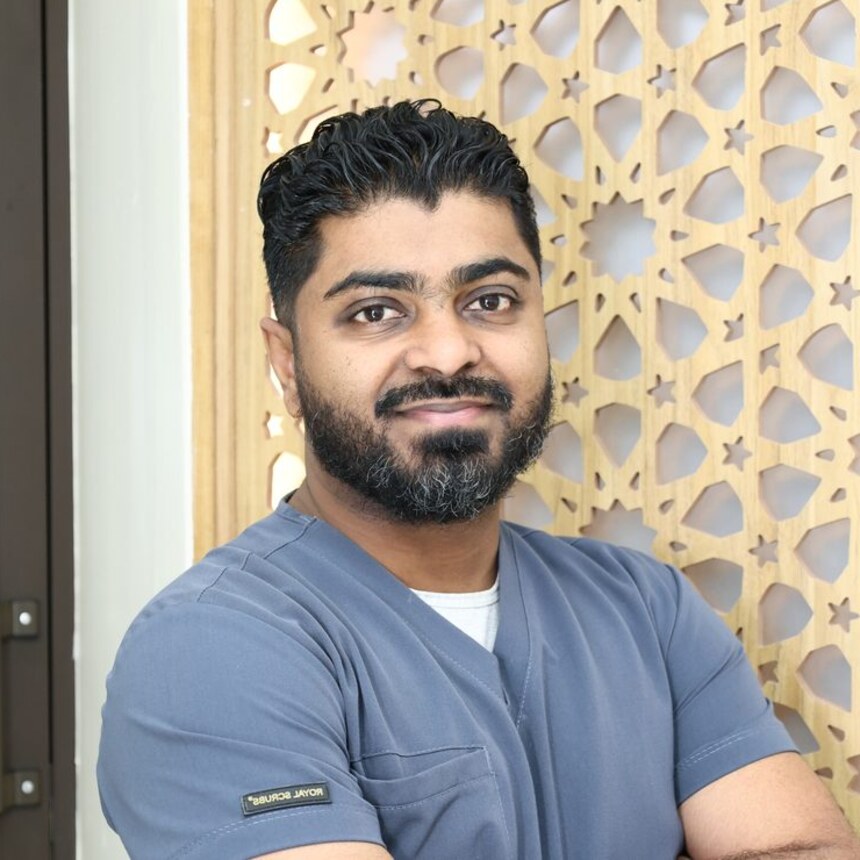
Dr. Ebrahim Yusuf Ebrahim
Consultant Physician · Interventional Endocrinologist & Diabetologist
One of the first doctors in Kenya to bring minimally invasive thermal ablation — microwave and radiofrequency — to the treatment of thyroid nodules and goitre, sparing patients from surgery. He provides consultant-led assessment of thyroid nodules and thyroid cancer — combining specialist ultrasound, biopsy and coordinated treatment and follow-up.
- MMed, Internal Medicine — University of Nairobi
- PG Diploma, Endocrinology & Diabetes — Royal College of Physicians, Ireland
- Fellowship, Endocrinology & Diabetes — University of Alexandria, Egypt
- Certificate in Interventional Thyroidology — Mumbai, India
- Special focus: thermal ablation (RFA & microwave) for thyroid nodules
Refer a patient with a suspicious nodule
We welcome referrals of patients with a suspicious thyroid nodule, an indeterminate or malignant biopsy, or a swollen neck node from family physicians, ENT surgeons, oncologists and other clinicians. Your patient receives prompt consultant assessment, full diagnostics and a coordinated treatment and follow-up plan — with clear communication back to you.
Rapid nodule assessment
For a suspicious nodule or neck node — clinical review, high-resolution ultrasound with TI-RADS scoring and same-visit FNAC to reach a diagnosis quickly.
Full diagnostic pathway
FNAC, core-needle biopsy and molecular testing as needed, with clear Bethesda reporting and a defined plan for indeterminate results.
Coordinated treatment
Surgical referral, radioactive-iodine planning and specialist-led hormone and follow-up care — organised and communicated back to you.
Simple to refer
Share the clinical details and any recent scans or results on WhatsApp or email; we assess promptly and report back clearly.
Book your thyroid cancer consultation
If you have a thyroid nodule, a neck swelling that needs assessing, or a diagnosis of thyroid cancer and want specialist care, booking is simple. Message us on WhatsApp or book online, and we'll arrange an assessment — often within a few days.
Bring any recent ultrasound scans, biopsy or blood results, or a referral letter if you have them; they help us move quickly. If you're worried about a lump but unsure whether it needs review, message us and we'll advise honestly — no obligation.
Where to find us
Doctors Park, 3rd Floor, 3rd Parklands Avenue, Nairobi
+254 706 651 416
+254 711 781 299
Languages: English · Kiswahili · Somali
Medically reviewed by Dr. Ebrahim Yusuf Ebrahim, Consultant Physician & Interventional Endocrinologist. Clinical figures are ranges from peer-reviewed studies, provided for general education — individual results vary and are confirmed at your review.
Related conditions & services
Worried about a thyroid lump? Get it assessed
Most thyroid lumps are benign — and the few that aren't are highly treatable when found early. Book a consultation online, or send us your recent scans on WhatsApp and we'll advise on the next step.
