
Thyroid function blood tests, explained
TSH, Free T4, Free T3 and thyroid antibodies each tell part of the story — and they mean far more read together than alone. Here is a clear, specialist guide to what each thyroid blood test measures, what your results mean, and why the numbers are only ever half the picture.

What are thyroid function blood tests?
Thyroid function tests are a small group of blood tests that measure how well your thyroid — the butterfly-shaped gland at the base of your neck — is working. The thyroid makes two hormones, thyroxine (T4) and triiodothyronine (T3), that set the pace of your metabolism, influencing your energy, weight, heart rate, mood and temperature. A simple sample from a vein in your arm lets us measure these hormones, and the pituitary signal that controls them.
No single number tells the whole story. The tests are always interpreted together — a high or low result in one only makes sense alongside the others, your symptoms and your examination. Read as a pattern, thyroid blood tests help diagnose an underactive thyroid (hypothyroidism), an overactive thyroid (hyperthyroidism) and autoimmune thyroid disease such as Hashimoto's and Graves' — and they guide the fine-tuning of treatment over time.
Worth knowing
Blood tests tell us how the thyroid is working; an ultrasound tells us how it is built. They answer different questions — which is why a thorough thyroid assessment usually needs both, not one alone.
Why are thyroid blood tests performed?
Your doctor may request thyroid blood tests to make a new diagnosis, to keep an established condition well controlled, or to check a thyroid that is at higher risk.
Symptoms that point to the thyroid
Unexplained tiredness, weight change, palpitations, feeling too hot or too cold, low mood, hair or skin changes, or a swelling in the neck can all prompt a thyroid check.
Monitoring a known condition
If you take levothyroxine or antithyroid medication, regular tests confirm your dose is right and keep your hormone levels in the target range.
Screening when risk is higher
In pregnancy or when planning it, with a family history of thyroid disease, or with another autoimmune condition, testing can catch problems early — sometimes before symptoms appear.
An abnormal result found by chance
Thyroid abnormalities are often picked up on blood tests done for another reason, and need proper interpretation to know what, if anything, follows.
Around certain medicines and treatments
Some medicines (such as amiodarone or lithium) affect the thyroid, and levels are checked before and after treatments like radioiodine or thyroid surgery.
A clear baseline
A documented set of results gives a reliable reference point, so any future change can be measured against it with confidence.
The three core tests: TSH, Free T4 and Free T3
Three tests form the core panel. Each measures a different part of the same system, and it's the way they move together that names the diagnosis.
The master switch
TSH (thyroid-stimulating hormone)
Made by the pituitary gland — not the thyroid itself — TSH is the signal that tells the thyroid how much hormone to produce. It's the most sensitive first-line test, because the pituitary constantly adjusts it through a feedback loop.
It reads back-to-front: a high TSH usually means an underactive thyroid (the pituitary is calling for more hormone), while a low TSH usually means an overactive one. A normal TSH makes significant thyroid dysfunction unlikely.
The main hormone
Free T4 (free thyroxine)
Thyroxine is the main hormone the thyroid releases. The 'free' fraction is the small, active portion not bound to proteins — the part your body can actually use — and it's always read alongside TSH.
A low Free T4 with a high TSH confirms an underactive thyroid; a high Free T4 with a low TSH confirms an overactive one. Free T4 also helps show how mild or severe the problem is.
The active hormone
Free T3 (free triiodothyronine)
T3 is the more potent, biologically active hormone, most of it made by converting T4 in the body's tissues. It isn't needed in every test, but it's valuable in specific situations.
Free T3 is most useful in an overactive thyroid, where it can be raised even when Free T4 is normal ('T3 toxicosis'). It is not a reliable test for an underactive thyroid and isn't routinely needed to monitor levothyroxine.
How the results read together
Because the tests move as a set, it's the combination that points to the diagnosis. These are the common patterns a specialist looks for.
High TSH · low Free T4
Overt (clear) hypothyroidism — an underactive thyroid. The commonest cause is Hashimoto's autoimmune thyroiditis.
High TSH · normal Free T4
Subclinical hypothyroidism — a mildly underactive gland the pituitary is still compensating for. Whether to treat depends on the TSH level, antibodies, symptoms and pregnancy plans.
Low TSH · high Free T4 / Free T3
Overt hyperthyroidism — an overactive thyroid. Causes include Graves' disease, a toxic nodule and thyroiditis, and further tests tell them apart.
Low TSH · normal Free T4 & Free T3
Subclinical hyperthyroidism — a subtly overactive gland that still warrants attention, particularly for the heart and bones.
Normal TSH & Free T4
Normal thyroid function. If symptoms persist, the cause usually lies elsewhere — or in the structure of the gland, which a scan can show.
Low TSH · low Free T4
An unusual pattern that can point to a problem with the pituitary gland itself rather than the thyroid, and prompts specialist assessment.
Thyroid antibody tests
Antibodies reveal whether a thyroid problem is autoimmune — the immune system mistakenly acting on the gland. They explain the why behind an abnormal result.
TPO antibodies (anti-TPO)
The commonest thyroid antibodies. Raised levels point to autoimmune thyroid disease, most often Hashimoto's thyroiditis — the leading cause of an underactive thyroid.
Learn more →
Thyroglobulin antibodies (anti-Tg)
Also seen in autoimmune thyroid disease, and checked alongside thyroglobulin when monitoring after treatment for thyroid cancer, where they can affect how that result is read.
Learn more →
TSH-receptor antibodies (TRAb)
The hallmark of Graves' disease. These antibodies switch the thyroid on, driving it to overproduce hormone; TRAb also helps guide treatment and pregnancy care.
Learn more →
Other important thyroid blood tests
Beyond the core panel, a few further tests add useful information in specific situations.
Thyroglobulin
A protein made only by thyroid tissue. It has little role in everyday diagnosis but is a key tumour marker after surgery and radioiodine for differentiated thyroid cancer.
Learn more →
Calcitonin
A hormone from the thyroid's C-cells. A raised level can be a marker for the rare medullary thyroid cancer, and it may be checked in selected patients with nodules or a relevant family history.
Calcium & parathyroid hormone
Not thyroid hormones, but closely related — the parathyroid glands sit behind the thyroid. Calcium is watched carefully after thyroid surgery, when these glands can be temporarily affected.
Learn more →
Vitamin D
Often checked alongside thyroid tests, as deficiency is common and can add to tiredness and low mood — symptoms that overlap with an underactive thyroid.
Inflammatory markers (ESR & CRP)
Raised in subacute (de Quervain's) thyroiditis — a painful, self-limiting inflammation of the gland — helping separate it from other causes of an overactive thyroid.
Learn more →
Full blood count & lipids
An underactive thyroid can cause anaemia and raised cholesterol, so related tests sometimes accompany a thyroid panel to build the fuller picture.
Having the test — what to know
A thyroid blood test is simply a small sample taken from a vein in your arm, usually over in a minute or two. You don't need to fast, and you can carry on with your day straight afterwards.
A few practical points help make the result reliable. If you take levothyroxine, it's usual to have the blood drawn first and take your tablet afterwards on testing days, so the sample reflects your steady level rather than the short peak just after a dose. High-dose biotin (vitamin B7) supplements can interfere with some thyroid assays and are best paused for a couple of days beforehand — so do mention any supplements you take. Because TSH varies a little through the day, consistent timing helps when results are compared over time.
Quick checklist
- No fasting needed — eat and drink normally.
- Taking levothyroxine? Have your blood drawn first, then take your tablet.
- Pause high-dose biotin supplements for 2–3 days, and tell us what you take.
- Bring any previous thyroid results so we can compare accurately.
- Tell us if you're pregnant, planning pregnancy, or recently unwell.
Why blood tests alone are not enough
Blood tests are essential, but they only measure how the gland is functioning at a moment in time. They cannot show its structure — its size, or whether it contains a nodule — and they cannot tell benign from malignant. That is why a complete assessment brings several tools together.
Ultrasound — the structure
A painless, radiation-free scan shows the size and texture of the gland and maps any nodules in fine detail — information no blood test can give.
Learn more →
Biopsy — the cells
When a nodule needs checking, an ultrasound-guided FNAC samples its cells to tell the benign majority from the small minority that aren't.
Learn more →
Nodules — seen, not felt
Many nodules cause no symptoms and normal blood tests. Imaging finds and characterises them, so nothing important is missed.
Learn more →
Thyroid blood tests — your questions answered
No. Thyroid function tests don't require fasting — you can eat and drink normally. If other tests such as glucose or cholesterol are being done at the same time, your doctor will tell you if fasting is needed for those.
TSH is the usual first-line test because it's the most sensitive to early change. But it's read together with Free T4 (and sometimes Free T3), because TSH alone can occasionally mislead — especially in pregnancy, pituitary problems, or while adjusting treatment.
It seems back-to-front, but TSH is the pituitary's demand signal. When the thyroid is underactive, the pituitary raises TSH to push it to work harder. So a high TSH usually means too little thyroid hormone, and a low TSH usually means too much.
It describes a mild, early pattern where TSH is abnormal but the thyroid hormones (Free T4 and Free T3) are still normal. It may need only monitoring, or treatment — the right answer depends on how far the TSH is off, whether antibodies are present, your symptoms, and whether you're pregnant or planning to be.
On testing days it's usually best to have the blood drawn first and take your tablet afterwards, so the result reflects your steady level rather than the short peak after a dose. Keep to the same routine each time so results compare fairly.
They show whether a thyroid problem is autoimmune. Raised TPO antibodies point to Hashimoto's (a common cause of an underactive thyroid), while TSH-receptor antibodies (TRAb) are the hallmark of Graves' disease (an overactive thyroid).
Yes. High-dose biotin (vitamin B7), found in some hair, skin and nail supplements, can interfere with certain thyroid assays and give misleading results. It's best paused for a couple of days before testing — and always tell us what you take.
Not quite. Reference ranges vary a little between laboratories, and the target range shifts in pregnancy and can differ with age. That's why results are interpreted by a specialist in your context, not just against a printed range.
Yes, considerably — and the targets are different, especially in the first trimester. Thyroid testing is important before and during pregnancy, and doses of thyroid medication often need adjusting. Tell us if you're pregnant or trying to conceive.
Normal thyroid function is reassuring, but it doesn't rule out other causes of the same symptoms, or a structural problem in the gland. We look at the whole picture — repeating or adding tests where sensible, and arranging an ultrasound if the neck needs examining.
It depends on the situation. When starting or changing a dose, tests are usually repeated after about 6–8 weeks; once stable, every 6–12 months is typical. Your specialist sets the right interval for you.
Yes. You're welcome to arrange testing and a specialist review directly. Bring any previous results so we can compare, and we'll interpret everything together and advise on any next steps.
Results you can build decisions on
- Consultant endocrinologist with dedicated thyroid expertise
- Every result interpreted in the context of your symptoms and examination
- TSH, Free T4, Free T3 and antibodies read together — never a single number in isolation
- Blood tests, high-resolution ultrasound and image-guided biopsy in one clinic
- Clear, plain-language explanations and an honest plan
- Results reviewed against international guidance and, where relevant, pregnancy targets
How we approach your results
Measure
The right panel of tests for your situation — no more, no less.
Interpret
Read as a pattern, in the context of you — not against a printed range alone.
Explain
What each result means, in plain language, with time for your questions.
Plan
A clear next step — reassurance, treatment, a scan, or a sensible recheck.
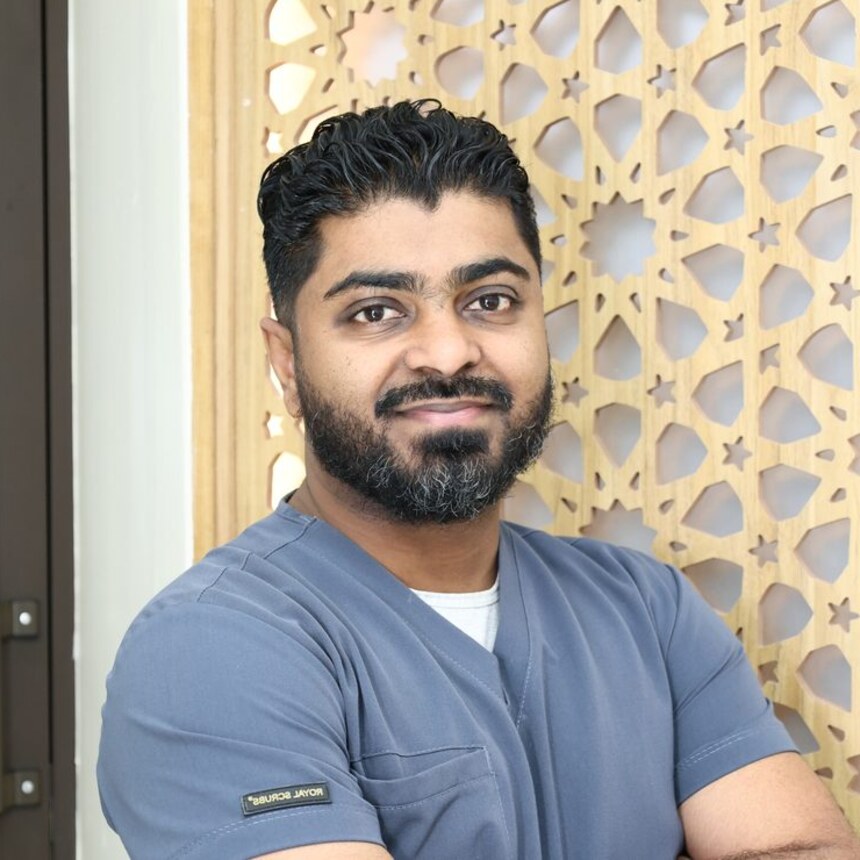
Dr. Ebrahim Yusuf Ebrahim
Consultant Physician · Interventional Endocrinologist & Diabetologist
One of the first doctors in Kenya to bring minimally invasive thermal ablation — microwave and radiofrequency — to the treatment of thyroid nodules and goitre, sparing patients from surgery. Your thyroid results are interpreted by him personally — read as a pattern and in the context of your symptoms, never as a single number against a printed range.
- MMed, Internal Medicine — University of Nairobi
- PG Diploma, Endocrinology & Diabetes — Royal College of Physicians, Ireland
- Fellowship, Endocrinology & Diabetes — University of Alexandria, Egypt
- Certificate in Interventional Thyroidology — Mumbai, India
- Special focus: thermal ablation (RFA & microwave) for thyroid nodules
Refer a patient for thyroid assessment
We welcome referrals for thyroid assessment from family physicians, obstetricians, ENT surgeons and endocrinologists across the region. Your patient receives a clear, consultant-interpreted result and comes back to you with a plan.
Specialist interpretation
Results are read together and in clinical context — including subtle patterns, subclinical disease and pregnancy targets — not simply flagged against a range.
One-stop assessment
Where indicated, blood tests, ultrasound and biopsy can be arranged at the same visit, sparing your patient repeat trips.
Simple to refer
Share the clinical details or previous results on WhatsApp or email; we assess promptly and report back clearly.
Your patient stays yours
We provide the assessment and, where needed, the procedure — and return your patient to you with a full report. Ongoing care stays in your hands.
Arrange thyroid tests & a specialist review
Arranging thyroid blood tests and a specialist review is simple, and you don't need a referral letter. Message us on WhatsApp or book online, and we'll guide you on exactly what's needed.
Already have results? Send them over and we'll interpret them for you, compare against any earlier tests, and advise honestly on whether anything further is needed — no obligation.
Where to find us
Doctors Park, 3rd Floor, 3rd Parklands Avenue, Nairobi
+254 706 651 416
+254 711 781 299
Languages: English · Kiswahili · Somali
Medically reviewed by Dr. Ebrahim Yusuf Ebrahim, Consultant Physician & Interventional Endocrinologist. Clinical figures are ranges from peer-reviewed studies, provided for general education — individual results vary and are confirmed at your review.
Related pages
Understand your thyroid results with confidence
Have your TSH, Free T4, Free T3 and antibodies read together by a specialist — with a clear plan, not just a printout. Book online, or send your existing results on WhatsApp.
