
Ultrasound-guided fine needle aspiration of thyroid nodules in Nairobi
A fine needle aspiration (FNAC) is the quick, precise test that tells us what the cells inside a thyroid nodule are actually doing. Performed under live ultrasound guidance and reported on the Bethesda system, it answers the one question a scan can't — and, for most people, brings reassurance.
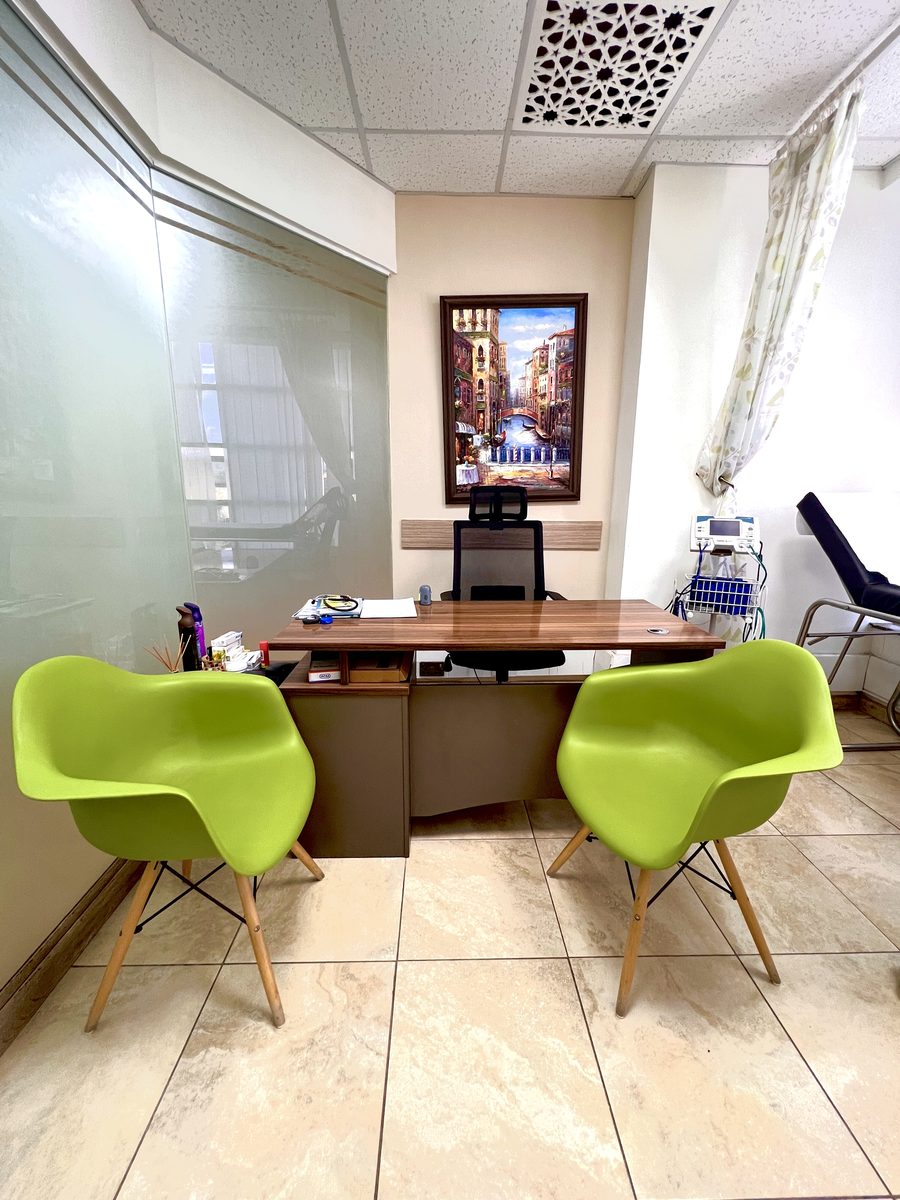
What is a fine needle aspiration (FNAC)?
A fine needle aspiration cytology — FNAC, often just called a thyroid biopsy — uses a very fine needle, finer than the ones used for a routine blood test, to draw a tiny sample of cells from a thyroid nodule. The sample is spread onto slides and examined under the microscope by a pathologist. It is the single most reliable way to find out whether a nodule is benign or needs closer attention.
At the clinic every FNAC is performed under live ultrasound guidance: the specialist watches the needle on screen in real time and places it exactly within the target. That precision is what makes the sample reliable and the procedure quick — and it's why an ultrasound-guided FNAC is a fundamentally better test than one done by feel alone.
Worth knowing
An ultrasound tells us how a nodule is built and how risky it looks; an FNAC tells us what its cells are. When the scan can't settle the question on its own, the FNAC does.
When is an FNAC recommended?
An FNAC is not needed for every nodule — only when the ultrasound picture calls for it. It is typically recommended in these situations.
TI-RADS grade and size
When a nodule's ACR TI-RADS category and its size cross the evidence-based threshold for sampling.
Suspicious features
Irregular margins, micro-calcifications or a markedly hypoechoic (very dark) solid nodule seen on the scan.
A nodule that has grown
Meaningful growth in a nodule already under surveillance, compared accurately against previous scans.
Abnormal neck lymph nodes
Lymph nodes with an abnormal appearance seen alongside a thyroid nodule.
Higher personal risk
A family history of thyroid cancer, or previous radiation to the head or neck — especially in childhood.
To settle uncertainty
When the picture is genuinely unclear and a cell sample is the fairest way to give you a firm answer.
The decision to biopsy always weighs the scan, the nodule's size and your history together — never a single feature in isolation.
Why most thyroid nodules don't need a biopsy
It's worth saying plainly: the great majority of thyroid nodules are completely benign, and most never need a needle at all.
Thyroid nodules are extremely common — by later life a large proportion of people have at least one, and only a small minority, roughly 5–10%, ever prove to be cancerous. Grading every nodule carefully with ACR TI-RADS is precisely what allows us to reassure most people without a biopsy, while making sure the few who genuinely need one are identified without delay.
If your nodule doesn't cross the size and risk thresholds, the right answer is reassurance and a sensible follow-up interval — not a biopsy. Recommending an FNAC only when the evidence calls for it is what spares most patients an unnecessary procedure.
The short version
- Most nodules are benign — only around 5–10% prove cancerous
- TI-RADS grading spares most people a needle altogether
- A biopsy is offered on evidence, not habit
- When observation is right, we say so — and set a clear review interval
Preparing for your FNAC
There is very little to do. An FNAC needs no fasting and no elaborate preparation — but a few things are worth checking beforehand.
Eat and drink normally
No fasting is needed. Take your usual medications and eat as you normally would before you come in.
Tell us about blood thinners
Let us know if you take aspirin, warfarin, clopidogrel or a newer anticoagulant, or if you have a bleeding tendency — we'll advise whether anything needs adjusting.
Bring your previous scans
Any earlier ultrasound images, blood-test results or reports help us target the right nodule and compare accurately.
Wear an open neckline
A top with a low or open neck makes the neck easy to access and keeps you comfortable.
Allow a little time
The sampling itself takes only minutes, but allow time for the scan, a chat about findings and a short rest afterwards.
What happens during an ultrasound-guided FNAC?
The procedure is quick, done in clinic, and finished in a single short visit. Here is exactly what to expect.
Settle & scan
You lie back comfortably with your neck gently extended. The specialist first scans the nodule to confirm the target and plan the safest path for the needle.
Clean & (if needed) numb
The skin is cleaned. A little local anaesthetic can be used if you'd like it, though the needle is so fine that many people don't need any.
The sample, under live guidance
Watching the needle on the ultrasound screen, the specialist passes the fine needle into the nodule and takes a small sample of cells. Each pass lasts only a few seconds.
A few gentle passes
Usually two to four passes are taken from different parts of the nodule to give the pathologist enough cells for a confident result.
Light pressure
A little pressure is held over the spot for a couple of minutes, then a small plaster is applied. That's it.
Home the same day
You rest briefly and go home the same day — most people return straight to their normal routine.
The whole appointment is usually over in well under an hour, and the sampling itself takes only minutes.
Is a thyroid FNAC painful?
This is the question almost everyone asks — and the honest answer is reassuring.
Because the needle used for an FNAC is very fine — thinner than the needle used to take a blood sample — most people find it far more comfortable than they expected. You'll feel a small scratch or a brief pressing sensation as the needle passes into the nodule, lasting only a few seconds per pass. It is not the ordeal many imagine.
Local anaesthetic is available if you'd prefer it, and the specialist talks you through each step as it happens. Afterwards you may have a little tenderness or a small bruise at the site for a day or two, easily settled with simple pain relief if needed.
What to expect
- A very fine needle — finer than a blood-test needle
- A brief scratch or pressure, a few seconds per pass
- Local anaesthetic available if you'd like it
- Mild tenderness or a small bruise for a day or two at most
Is thyroid FNAC safe?
Ultrasound-guided FNAC is one of the safest procedures in medicine — serious complications are very rare.
As with any procedure, we go through the small risks with you beforehand and answer every question before we begin.
Why it's so safe
- Live ultrasound lets the specialist see and avoid nearby blood vessels and structures throughout.
- The most common after-effect is minor — a little bruising or tenderness at the site that settles quickly.
- Serious complications are very rare; significant bleeding or infection is uncommon with a fine needle in trained hands.
- There is no ionising radiation involved at any stage.
- It does not cause a nodule to spread or worsen — a common and understandable worry that is not borne out by the evidence.
- Because it's ultrasound-guided, the sample is more reliable, which reduces the chance of needing a repeat.
The Bethesda System, in plain language
Your FNAC sample is reported using the Bethesda System — an international framework that sorts the result into one of six categories, each with a clear recommendation. It turns a microscope finding into a plain next step.
I — Non-diagnostic
Not enough cells for a firm answer. The usual next step is simply to repeat the FNAC under ultrasound.
II — Benign
The reassuring and by far the most common result. Routine ultrasound surveillance is all that's needed.
III — Atypia (AUS)
A few cells look slightly unusual but aren't clearly abnormal. Options are a repeat FNAC, molecular testing or a core biopsy.
IV — Follicular neoplasm
A pattern that can't be fully sorted on cells alone. Usually leads to a diagnostic procedure or molecular testing to clarify.
V — Suspicious for malignancy
Strongly suggestive of cancer, though not fully confirmed on cytology. Surgery is generally recommended.
VI — Malignant
A clear diagnosis of thyroid cancer, allowing a definitive treatment plan to be made without delay.
Each category also carries an approximate cancer-risk range, which — with your scan and history — guides whether the next step is surveillance, a repeat sample, or treatment. Most results fall into the benign category. (Category risk figures are approximate ranges from published series, pending clinician sign-off.)
What happens after your FNAC results?
Your result doesn't sit in a vacuum — it's read alongside your scan and your history to agree a clear plan. Here's where each path can lead.
Reassurance & surveillance
A benign result means the nodule is followed with periodic ultrasound rather than treated — the outcome for most people.
Learn more →
A repeat or core biopsy
A non-diagnostic or atypical result may simply need repeating, or a core needle biopsy to gather more tissue.
Learn more →
Radiofrequency ablation (RFA)
A benign nodule that's large or symptomatic can be shrunk from within — no incision, no scar, home the same day.
Learn more →
Surgery, when it's right
A suspicious or malignant result is discussed fully, and referral for surgery arranged with a clear, supported plan.
Learn more →
Whatever the result, you leave with it explained in plain language and a next step already agreed — never a letter days later with no context.
Why accurate FNAC matters
An FNAC is only as good as the hands that take it and the eyes that read it. A specialist-performed, ultrasound-guided sample is a different test from one done blind.
A confident, accurate FNAC spares many patients unnecessary worry — and makes sure the few who need treatment reach it without delay.
- The sample is taken under live ultrasound, so the needle is placed exactly within the target — not near it.
- The same specialist who scanned the nodule takes the sample, so nothing is lost between imaging and biopsy.
- Enough passes are taken from the right parts of the nodule to give the pathologist a confident, diagnostic sample.
- A well-taken sample reduces non-diagnostic results — and the need to come back for a repeat.
- The result is interpreted with your full clinical picture, not read in isolation.
- Where the next step is a procedure — RFA, aspiration or referral — it can be discussed and arranged in the same clinic.
Thyroid FNAC — your questions answered
Far less than most people expect. The needle is very fine — thinner than a blood-test needle — so you feel only a brief scratch or pressure for a few seconds per pass. Local anaesthetic is available if you'd prefer it, and any tenderness afterwards is mild and short-lived.
The sampling itself takes only minutes. Allow a little under an hour for the whole visit — the scan, a few gentle needle passes, a chat about the findings, and a short rest before you go home.
No fasting and no special preparation. Eat and take your usual medications as normal. Do tell us in advance if you take blood thinners or have a bleeding tendency, and wear a top with an open neckline.
Yes — it's one of the safest procedures in medicine. Done under live ultrasound, the specialist sees and avoids nearby structures. The commonest after-effect is minor bruising; serious complications are very rare, and there's no radiation.
No. This is a common and understandable worry, but the evidence is clear that a fine-needle sample does not cause a nodule to spread or worsen. The needle is far too fine for that.
Usually not. We grade every nodule with ACR TI-RADS, and an FNAC is recommended only when a nodule's features and size cross evidence-based thresholds. Most nodules never need one.
It's the international framework used to report thyroid FNAC results. It sorts your sample into one of six categories — from benign to malignant — each with a clear recommended next step and an approximate cancer-risk range.
It's the reassuring and most common result: the cells show no sign of cancer. The nodule is then simply followed with periodic ultrasound rather than treated, and no further action is usually needed.
It means there weren't quite enough cells for a firm answer — it does not mean anything is wrong. The usual next step is simply to repeat the FNAC under ultrasound, which most often gives a clear result.
Cytology results typically take a few days, as the pathologist examines the slides carefully. We contact you to explain the result in plain language and agree the next step together.
An FNAC samples individual cells with a very fine needle; a core needle biopsy takes a small cylinder of tissue with a slightly larger one. FNAC is the usual first test; a core biopsy is used mainly when FNAC results are repeatedly inconclusive.
No. Most biopsies return a benign result and lead to reassurance, not surgery. Even where a nodule is benign but troublesome, options like radiofrequency ablation can often avoid an operation altogether.
Not always — you're welcome to enquire directly, and we'll advise whether a biopsy is appropriate. If you do have a referral, previous scans or blood results, bring them along; they help us interpret accurately.
Yes. Patients travel to us from across East Africa. Send your details or previous scans first on WhatsApp; we'll advise on what to bring and can often combine your scan, biopsy and any treatment discussion into a single short visit.
A biopsy you can build decisions on
- Consultant endocrinologist with dedicated thyroidology expertise
- Every FNAC performed under live, high-frequency ultrasound guidance
- Sampling and interpretation aligned with ACR TI-RADS and the Bethesda system
- Results explained to you at the visit, in plain language
- FNAC, core biopsy, cyst aspiration and RFA available under one roof
- Structured reports your referring doctor can act on immediately
How your FNAC works
Scan
A specialist ultrasound confirms the target and whether a biopsy is truly needed.
Sample
A quick, ultrasound-guided FNAC — a few gentle passes with a fine needle.
Report
Your result graded on the Bethesda system by a pathologist.
Plan
A clear next step agreed with you — reassure, repeat, treat or refer.
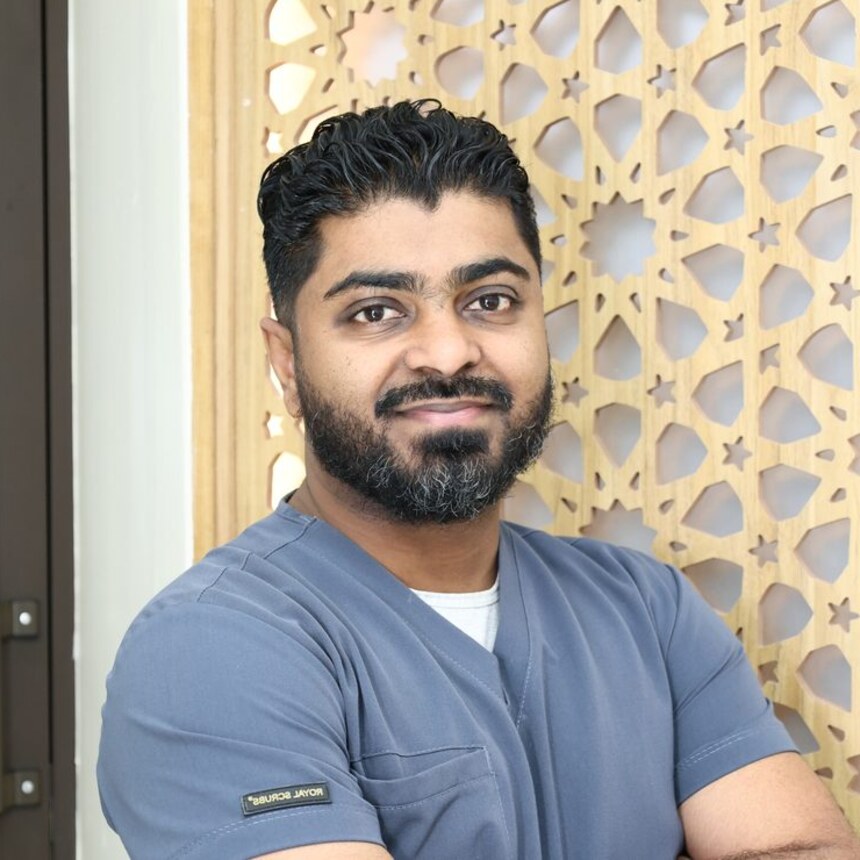
Dr. Ebrahim Yusuf Ebrahim
Consultant Physician · Interventional Endocrinologist & Diabetologist
One of the first doctors in Kenya to bring minimally invasive thermal ablation — microwave and radiofrequency — to the treatment of thyroid nodules and goitre, sparing patients from surgery. Every thyroid FNAC at the clinic is performed under live ultrasound by him personally — so the scan, the sample and its interpretation are never separated.
- MMed, Internal Medicine — University of Nairobi
- PG Diploma, Endocrinology & Diabetes — Royal College of Physicians, Ireland
- Fellowship, Endocrinology & Diabetes — University of Alexandria, Egypt
- Certificate in Interventional Thyroidology — Mumbai, India
- Special focus: thermal ablation (RFA & microwave) for thyroid nodules
Refer a patient for a thyroid FNAC
We welcome FNAC and biopsy referrals from ENT surgeons, endocrinologists, radiologists and family physicians across the region. Your patient receives a consultant-performed, ultrasound-guided sample and a structured Bethesda report — and comes back to you with a clear plan.
Consultant-performed sampling
Every FNAC is scanned and sampled by the specialist under live ultrasound, with a structured Bethesda-reported result.
One-stop assessment
Where indicated, ultrasound, FNAC and a treatment discussion can happen at the same visit — sparing your patient repeat trips.
Simple to refer
Share the clinical details or the patient's previous ultrasound on WhatsApp or email. We sample promptly and report back clearly.
Your patient stays yours
We provide the biopsy and, where needed, the procedure — and return your patient to you with a full report. Ongoing care stays in your hands.
Book your thyroid FNAC assessment
Booking a thyroid FNAC is simple, and you don't always need a referral letter. Message us on WhatsApp or book online, and we'll find a time that suits you — often within a few days.
Bring any previous thyroid scans, blood-test results or biopsy reports if you have them; they help us target the right nodule and compare accurately. Not sure whether you even need a biopsy? Send us your scan on WhatsApp and we'll advise honestly — no obligation.
Where to find us
Doctors Park, 3rd Floor, 3rd Parklands Avenue, Nairobi
+254 706 651 416
+254 711 781 299
Languages: English · Kiswahili · Somali
Medically reviewed by Dr. Ebrahim Yusuf Ebrahim, Consultant Physician & Interventional Endocrinologist. Clinical figures are ranges from peer-reviewed studies, provided for general education — individual results vary and are confirmed at your review.
Not sure if you need a biopsy? Ask us first
Send us your thyroid scan on WhatsApp and a specialist will tell you honestly whether an FNAC is needed — with no obligation. Or book your assessment online.
