
Thyroid Nodules, Cancer & RFA: 20 Questions Answered
In this free patient webinar, consultant endocrinologist Dr Ebrahim Yusuf answers the twenty questions patients ask most about thyroid nodules, goitre, thyroid cancer and radiofrequency ablation (RFA) — in plain language, in about an hour.
Most thyroid nodules are not cancer. This talk walks through what a thyroid nodule is, how common nodules are, how we investigate them with thyroid ultrasound and a biopsy, what thyroid cancer is and how it is treated, and how radiofrequency ablation (RFA) can shrink selected benign nodules and goitre without surgery — and when you should get your thyroid checked.
Prefer to see outcomes first? Read our patient success stories — real before-and-after RFA results from Nairobi.
Presented by Dr. Ebrahim Yusuf Ebrahim, Consultant Physician & Interventional Endocrinologist · About 60 minutes · 20 questions
Full talk transcript
Lightly edited for readability from the live webinar on 30 September 2026. Presented by Dr Ebrahim Yusuf.
Part 1 — The thyroid, nodules & goitre
Do I have a thyroid? People ask me this all the time — often meaning it as a disease. But everyone has a thyroid. It is a small, butterfly-shaped gland at the front of the neck, just below the Adam's apple. Its hormones travel throughout the body and affect almost every organ: mood, memory and concentration; heart rate and blood pressure; digestion, bowel habit and weight; fluid and salt balance; and menstruation and fertility. It is a small organ, but a very important one.
What is a thyroid nodule? A nodule is a lump, or an overgrowth of tissue, within the thyroid. There are several types: cystic nodules contain fluid; solid nodules are made of thyroid tissue; and mixed nodules contain both. You may have one nodule or several. The key thing to remember is that not all nodules are cancer.
How common are thyroid nodules? They are very common. Only a few can be felt or seen — about 5%. On ultrasound, some studies find nodules in up to half of people; so out of twenty people here, ten might have one. Most people diagnosed are women — roughly fifteen of those twenty. Ultrasound is the most sensitive way to find a nodule.
Why do thyroid nodules develop? Colloid nodules — which contain fluid — are the most common. You may also have a multinodular goitre, a nodule that turns out to be a cancer, or nodules from inflammation, as in Hashimoto's thyroiditis or Graves' disease.
What is a goitre, and how is it different from a nodule? People ask whether they have a goitre or a nodule — and often the answer is both. Goitre is simply an umbrella term meaning the thyroid is enlarged. It may be enlarged by a single nodule, by multiple nodules (a multinodular goitre), or diffusely with no distinct nodules, as in Hashimoto's thyroiditis or Graves' disease. With a nodule, the thyroid may work normally, or it may over-produce hormone — a toxic adenoma.
Do nodules or goitre cause symptoms? Often there are no symptoms at all. Many nodules are found by chance — on a scan done for another reason, or when a spouse notices the neck looks fuller. Symptoms tend to appear as a nodule enlarges: a visible swelling or cosmetic concern, a feeling of a lump or pressure, difficulty swallowing, a hoarse or changed voice from pressure on the nerves, or difficulty breathing if it presses on the windpipe.
Part 2 — Investigating a nodule
How do you diagnose a thyroid nodule? Usually the nodule has already been seen on a scan. From there it is important to go through a proper assessment. First a blood test, to see whether the thyroid is over- or under-producing hormone. Then a thyroid ultrasound, where we carry out a risk assessment — does this nodule look suspicious? That guides whether a biopsy is needed: a fine-needle aspiration, or a core-needle biopsy, which takes a little more tissue.
What does a thyroid ultrasound actually tell us? We look at the nodule's composition — solid, or containing fluid? Its brightness, or echogenicity — is it darker than normal thyroid? Its shape — taller or wider? Its margins — smooth or ragged? Any bright spots, which we call calcifications. The blood flow within it and the surrounding tissue. And we check the neck for any lymph nodes that might point to something more serious.
What makes a nodule look suspicious? A simple nodule has smooth, well-defined edges. Ragged or irregular edges raise suspicion a little. A nodule taller than it is wide raises it further. Bright spots begin to point towards something more suspicious, such as cancer. No single feature is decisive — it is the combination that matters.
Does every thyroid nodule need a biopsy? During the ultrasound we place each nodule into a scoring system — the ACR TI-RADS score, from the American College of Radiology. It runs from TR1 (benign) and TR2 (not suspicious), through TR3 (mildly suspicious, which may or may not need a biopsy), to TR4 and TR5, which usually do. For TR1 and TR2 we usually don't biopsy; we follow up with a repeat ultrasound, or consider a minimally invasive treatment.
How accurate is a thyroid biopsy? A biopsy does not stand alone — thyroid nodules need the ultrasound, the examination, the history and the biopsy together. A fine-needle aspiration (FNAC) collects cells to examine under the microscope; a core-needle biopsy takes a slightly larger piece of tissue. Results may be non-diagnostic (often when a cystic nodule yields only fluid), benign, intermediate, suspicious, or malignant. Both the ultrasound and the biopsy have limitations.
What are the chances a nodule is cancer? Roughly 5 out of 100 thyroid nodules are cancer. The risk varies with age, sex, family history, previous radiation to the neck — for example after treatment for head and neck tumours — and how the nodule looks on ultrasound. My job is not to assume every nodule is cancer, but to find the small minority that need closer attention.
Part 3 — Thyroid cancer
What is thyroid cancer? Thyroid cancer starts in thyroid cells, and it is not a single disease. Papillary thyroid cancer is the most common; it usually grows slowly, has an excellent outlook, and can often be cured. Follicular cancer is less common but also has good outcomes. Medullary thyroid cancer is rare, can run in families, and may occur with other tumours. The rarest and most aggressive is anaplastic thyroid cancer.
How is thyroid cancer treated? It starts with making the correct diagnosis — in fact over 90% of nodules removed at surgery turn out not to be cancer. We determine the type, the size, and whether it has spread. Treatment usually means removing the thyroid, followed in some papillary and follicular cancers by radioactive iodine, and then keeping the TSH a little lower than normal, which helps prevent the cancer from growing.
Part 4 — Radiofrequency ablation (RFA)
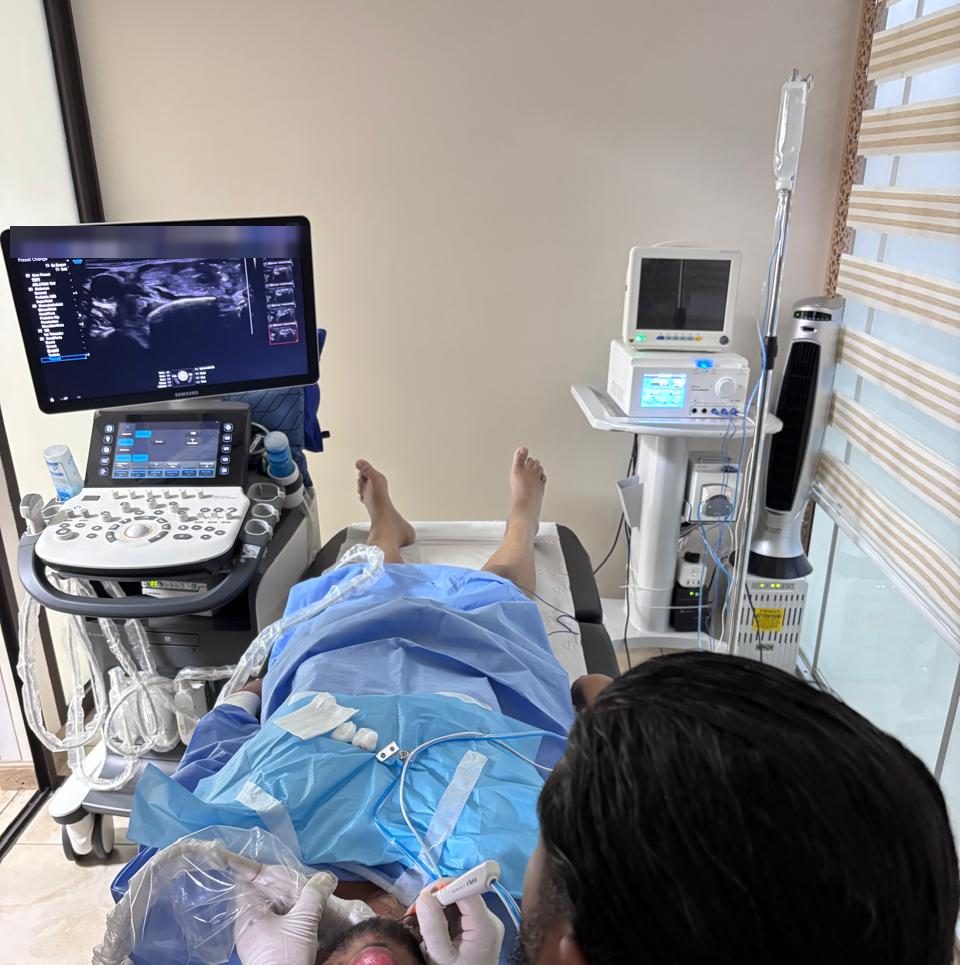
What is radiofrequency ablation (RFA)? For a long time surgery was the only option; now there is another. Radiofrequency ablation is a minimally invasive treatment that has been available for over 26 years in South Korea and more than 10 years in Egypt, among other countries, and is now being offered in Kenya. Under ultrasound guidance, a thin electrode delivers a controlled amount of heat into the nodule; the cells die and the body gradually clears them, and the nodule shrinks. The aim is not to remove the thyroid, but to relieve symptoms — cosmetic concern, pressure, difficulty breathing, a voice change — while preserving the gland. It is used mainly for nodules that are not cancer, though it has recently been approved for certain selected papillary thyroid cancers.
How does RFA make a nodule shrink? It is not cutting the nodule out. The heat treats the tissue, and the body slowly breaks it down and clears it over the following months — with up to 90–95% reduction in size by around three, six and twelve months.
Am I a candidate for RFA? First we confirm the nodule is not cancer, using fine-needle aspiration and core-needle biopsy. Good candidates have pressure in the neck, difficulty swallowing, or a cosmetic concern from an enlarged nodule; a nodule that is progressively enlarging; or simply a wish to avoid a cut, general anaesthesia, a hospital stay and the recovery of surgery.
Is RFA safe? Every procedure carries risk, but with radiofrequency ablation the risk of injury to nearby structures is under 2%, reduced further by careful patient selection and an experienced operator. We work under ultrasound guidance to avoid the airway, the nerves to the vocal cords and the blood vessels, and we can inject fluid to separate the nodule from the surrounding structures — making the procedure much safer. The goal is shrinkage, not removal.
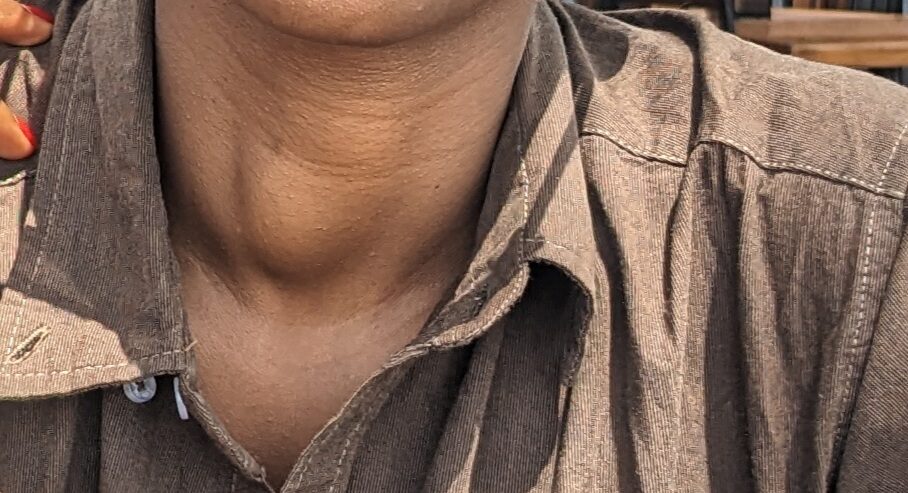
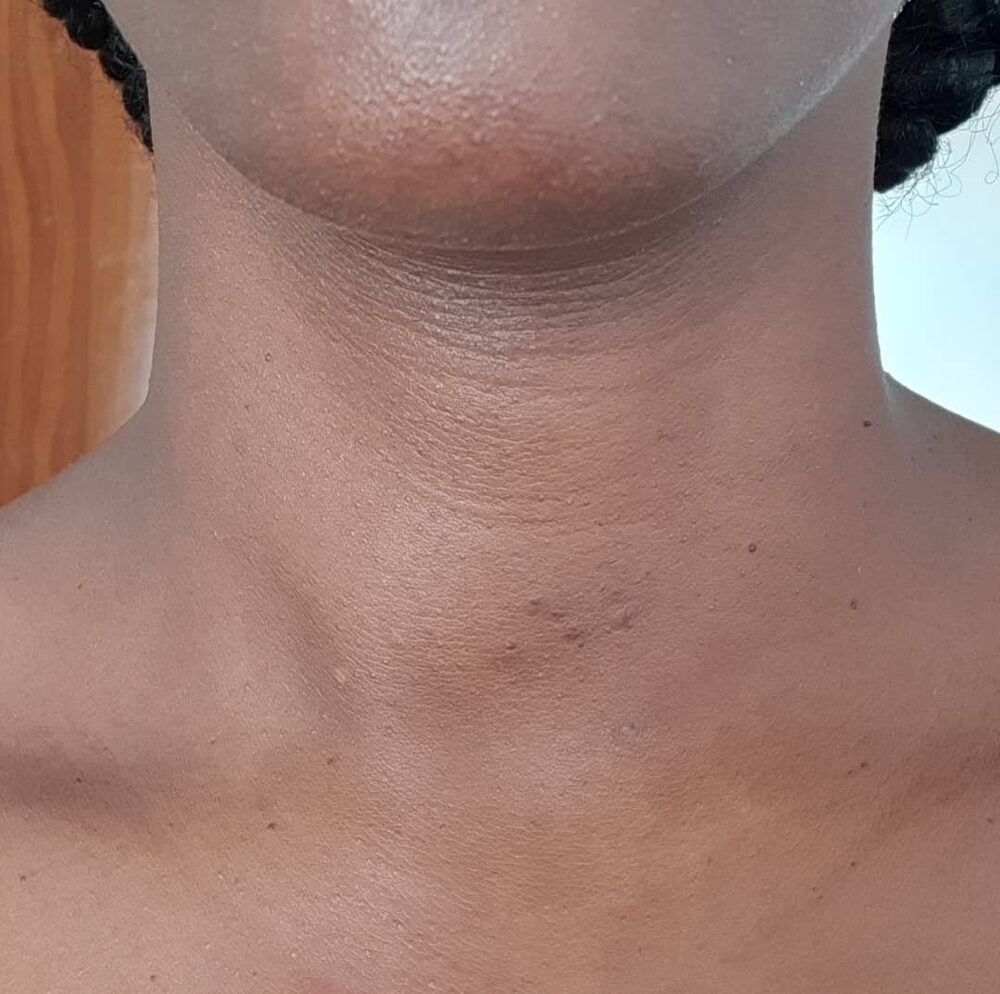
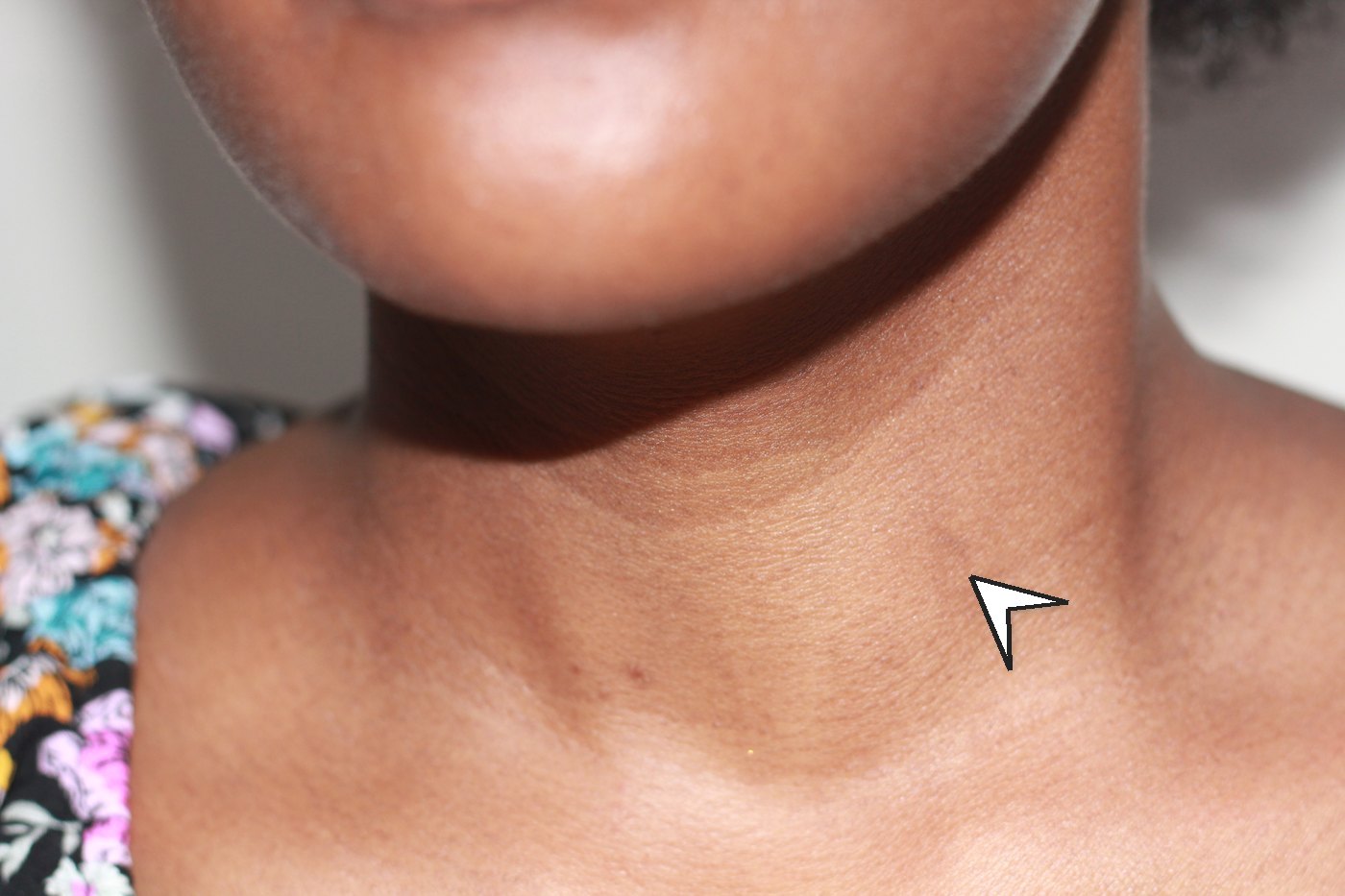
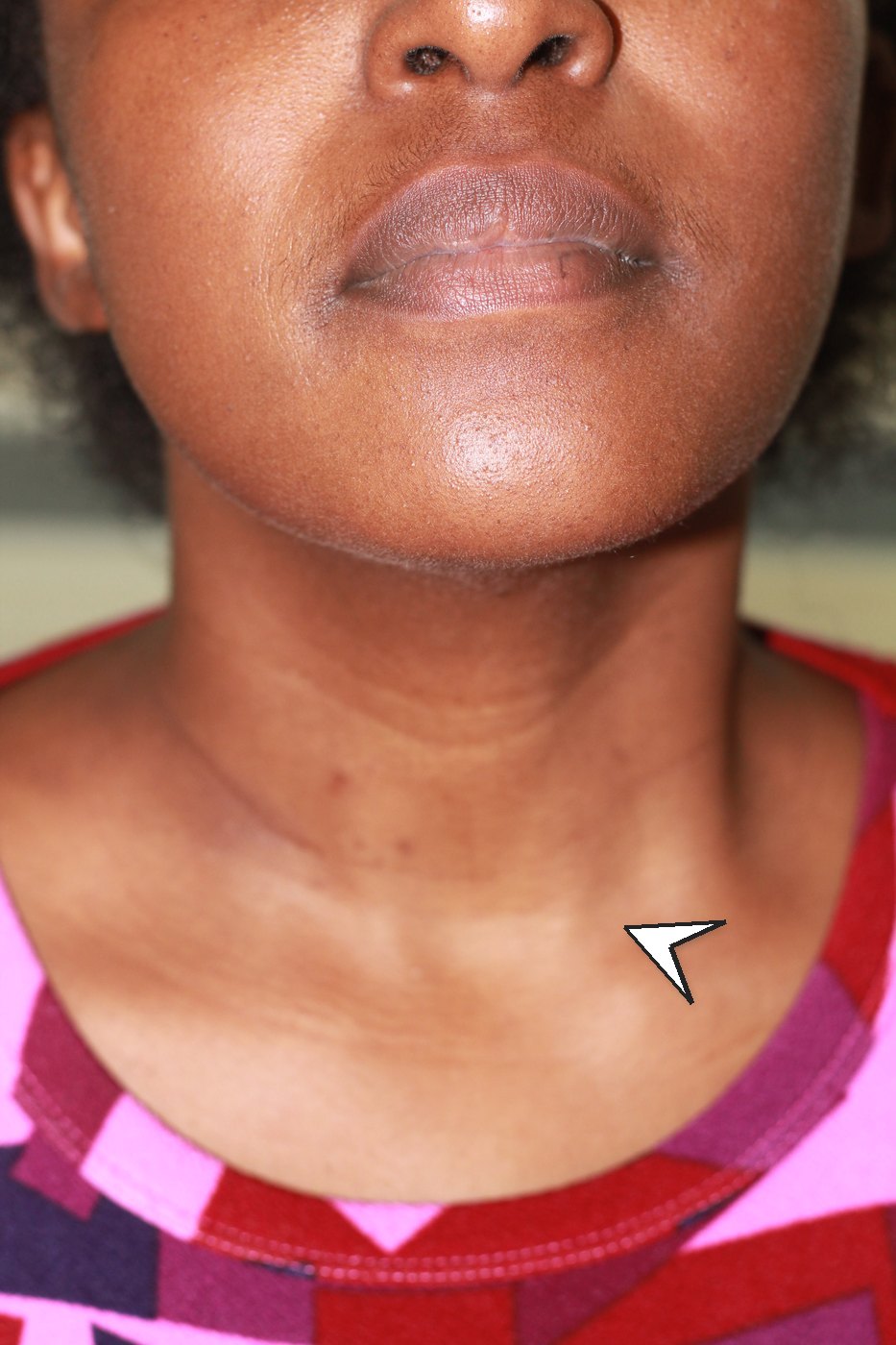
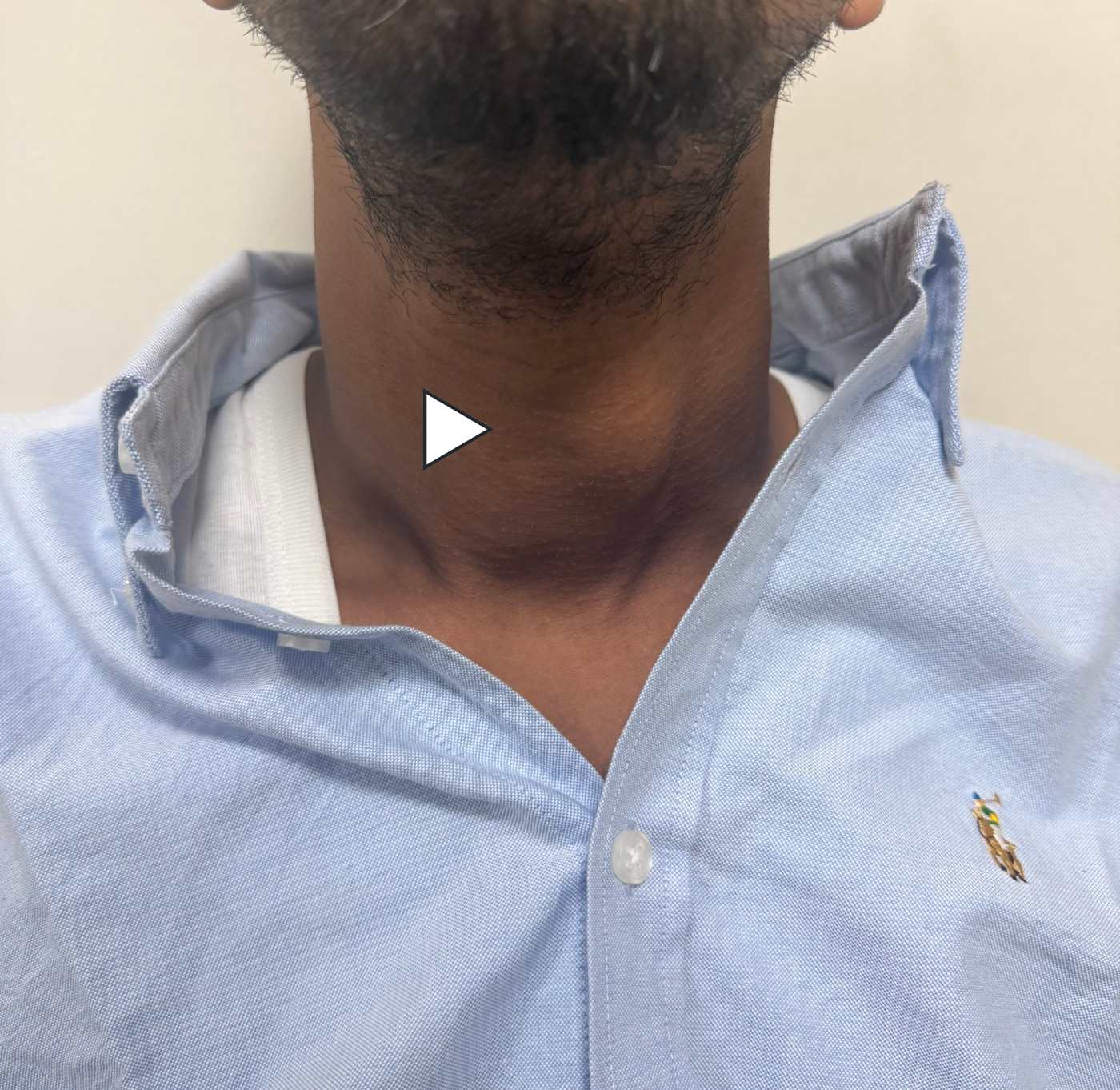
Successful cases: before and after RFA In our own patients you can see the difference: a man with a thyroid nodule, and the effect a month later; a young woman with a nodule on the side of the neck; and others — each keeping their thyroid and going home the same day. Results do vary, and not every nodule shrinks this much.
Part 5 — When to get checked
When should you see a doctor about your thyroid? If you notice a thyroid nodule, or someone points one out, the next step is to see a doctor and have an ultrasound and risk assessment. Get your neck checked if you have difficulty swallowing or breathing, a changing voice, abnormal thyroid blood tests, or a family history of thyroid cancer. The message tonight: if you have a thyroid nodule, don't panic — but don't ignore it either. Get it assessed properly, and treated.
What this talk covers
Twenty questions in five parts:
- The gland, nodules & goitre
- Investigating a nodule
- Thyroid cancer
- Radiofrequency ablation (RFA)
- When to get checked
Questions from the audience
Real questions patients asked during the live webinar, with Dr Ebrahim's answers — shared for general education, not personal medical advice. For advice about your own thyroid, send us your reports for a specialist review.
I've been diagnosed with a parathyroid adenoma and advised surgery. Where should I have it done?
First, the parathyroids are four tiny glands behind the thyroid that control calcium. A parathyroid adenoma means one has enlarged and is making too much parathyroid hormone, which raises your calcium. Not everyone needs surgery — we decide based on your calcium level, your age, and whether it is affecting your kidneys or bones (osteoporosis). There is no emergency: the first step is to control the calcium, which then gives you time to decide. The operation is done in Kenya, but it is delicate (removing only the enlarged gland from behind the thyroid), so choose an experienced surgeon — as a rule of thumb, a good thyroid or parathyroid surgeon does at least 20 such operations a year. Start by seeing an endocrinologist to confirm the diagnosis and get your calcium and kidney function in order.
What happens if someone is wrongly diagnosed or given the wrong treatment? Can it be corrected?
Yes, it can be corrected. Thyroid disease used to sit under general internal medicine, then endocrinology, and now there are sub-specialists who focus specifically on the thyroid — so seeing the right specialist for your condition matters. No one should rush you into surgery. Before any procedure you should understand how it will be done, what to expect and the possible complications. Getting the full picture, and a specialist review, is how a misdiagnosis gets put right.
I was treated for hypothyroidism on levothyroxine, but now I have hyperthyroid symptoms. Is that a misdiagnosis?
Not necessarily. Hashimoto's thyroiditis — the commonest cause of hypothyroidism here — can begin with a temporary overactive (hyperthyroid) phase as stored hormone is released, so your tests can look overactive for a while before becoming underactive. Occasionally there is also an overlap between Hashimoto's and Graves' disease. The key is to know your starting thyroid function tests and to recheck TSH, free T4 and free T3 — remembering TSH can take about 4–6 weeks to settle after a change. Thyroid antibodies and an ultrasound help clarify what is going on, and your dose may simply have been higher than you needed.
After a partial thyroidectomy, a nodule has come back on the other side. Why?
A partial thyroidectomy is always a balance of benefits and risks, guided by the ultrasound beforehand. As long as you still have thyroid tissue, you can form a new nodule — but thyroid nodules are slow-growing, usually over 5 to 10 years. If the remaining side already has a nodule likely to grow, and because going back in through scar tissue (fibrosis) is harder, some surgeons advise removing the whole thyroid the first time. It should be discussed and planned on your ultrasound findings.
I'm on levothyroxine but my weight won't shift and my hair is falling out. Why?
Weight is multifactorial — the thyroid contributes, but it is rarely the whole story. It is worth looking at diet and nutrients (for example zinc and magnesium), overall health, and, for hair, female-pattern hair loss linked to other hormones. So this needs a holistic approach alongside getting your thyroid levels right, rather than expecting the thyroid medication alone to fix it.
I have thyroid eye disease. How is it treated?
Thyroid eye disease comes from high thyroid-receptor antibodies — the same ones involved in Graves' disease — which act behind the eyes and push them forward, with dryness and grittiness. It must be treated early, in the active phase: get the thyroid controlled quickly and, usually, a course of steroids (around 12 weeks) to reduce the inflammation. Once it is advanced it is very hard to reverse. In Kenya we treat it with steroids and immunosuppressants; surgery (orbital decompression) is reserved for when vision is threatened, not for cosmetic reasons — most eye surgeons will not operate on functioning eyes.
I'm 27 with a small neck swelling and keep being told to wait six months. If it's removed, will it affect my ability to have children?
Removing part of the thyroid does not affect fertility, as long as your thyroid levels are normal (TSH under about 2.5), you have no other antibodies or risk factors, and there are no structural issues with your reproductive organs. Even removing the whole thyroid, if you are well controlled on levothyroxine, does not cause infertility. If you are planning a pregnancy, work closely with an endocrinologist so your levels are optimised going in.
Is leg swelling connected to the thyroid?
Usually not. The commonest cause is venous insufficiency — the leg veins struggling to pump blood back up, so fluid pools, often with visible veins and swelling that is worse after standing and better after lying down overnight. Swelling in just one leg should be checked with a venous ultrasound to rule out a clot. So get it assessed rather than assuming it is the thyroid.
I have tingling and burning in my legs and feet, and I'm hypothyroid. Is that the thyroid?
The first thing to check is your blood sugar — diabetes is the commonest cause of tingling and burning in the feet. If you are hypothyroid and carrying extra weight, nerve compression in the back can also cause it. So it is not necessarily the thyroid itself, and it needs proper assessment.
Is there a link between birth control and thyroid problems?
Oral contraceptives do not cause an over- or under-active thyroid, but they do raise the thyroid-binding proteins that carry thyroid hormone in the blood, so your measured levels can shift. They also carry a higher risk of blood clots in the legs. So they can affect the numbers we see, without being a cause of thyroid disease itself.
The evidence behind RFA
~50%
Typical nodule shrinkage within about six months in published studies of benign nodules.
up to ~90%
Volume reduction reported over several years of follow-up in longer-term studies.
2018
Year a dedicated thyroid RFA device received FDA clearance; the technique has been used across Korea & Europe for over a decade.
See these results in real patients — before-and-after success stories →
References
- Jung SL, Baek JH, et al. Efficacy and safety of radiofrequency ablation for benign thyroid nodules: a prospective multicenter study. Korean J Radiol, 2018.
- Deandrea M, et al. Long-term efficacy of a single session of RFA for benign thyroid nodules. J Clin Endocrinol Metab, 2019.
- Baek JH, et al. Complications encountered in the treatment of benign thyroid nodules with US-guided RFA: a multicenter study. Radiology, 2012.
- Citations to be verified and finalised by our clinicians before publication.
Explore next
Thyroid nodules
What a nodule is and when it needs treatment.
Learn more →Goitre
An enlarged thyroid — causes, symptoms and options.
Learn more →Thyroid cancer
The types, outlook and how it is treated.
Learn more →Thyroid Nodule RFA
Non-surgical treatment, candidacy, cost and results.
See RFA →Thyroid ultrasound
The key test for characterising a nodule.
Learn more →Before & after results
Real, consented RFA results from Nairobi patients.
See results →Medically reviewed by Dr. Ebrahim Yusuf Ebrahim, Consultant Physician & Interventional Endocrinologist. Clinical figures are ranges from peer-reviewed studies, provided for general education — individual results vary and are confirmed at your review.
Have a thyroid nodule or neck lump?
Send us your ultrasound and biopsy on WhatsApp for a specialist review — a reply within 24 hours.
