
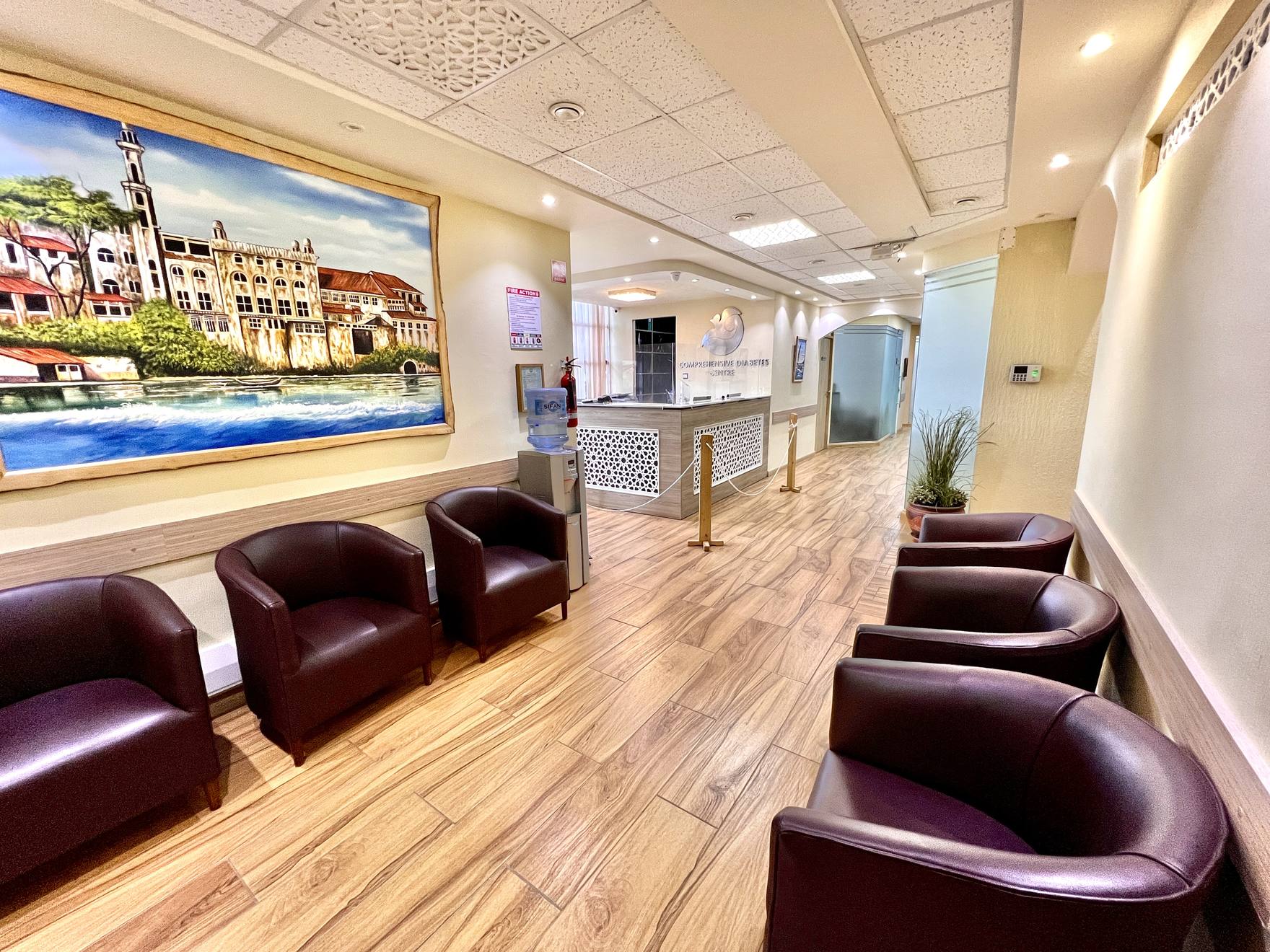
One specialist. One focus: your thyroid.
Whether you've discovered a thyroid lump, been diagnosed with thyroid disease, or are looking for expert treatment, our specialist clinic provides comprehensive thyroid care using international standards and the latest minimally invasive technologies.
- Consultant Endocrinologist
- Internationally trained thyroidologist
- Thyroid ultrasound specialists
- Minimally invasive thyroid treatments
Finding a thyroid lump can be frightening
Many patients arrive feeling overwhelmed after noticing a swelling in the neck, receiving abnormal blood-test results, or being told they may need thyroid surgery. Our role is to help you understand your condition, reach an accurate diagnosis, and guide you towards the treatment that is right for you.
- Most thyroid conditions are treatable.
- Many thyroid nodules are not cancer.
- Many patients do not need surgery.
You will never be rushed into treatment. You will always understand your options.
A clinic built entirely around the thyroid
Focused expertise, international training and modern technology — in one place, for one gland.
Specialist care
A dedicated, thyroid-focused practice — not a general clinic that also sees thyroids. Your thyroid is the whole point.
International training
International fellowship training in endocrinology and interventional thyroidology, brought home to Nairobi.
Modern technology
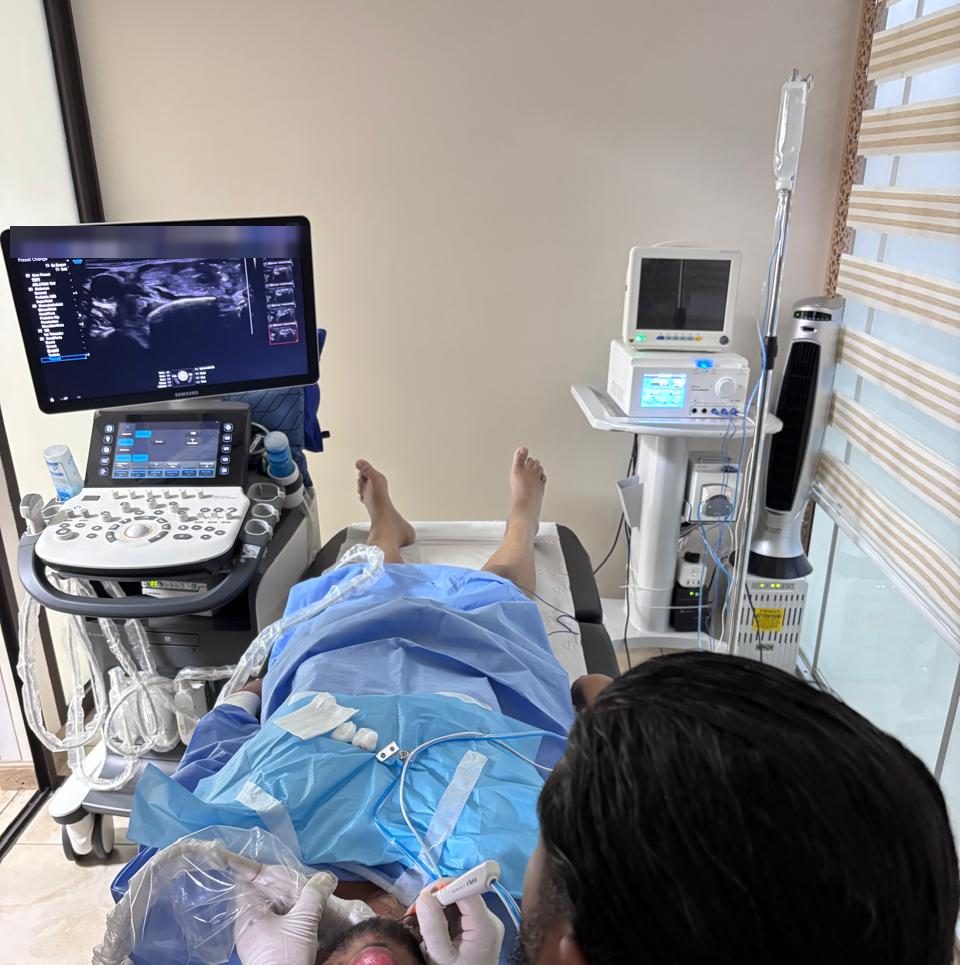
High-resolution thyroid ultrasound, radiofrequency ablation (RFA) and core-needle biopsy — under one roof.
Evidence based
Care guided by international standards — ATA, ETA, AACE and the ACR TI-RADS ultrasound system.
Personalised care
Every patient leaves with an individual management plan built around their scan, their bloods and their goals.
A complete thyroid centre
Diagnosis, monitoring, medical treatment, minimally invasive procedures and long-term follow-up — start to finish.
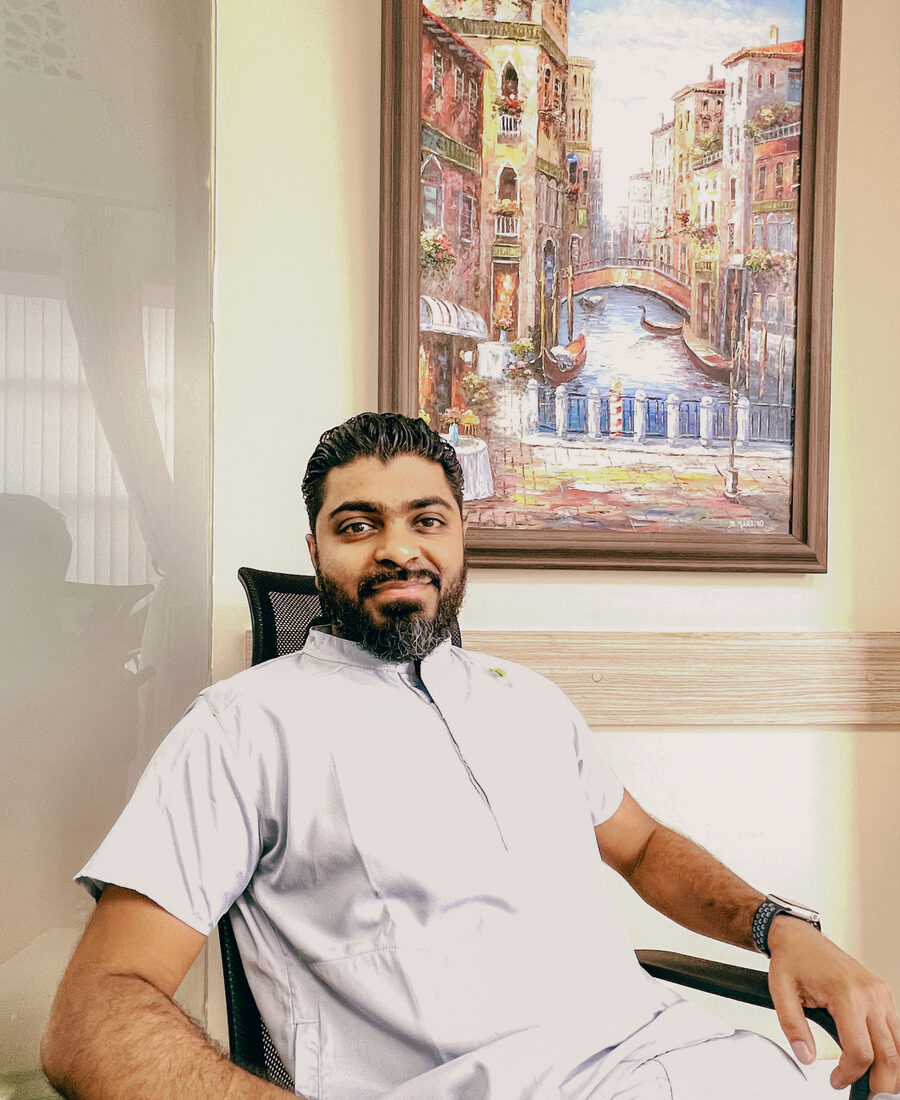
Dr. Ebrahim Yusuf Ebrahim
Consultant Endocrinologist & Thyroidologist
Some patients need reassurance. Others need long-term medical management. A few need advanced, minimally invasive procedures. Dr. Ebrahim Yusuf is a consultant physician and interventional endocrinologist with a special focus on diagnosing and treating thyroid disease. After specialist training in internal medicine, diabetes and endocrinology, he pursued advanced international training in interventional thyroidology — including radiofrequency ablation (RFA) and advanced thyroid ultrasound — and was among the first in Kenya to bring thermal ablation of thyroid nodules to patients. His approach combines evidence-based medicine with unhurried, compassionate care, so that every patient understands their diagnosis and every treatment option before deciding.
Medical school
Qualified in medicine and trained as a physician.
Internal medicine
MMed, Internal Medicine — University of Nairobi.
Endocrinology & diabetes
PG Diploma (Royal College of Physicians, Ireland) and Fellowship (University of Alexandria, Egypt).
Interventional thyroidology
Certificate in Interventional Thyroidology — Mumbai, India; thermal ablation of thyroid nodules.
Present day
Leading a dedicated thyroid centre in Nairobi, caring for patients from across East Africa.
Exactly what happens, step by step
No uncertainty. Here is the path from your first symptom to being fully looked after.
Symptoms
You notice a neck swelling, an abnormal blood test, or symptoms like fatigue, weight change or a racing heart.
Consultation
An unhurried specialist consultation to understand your history, concerns and goals.
Thyroid ultrasound
A high-resolution scan of the gland and any nodules, graded with the ACR TI-RADS system.
Blood tests
Thyroid function (TSH, free T4/T3) and antibodies where relevant, to see how the gland is working.
Diagnosis
Your results are explained clearly and put together into one accurate picture of what is going on.
Treatment plan
A personalised plan — reassurance and monitoring, medication, or a minimally invasive procedure.
Follow-up
Structured review to confirm you are on track, with remote follow-up for patients who travelled to us.
Find your thyroid condition
From nodules and goitre to autoimmune and overactive thyroid disease — explained clearly, treated expertly. Swipe through, or see the full list.
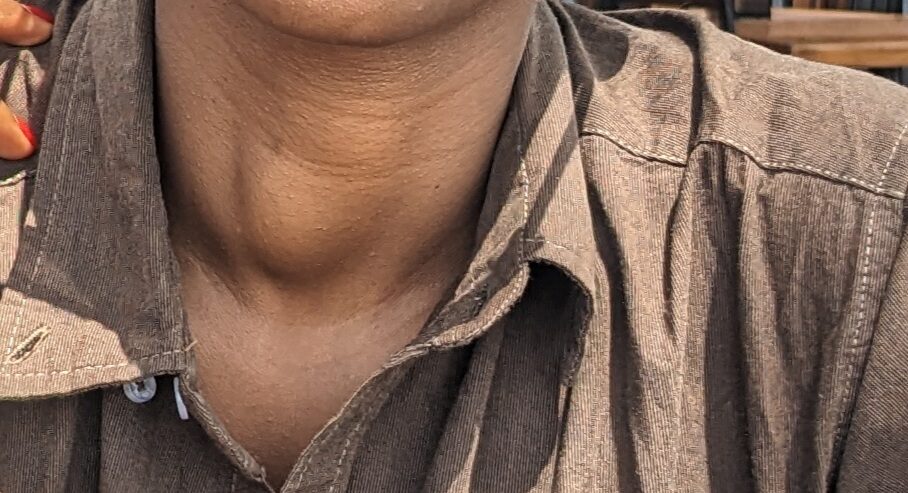
Thyroid nodules
Lumps in the thyroid. Most are benign — an ultrasound and, if needed, a biopsy tell us for sure.
Goitre
An enlarged thyroid or neck swelling. We find the cause and treat it — often without surgery.
Hypothyroidism
An underactive thyroid causing fatigue, weight gain and feeling cold. Very treatable.
Hyperthyroidism
An overactive thyroid causing a racing heart, weight loss and anxiety. We find the cause first.
Graves' disease
The commonest cause of an overactive thyroid — an autoimmune condition we can control.
Hashimoto's thyroiditis
The commonest cause of an underactive thyroid — autoimmune inflammation of the gland.
Thyroid cancer
Uncommon and, when found, usually very treatable. Comprehensive diagnosis-to-follow-up care.
Thyroiditis
Inflammation of the thyroid — which can make it temporarily overactive then underactive.
Thyroid eye disease
Eye changes linked to thyroid autoimmunity — assessed, staged and treated in good time.
Toxic thyroid adenoma
A single overactive nodule making too much hormone — often suitable for RFA or radioiodine.
Toxic multinodular goitre
Several overactive nodules in an enlarged gland — we tailor treatment to you.
Subclinical thyroid disease
Borderline blood results with few or no symptoms. When to treat, and when to simply watch.
Everything your thyroid needs, under one roof
Accurate diagnosis and the full range of treatment — from a simple scan to advanced, minimally invasive procedures.

Thyroid ultrasound
High-resolution imaging of the gland and nodules, graded with ACR TI-RADS.
Learn more
Thyroid blood tests
TSH, free T4/T3 and antibodies — how your thyroid is actually working.
Learn more
Fine needle aspiration
A quick, low-risk biopsy to check whether a nodule is benign.
Learn more
Core needle biopsy
A larger tissue sample when a fine-needle result is unclear.
Learn more
Radiofrequency ablation
Shrink a benign nodule with targeted heat — no surgery, no scar.
Learn more
Radioiodine therapy
A definitive treatment for selected overactive thyroid conditions.
Learn more
Thyroid surgery
When an operation is the right choice — with clear, honest guidance.
Learn more
Medical management & monitoring
Specialist-led medication and long-term follow-up, tailored to you.
Learn moreWhy radiofrequency ablation is changing thyroid care
RFA shrinks a benign, symptomatic nodule with precisely targeted heat — no scar, no general anaesthetic, home the same day. Here is how it compares with the traditional options.
Surgery still has a clear role — for cancer, suspicious nodules and some very large goitres. For a benign, symptomatic nodule, RFA is now an established alternative.
Thyroid questions people ask us most
Plain-English answers on symptoms, diagnosis, nodules, biopsy, RFA, pregnancy and when to see a specialist.
Most thyroid nodules develop because of benign overgrowth of thyroid tissue, fluid-filled cysts, or long-standing iodine deficiency. Some are linked to inflammation such as Hashimoto's thyroiditis. While discovering a thyroid lump can be worrying, the great majority of nodules are not cancerous. A specialist thyroid ultrasound helps determine the characteristics of the nodule — its size, composition and blood flow — and whether further tests such as fine needle aspiration or core needle biopsy are recommended. In most cases the answer is reassuring, and many nodules simply need periodic monitoring rather than any active treatment.
No. Approximately 90–95% of thyroid nodules are benign. A detailed ultrasound examination and, when appropriate, a biopsy allow us to assess the risk accurately using the international ACR TI-RADS system. Many patients only require observation rather than surgery. Features that raise or lower concern — such as the nodule's shape, margins, internal make-up and any calcification — are all weighed together. Even when a biopsy is advised, the purpose is to give you certainty, not to assume the worst. If a nodule does turn out to be suspicious, finding it early gives the best possible outcome, as most thyroid cancers are highly treatable.
Some cystic (fluid-filled) nodules reduce in size naturally, or after simple aspiration or minimally invasive treatments. Solid nodules are less likely to disappear on their own, but they can often be managed effectively without surgery — either by monitoring, or by shrinking them with radiofrequency ablation (RFA), depending on their size, symptoms and ultrasound features. Whether a nodule needs any treatment at all depends on whether it is causing symptoms, whether it is growing, and what the biopsy shows. Many benign nodules are simply watched over time with periodic ultrasound, and never need anything more.
Radiofrequency ablation is a minimally invasive procedure that uses heat generated from high-frequency electrical energy to reduce the size of selected benign thyroid nodules while preserving normal thyroid tissue. It is performed under local anaesthesia, leaves no surgical scar, and usually allows patients to return home the same day. A fine electrode is guided into the nodule using live ultrasound, and the treated tissue is gradually broken down and cleared by the body over the following months. Because the healthy gland is left intact, most patients do not need lifelong thyroid medication afterwards — a key advantage over surgery.
Not necessarily. Many thyroid conditions can be treated with medication or safely monitored over time. Surgery is usually reserved for selected cancers, very large goitres causing pressure, suspicious nodules, or where other treatments are unsuitable. For many benign but troublesome nodules, radiofrequency ablation offers a non-surgical alternative. During your consultation we explain all appropriate options — including doing nothing more than monitoring — before ever recommending an operation. The right choice depends on your diagnosis, your symptoms and your own preferences, and you will never be rushed into treatment.
Thyroid problems can be quiet or obvious. An underactive thyroid tends to cause fatigue, weight gain, feeling cold, dry skin, constipation and low mood. An overactive thyroid tends to cause a racing or irregular heartbeat, weight loss despite a good appetite, anxiety, tremor, sweating and difficulty sleeping. A goitre or nodule may show as a visible neck swelling, a feeling of tightness, or discomfort on swallowing. Many people have only mild or non-specific symptoms, which is why a simple blood test and, where needed, an ultrasound are so useful in reaching an accurate diagnosis.
Diagnosis usually combines three things: your history and symptoms, blood tests, and imaging. Blood tests measure how the gland is working — chiefly TSH, and free T4 and T3 — and can include antibodies to detect autoimmune conditions such as Graves' or Hashimoto's. A high-resolution ultrasound examines the structure of the gland and any nodules. Where a nodule needs further assessment, a fine needle aspiration or core needle biopsy checks whether it is benign. Bringing these results together gives one clear, accurate picture, which we then explain to you plainly before discussing what, if anything, needs to be done.
A thyroid ultrasound is a painless, radiation-free scan that uses sound waves to produce detailed images of the thyroid gland and any nodules. You lie back with your neck gently extended while a small probe with warm gel is moved over the front of your neck; it takes only a few minutes and there are no needles and no injections. The scan shows the size and make-up of the gland, the number and features of any nodules, and their blood flow. These features are graded using the ACR TI-RADS system, which helps decide whether a nodule can simply be watched or should be biopsied.
A fine needle aspiration is a quick, low-risk test in which a very thin needle — similar to those used for blood tests — is used to take a small sample of cells from a thyroid nodule, guided by ultrasound. It is done in the clinic, usually without any need for anaesthetic beyond a little local numbing, and most people describe only brief discomfort. The sample is examined under a microscope to determine whether the nodule is benign, suspicious or unclear, using the international Bethesda system. FNA is the single most useful test for telling benign nodules from those that need closer attention or removal.
A core needle biopsy uses a slightly larger needle to take a small core of tissue, rather than just cells, again guided by ultrasound and under local anaesthetic. It is generally used when a fine needle aspiration has given an unclear or indeterminate result, or when more tissue is needed to reach a confident diagnosis — for example in certain inflammatory conditions or lymphoma. Because it provides a more complete sample, a core biopsy can sometimes avoid the need for diagnostic surgery. Your specialist will only recommend it when the extra information it provides will genuinely change or clarify your management.
The key thyroid blood test is TSH, the signal from the pituitary gland that tells the thyroid how much hormone to make. A high TSH usually means the thyroid is underactive; a low TSH usually means it is overactive. Free T4 and free T3 measure the actual thyroid hormones in your blood. Antibody tests can reveal autoimmune conditions such as Hashimoto's or Graves'. Results are always interpreted together and alongside your symptoms — a single borderline value is often repeated before any lifelong treatment is started. We take time to explain exactly what your numbers mean for you rather than leaving you to decode them alone.
Most laboratories quote a normal TSH range of roughly 0.4 to 4.0 mU/L, though the exact figures vary slightly between labs, and the ideal range can differ in pregnancy, in older adults, and for people already on thyroid medication. A result just outside the range does not automatically mean treatment is needed — it is read together with your free T4, any antibodies, your symptoms and your circumstances. Borderline results are usually repeated before any decision, because thyroid levels can fluctuate. This is exactly the kind of interpretation a thyroid specialist can help with, rather than treating a number in isolation.
Hypothyroidism means the thyroid is underactive and not making enough hormone. It commonly causes tiredness, weight gain, feeling cold, dry skin, constipation, low mood and slowed thinking. The most frequent cause worldwide is autoimmune Hashimoto's thyroiditis, and it can also follow thyroid surgery, radioiodine treatment or certain medicines. It is diagnosed with a simple blood test showing a raised TSH, usually with a low free T4. The good news is that hypothyroidism is very treatable: a daily dose of levothyroxine, adjusted to your blood results, restores your hormone levels to normal and, for most people, resolves the symptoms completely.
Hyperthyroidism means the thyroid is overactive and producing too much hormone. It tends to cause a fast or irregular heartbeat, weight loss despite a normal or increased appetite, anxiety, tremor, sweating, heat intolerance and difficulty sleeping. The commonest cause is Graves' disease, an autoimmune condition, followed by overactive nodules and some forms of thyroiditis. Because the treatments differ, the first step is always to find the exact cause using blood tests, antibodies, ultrasound and sometimes an uptake scan. Options then include medication to calm the gland, radioiodine, or surgery. Left untreated it can strain the heart and bones, so timely assessment matters.
Graves' disease is an autoimmune condition in which the immune system stimulates the thyroid to make too much hormone, causing hyperthyroidism. It is the most common cause of an overactive thyroid and can also affect the eyes, causing thyroid eye disease. It is diagnosed with thyroid blood tests and a specific antibody called TRAb, sometimes with an ultrasound or uptake scan. Graves' is very manageable: treatment options include antithyroid medication, radioiodine and surgery, chosen according to your circumstances and preferences. Controlling the overactivity protects your heart and bones, and we monitor the eyes so any changes are picked up and managed early.
Hashimoto's thyroiditis is an autoimmune condition in which the immune system gradually inflames the thyroid, and it is the commonest cause of an underactive thyroid. It often develops slowly over years, and many people first notice tiredness, weight gain or feeling cold. It is diagnosed with thyroid blood tests and thyroid antibodies (chiefly TPO antibodies), often alongside an ultrasound. Not everyone with Hashimoto's needs treatment straight away — if the gland is still working normally, we simply monitor it. Once it becomes underactive, levothyroxine replacement restores normal levels. We tailor monitoring to you, so treatment starts at the right time, not too early.
A goitre is simply an enlarged thyroid gland, which may show as a swelling at the front of the neck. It can be smooth and diffuse, or contain one or several nodules. Goitres have many causes — iodine deficiency, autoimmune conditions such as Hashimoto's or Graves', and benign nodular growth among them. Some goitres are linked to an underactive or overactive thyroid, while many occur with entirely normal thyroid function. Assessment combines an ultrasound, blood tests and sometimes a biopsy. Treatment depends on the cause and on whether the goitre is causing pressure symptoms — and many are managed without surgery, including with RFA.
For most people, no. Thyroid cancer is uncommon, and the large majority of nodules and goitres are entirely benign. When cancer is found, it is usually one of the well-differentiated types, which are among the most treatable of all cancers, with excellent long-term outcomes. Ultrasound and, where needed, a biopsy are very good at identifying the small number of nodules that need closer attention. If a nodule looks suspicious, we explain this clearly and guide you through the next steps without delay. Reaching certainty quickly — one way or the other — is exactly what a specialist thyroid assessment is designed to do.
Radiofrequency ablation has a strong safety record when performed by an experienced specialist on carefully selected benign nodules. Because there is no incision and no general anaesthetic, and the whole procedure is done under live ultrasound guidance, serious complications are uncommon. Most patients feel only mild pressure or warmth during treatment, and some soreness, minor swelling or bruising for a few days afterwards. A temporary change in voice can occur but usually settles. Careful patient selection — treating only biopsy-proven benign nodules — and specific protective techniques are what keep RFA both safe and effective. Your specialist will discuss the risks that apply to your nodule before you decide.
Most patients find RFA far more comfortable than they expect. Local anaesthetic is used to numb the skin and the area around the nodule, so during treatment you typically feel only mild pressure or a sensation of warmth. You stay awake throughout and can tell the doctor how you are feeling at any point. Afterwards, some tenderness, mild swelling or bruising in the neck is normal for a few days and usually settles with simple pain relief such as paracetamol. Because there is no surgical wound, there is no deep post-operative pain, and most people are back to their normal routine within a day or two.
Usually not. One of the main advantages of radiofrequency ablation over surgery is that it treats only the nodule and preserves the surrounding healthy thyroid gland. Because the gland keeps working, most patients do not need lifelong thyroid hormone replacement afterwards. This is quite different from an operation to remove part or all of the thyroid, which often leads to a lifetime of daily medication. We check your thyroid function before and after the procedure to confirm the gland is working normally, and in the uncommon event that levels do change, this is straightforward to monitor and manage.
Radioiodine is a treatment taken by mouth as a capsule or drink, used mainly for an overactive thyroid caused by Graves' disease or overactive nodules. The thyroid naturally takes up iodine, so the radioactive iodine concentrates in the gland and gradually reduces its overactivity over weeks to months, while the rest of the body is largely unaffected. It is a well-established, effective and convenient outpatient treatment with decades of evidence behind it. Because it often makes the thyroid underactive over time, many patients later need levothyroxine — a planned, well-managed outcome rather than a complication. It is not used during pregnancy or breastfeeding.
Thyroid surgery is recommended in specific situations: proven or strongly suspected thyroid cancer, very large goitres pressing on the windpipe or gullet, some overactive thyroid conditions where other treatments are unsuitable, and certain nodules with indeterminate biopsy results. It can involve removing half the gland (a lobectomy) or all of it (total thyroidectomy), depending on the diagnosis. In experienced hands it is a safe and effective operation, though it does mean a neck scar and, if the whole gland is removed, lifelong thyroid medication. Where surgery is not strictly necessary, we will say so plainly and discuss the alternatives, including monitoring, medication and RFA.
It depends on the condition. Many benign nodules and mild, stable thyroid changes can safely be monitored and may never need treatment. However, an untreated overactive thyroid can strain the heart — causing palpitations or an irregular rhythm — and weaken the bones over time, while an untreated underactive thyroid can worsen fatigue, raise cholesterol and, rarely, become serious. A growing goitre can begin to press on the windpipe or gullet. This is why accurate diagnosis matters: it tells us which problems genuinely need treatment and which simply need watching, so you are neither over-treated nor left with something that should have been addressed.
Yes. Most women with thyroid conditions can conceive and have healthy pregnancies, but thyroid levels do need to be well controlled before and during pregnancy, because they affect both fertility and the baby's development. An underactive thyroid usually needs a higher dose of levothyroxine once pregnant, with more frequent blood tests. An overactive thyroid needs careful management, as some treatments are avoided in pregnancy and a specific medication is preferred in early pregnancy. If you have a thyroid condition and are planning a pregnancy, a specialist review beforehand helps get your levels into the ideal range and plan the monitoring you will need.
Iodine is the raw material the thyroid uses to make its hormones, so both too little and too much can cause problems. Long-standing iodine deficiency is a classic cause of goitre and an underactive thyroid, while a sudden large excess — for example from certain supplements, seaweed products or contrast dyes — can occasionally tip a susceptible thyroid into over- or under-activity. For most people eating a normal diet with iodised salt, iodine intake is adequate and no supplements are needed. We generally advise against high-dose iodine or kelp supplements unless specifically recommended, and are happy to advise on iodine if you have a thyroid condition.
It depends on your situation. If you take levothyroxine or antithyroid medication, we usually recheck your blood tests about 6–8 weeks after any dose change, then roughly once a year once your levels are stable. If you have a benign nodule or goitre being monitored, an ultrasound every so often — the interval guided by its features — tracks any change. Autoimmune conditions such as Hashimoto's are reviewed periodically even when the gland is still working normally. We will always give you a clear, individual monitoring schedule, and advise you to be re-checked sooner if your symptoms change or you are planning a pregnancy.
It is worth seeing a specialist if you have found a lump or swelling in your neck, had an abnormal thyroid blood test, been told you have a nodule on a scan, or have persistent symptoms of an over- or underactive thyroid. A specialist review is also valuable if you have been advised you may need thyroid surgery and would like to understand all your options, if your thyroid levels are difficult to control, or if you are planning a pregnancy with a known thyroid condition. Seeing someone who focuses on the thyroid means your scan, your bloods and your symptoms are interpreted together, accurately and without delay.
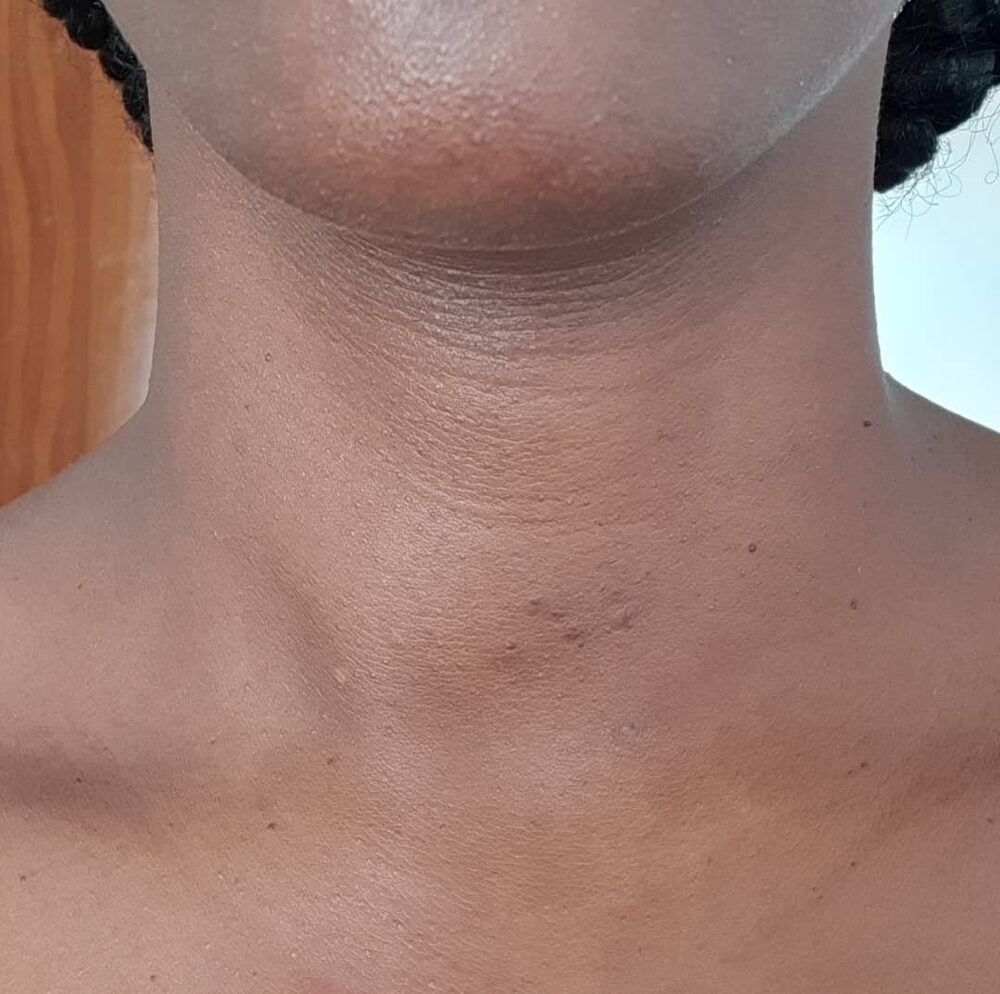
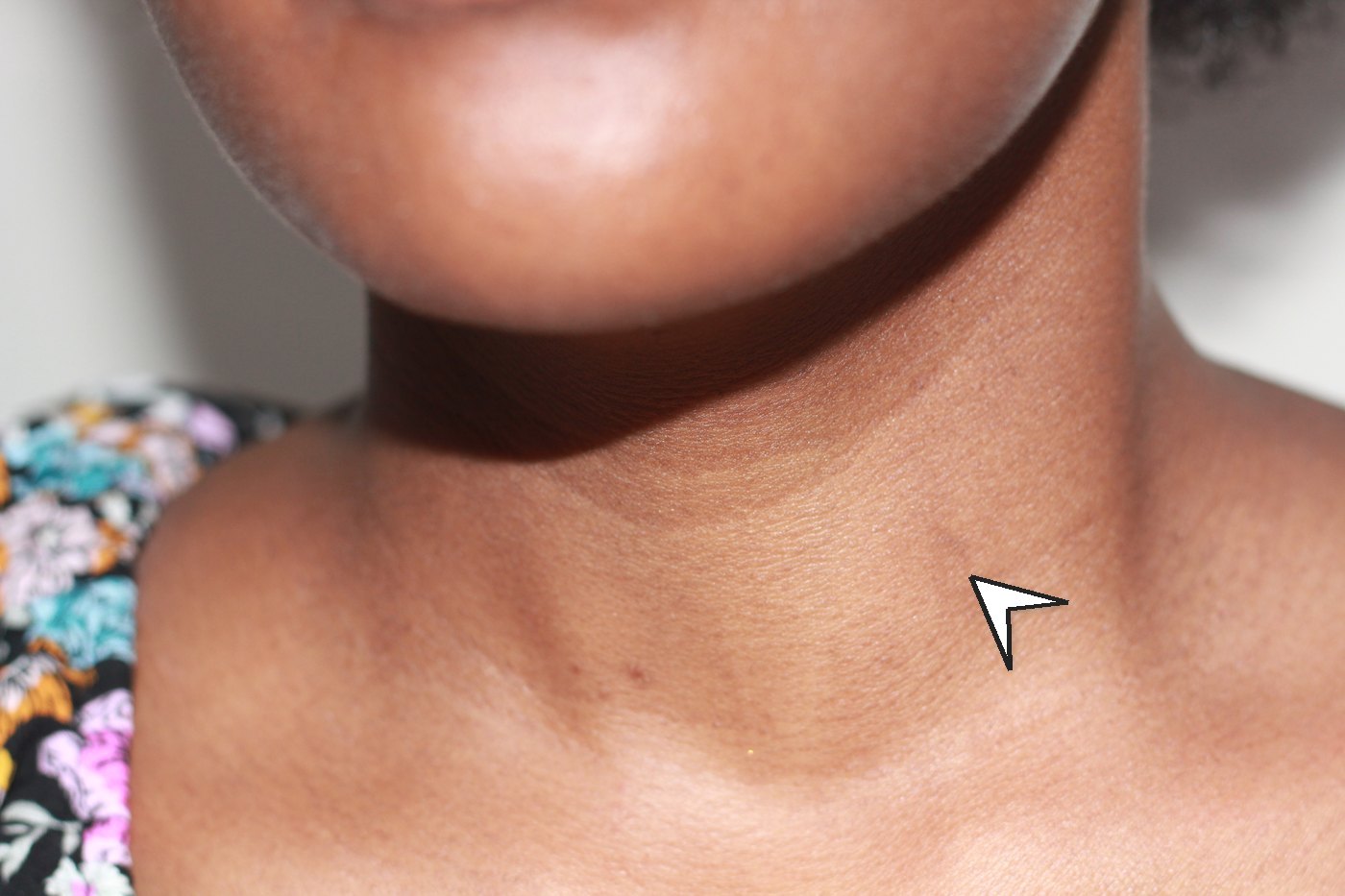
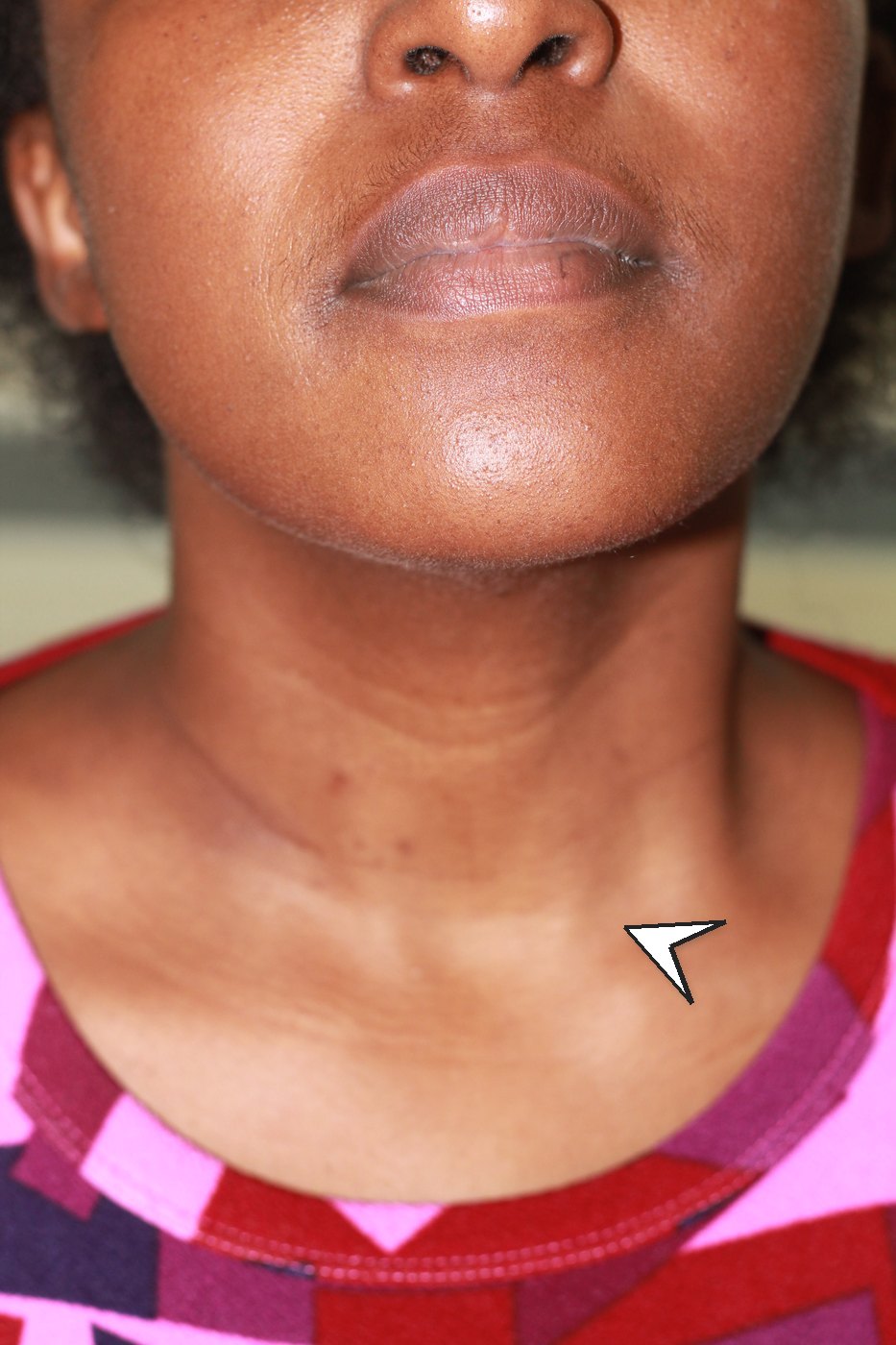
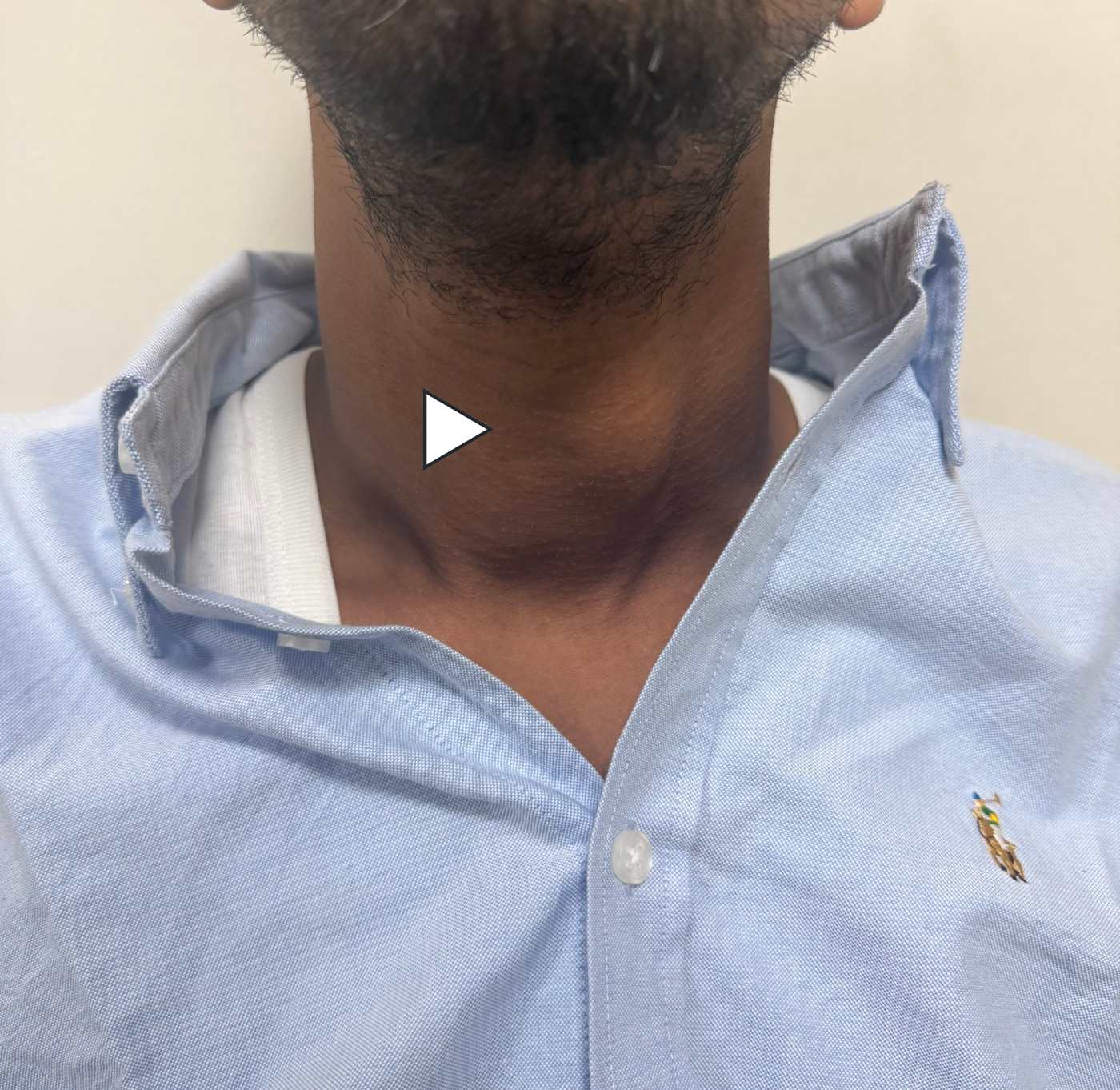
First, try not to panic — the great majority of neck and thyroid lumps are benign. It is sensible to have it assessed rather than watch and worry: a specialist thyroid ultrasound can quickly show whether the lump arises from the thyroid, how it looks, and whether any further test such as a biopsy is needed. Bring along any previous scans or blood tests if you have them. In many cases the assessment is reassuring and no treatment is required beyond monitoring. If something does need attention, finding it early gives the widest range of options and the best outcomes.
Yes. We regularly care for patients travelling from across East Africa — including Uganda, Somalia, Tanzania, Ethiopia and beyond. For those coming from abroad, much of the initial assessment can be done remotely: you send your recent thyroid ultrasound and any biopsy results, a specialist reviews them, and we confirm a plan before you travel. Many treatments, including RFA, can then be completed in a single short visit, with follow-up coordinated remotely once you are home. We can also arrange consultations in English, Kiswahili and Somali, so language is one less thing to worry about.
Every treatment plan is individual, so cost depends on exactly what you need — for example the type of scan, whether a biopsy is required, and the size and number of any nodules treated. Rather than quote a misleading figure, we give you a clear, written quote after reviewing your details, with no obligation. The simplest first step is to send your recent thyroid ultrasound and any biopsy results on WhatsApp for a reports review; we will confirm what is involved and provide your personalised quote before you commit to anything. That way you have complete clarity before making any decision.
Rated 5.0 by the people we've treated
“Dr. Ebrahim is an excellent thyroid doctor. Excellent clinic location in Nairobi — and an amazing clinic design.”
“My experience with Dr. Ebrahim has been nothing short of exceptional. His expertise really helped me keep things in check.”
“Amazing team of doctors — Dr. Gaman and Dr. Ebrahim came highly recommended and I'm very impressed. Kudos.”
“Excellent endocrinologist and diabetes specialist.”
“Amazing physician and thyroid doctor. Thank you.”
“The best — I recommend.”
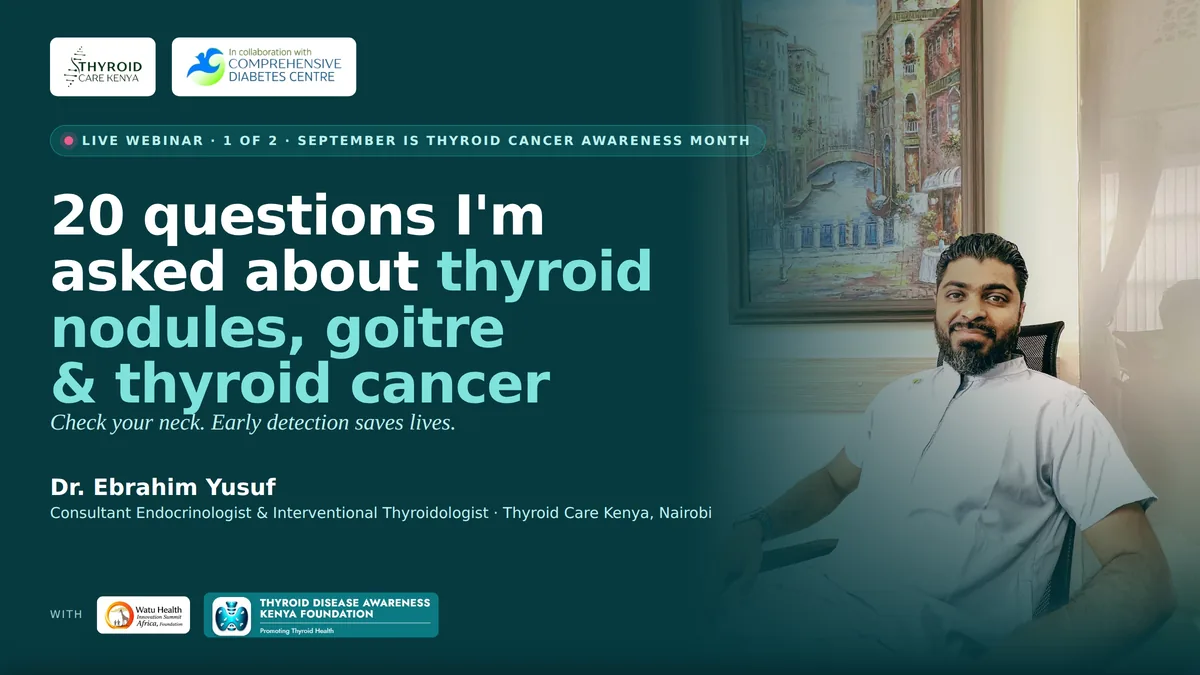
20 Thyroid Questions, answered
A free patient webinar with Dr Ebrahim Yusuf: 20 plain-language answers on thyroid nodules, goitre, ultrasound, biopsy, thyroid cancer and non-surgical RFA — Nairobi, Kenya.
Understand your thyroid, in your own time
Guides, articles and explainers written by a thyroid specialist — the growing knowledge hub for thyroid care in the region.

Learn hub & articles
Plain-English guides on nodules, RFA, goitre and living with thyroid disease.
Read the articles
Understand your blood tests
What TSH, free T4/T3 and thyroid antibodies actually mean for you.
Blood tests explained
Patient stories
Real journeys from first symptom to treatment and recovery.
See patient stories
Meet your specialist
Credentials, approach and a look inside the Nairobi clinic.
About the specialistExpert thyroid care starts with the right diagnosis
Book your consultation today and receive a comprehensive assessment from a dedicated thyroid specialist — or message us on WhatsApp with your scans for a reports review.
