
Radioiodine therapy (I-131) for an overactive thyroid in Nairobi
Radioiodine therapy is a safe, well-established and definitive treatment for an overactive thyroid. A single dose of iodine-131, taken by mouth, is absorbed almost entirely by the thyroid and gradually calms the overactive tissue — no operation, no scar, and usually as an outpatient. We assess whether it's the right choice for you, prepare you properly, and follow you up for the long term.
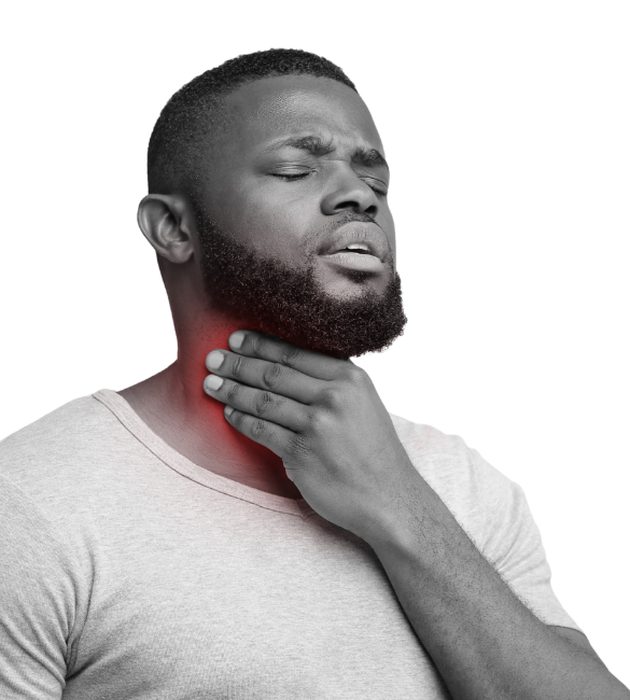
What is radioiodine therapy?
Radioiodine therapy uses a form of iodine called iodine-131 (I-131), a mild radioactive isotope taken by mouth as a single capsule or drink. The thyroid is the only part of the body that takes up iodine in any quantity, and it cannot tell ordinary iodine from the radioactive form. So when you swallow the dose, the overactive thyroid tissue soaks it up while the rest of the body absorbs almost none.
Once inside the gland, the I-131 releases its energy over a very short distance — enough to gradually shrink and quieten the overactive thyroid cells over the following weeks and months, without affecting the surrounding neck structures. It is one of the most established treatments in all of medicine, used safely for more than seventy years, and for many people it settles an overactive thyroid for good in a single treatment.
Worth knowing
A worry we hear often: 'will this make me radioactive?' In practical terms, no — the dose is small, it targets the thyroid rather than the whole body, and it clears steadily over days. We give you clear, simple precautions to follow for a short period afterwards, and that is all that's needed.
Who needs radioiodine therapy?
Radioiodine is a definitive treatment for hyperthyroidism caused by the thyroid overproducing hormone. It is particularly well suited to these situations — the right choice always depends on the cause, your circumstances and your preferences.
Graves' disease
A common and effective choice, especially where antithyroid tablets haven't given lasting control, aren't tolerated, or the overactivity has returned.
Learn more →
Toxic multinodular goitre
Often favoured here — it treats multiple autonomous nodules across an enlarged gland in one dose, avoiding surgery.
Learn more →
Toxic thyroid adenoma
A single overactive 'hot' nodule takes up the iodine strongly, so radioiodine can switch it off while sparing the normal thyroid around it.
Learn more →
Recurrent hyperthyroidism
When an overactive thyroid comes back after a course of medication, radioiodine offers a definitive way to prevent further relapses.
When surgery isn't ideal
For patients in whom an operation carries added risk, or who would simply prefer to avoid one, radioiodine is a proven non-surgical alternative.
A considered, shared decision
We weigh radioiodine against medication, RFA and surgery with you — the aim is the treatment that fits your diagnosis and your life, not a one-size-fits-all path.
Radioiodine treats an overactive gland — it is not used for the inflammatory 'leaking' forms of thyroiditis, which settle on their own. Confirming the cause first is exactly why specialist assessment comes before any treatment decision.
Benefits of radioiodine therapy
For the right patient, radioiodine offers a combination of advantages that few other treatments match.
A high success rate
A single dose resolves the overactivity for the great majority of people; where needed, a second dose can be given later.
Usually an outpatient
For most doses there is no hospital stay — you take the treatment and go home the same day, with simple precautions.
No surgery, no scar
It avoids an operation, a general anaesthetic and the small surgical risks to the voice and parathyroid glands.
Decades of evidence
One of the most studied treatments in medicine, with a long, reassuring safety record spanning generations of patients.
Definitive control
Rather than managing the overactivity day to day, radioiodine aims to treat its source once and for all.
Straightforward to take
A single capsule or drink — no needles, no incision and no lengthy recovery.
The main trade-off is well understood and easily managed: because the treatment reduces thyroid activity, many people become underactive afterwards and take a daily levothyroxine tablet. This is a stable, treatable outcome — not a complication — and it is discussed fully before you decide.
Who should not receive radioiodine?
It must not be given in pregnancy or while breastfeeding, and pregnancy should be avoided for a period after treatment — for women, we confirm you are not pregnant beforehand and give clear advice on timing. It is also generally avoided where there is active, moderate-to-severe thyroid eye disease, because radioiodine can occasionally worsen the eyes; we assess this carefully and, where treatment is still appropriate, steroid cover may be used.
For a very large goitre that is pressing on the windpipe or gullet, or where quick relief of compression is needed, surgery is often the better route. And in some younger patients, or where a patient prefers to preserve the gland, medication or another approach may be discussed first. None of this is decided in isolation — it's weighed together at your assessment.
If radioiodine isn't the best fit, it doesn't mean you're out of options — antithyroid medication, radiofrequency ablation and surgery each have their place, and we'll talk you through the one that suits you.
When another route is safer
- Pregnancy and breastfeeding — radioiodine is not given; pregnancy is deferred for a set period afterwards
- Planning a pregnancy soon — timing is discussed and adjusted for both women and men
- Active moderate-to-severe thyroid eye disease — assessed first; steroid cover or an alternative may be advised
- Large, compressive goitre — surgery may relieve pressure more quickly
- Selected younger patients or personal preference to keep the gland — alternatives are considered
Preparing for treatment
Good preparation makes radioiodine both safer and more effective. The exact steps are tailored to you, but this is what it usually involves.
Confirm the diagnosis
We make sure the cause of your overactive thyroid is clear — with blood tests, an ultrasound and, where needed, a radionuclide uptake scan — so radioiodine is genuinely the right treatment.
Adjust your medication
Antithyroid tablets are often paused for a short period around the treatment so the thyroid takes up the iodine well, then restarted or stopped as advised. Never change your own dose without guidance.
Rule out pregnancy
For women who could be pregnant, a pregnancy test is done shortly before treatment, and we discuss reliable contraception and timing.
Mind your iodine intake
Where advised, a short period avoiding iodine-rich foods, supplements and recent iodine-based contrast scans helps the thyroid absorb the dose fully.
Plan the day and after
We give you written instructions covering the precautions to follow at home, so you can arrange work, travel and family life around the short period afterwards.
What happens during treatment?
The treatment itself is quick and undramatic — most people are surprised by how simple it is.
Arrival and final checks
You come to the clinic or nuclear medicine facility, where the plan and any last questions are gone over and the dose is confirmed for you.
Taking the dose
You swallow the iodine-131 as a single small capsule or a drink of liquid. It is tasteless and painless — there are no needles and no procedure to undergo.
A short wait
You may be observed for a little while afterwards. Most people then go straight home the same day; only higher doses occasionally need a short stay.
Home with your precautions
You go home and follow the simple radiation-safety precautions you've been given for a short period — the dose then does its work quietly over the following weeks.
Gradual improvement
The overactive thyroid settles gradually, not overnight. Symptoms ease over several weeks to a few months as hormone levels come down, and we monitor you throughout.
Beta-blockers and, where appropriate, antithyroid medication can be used to keep you comfortable in the weeks while the radioiodine takes full effect.
Radiation safety after treatment
For a short period after treatment you'll follow some simple precautions to limit others' exposure to the small amount of radiation you carry. The exact advice depends on your dose and on local regulations — we give it to you in writing.
These steps sound stricter than they feel in practice. They are short-lived, common-sense measures — and we make sure you understand exactly what applies to you before you leave.
Your temporary precautions
- Keep a sensible distance and limit close, prolonged contact — especially with pregnant women and young children — for the advised number of days.
- Sleep alone for the recommended period rather than sharing a bed.
- Practise careful hygiene: flush the toilet well, wash hands thoroughly and don't share cups, cutlery or towels for a few days.
- Time off work is usually short; those who work closely with pregnant women or small children may need a little longer.
- Travel and airport security: sensitive detectors can pick up the isotope for some weeks — carry the treatment letter we provide if you're travelling.
- The precautions are temporary and precautionary; the radioactivity clears steadily and everyday life resumes quickly once the period ends.
Possible side effects
Radioiodine is generally very well tolerated. Most effects are mild and short-lived; a few are worth knowing about in advance.
Mild neck tenderness
A little soreness or swelling over the thyroid for a few days as the gland responds — usually settled with simple pain relief.
A brief flare
Occasionally hormone released from treated tissue causes a short-lived worsening of overactive symptoms early on; beta-blockers help manage this.
Dry mouth or altered taste
The salivary glands take up a little iodine, so some people notice a dry mouth or a temporary change in taste, which usually recovers.
An underactive thyroid
The expected long-term effect: the thyroid becomes underactive and a daily levothyroxine tablet restores normal levels. This is planned for, not a surprise.
Learn more →
Thyroid eye disease
In susceptible people — particularly smokers with Graves' — the eyes can worsen. We assess this beforehand and use steroid cover where indicated.
Learn more →
Rare effects
Serious complications are very uncommon. We go through the specific risks that apply to you before treatment so nothing comes as a surprise.
Becoming underactive is by far the most common outcome, and it is a good one: a stable, easily corrected state managed with one tablet a day, in place of an unpredictable overactive gland.
Long-term follow-up
Radioiodine isn't a one-visit treatment and forget — the care that follows is what makes it work well. Over the weeks and months afterwards we check your thyroid blood tests at intervals to watch how your hormone levels change as the gland settles, and to catch the switch from overactive to underactive at the right moment.
Most people eventually become underactive, at which point we start levothyroxine and fine-tune the dose until you feel well and the numbers are right. A minority remain overactive and may need a further dose or another approach. Either way, thyroid function needs monitoring for life — a simple, periodic blood test — so your levels stay where they should be for your heart, bones and energy.
Care that continues
Structured, long-term follow-up is part of the treatment, not an afterthought. We keep an eye on your levels for the long run so an overactive thyroid — and later a correctly balanced one — never drifts unnoticed.
Understanding your treatment options
Radioiodine is one of four main ways to treat an overactive thyroid. None is 'best' in the abstract — the right one depends on your diagnosis, your goals and your circumstances. Here's how they compare.
Antithyroid medication
Tablets (carbimazole or PTU) that lower hormone production. Excellent for control and often the first step — but for some causes the overactivity returns when the tablets stop.
Radioiodine (I-131)
A single oral dose that definitively calms the gland, usually as an outpatient. No surgery; most people become underactive and take levothyroxine afterwards.
Radiofrequency ablation
For a single overactive nodule, RFA can shrink and switch it off through the skin, often preserving normal thyroid function — no radiation, no scar.
Learn more →
Thyroid surgery
Removing part or all of the gland gives immediate, definitive control and relieves a large compressive goitre — the route of choice in selected cases.
We talk all of these through at your consultation, alongside your scan and blood results, so the decision is genuinely yours — informed, unhurried and matched to your diagnosis.
Radioiodine therapy — your questions answered
No. You simply swallow a single capsule or a small drink of liquid — there are no needles and no procedure. It is tasteless and painless, and most people are surprised by how straightforward it is.
Usually not. For the doses used to treat an overactive thyroid, radioiodine is generally given as an outpatient and you go home the same day, following simple precautions. Only occasionally do higher doses require a short stay, and we tell you in advance if that applies to you.
Only to a very small degree, and only for a short time. The dose targets the thyroid, and the radioactivity clears steadily over days. You'll follow simple precautions — keeping some distance from young children and pregnant women, sleeping alone and careful hygiene — for the advised period, then everyday life resumes.
Typically a matter of days, with the exact length depending on your dose and on local regulations. We give you clear written advice on distances, sleeping arrangements and hygiene, and on how long each measure applies — particularly around pregnant women and small children.
Yes, though airport radiation detectors are very sensitive and can pick up the isotope for some weeks after treatment, even once you feel completely normal. We provide a treatment letter to carry so any alert at security is easily explained.
Radioiodine at the doses used for an overactive thyroid is not known to reduce long-term fertility in women or men. What matters is timing: pregnancy should be avoided for a set period afterwards, and we give both women and men clear advice on how long to wait before trying to conceive.
Pregnancy is deferred for a defined period after treatment — several months — to allow the radioiodine to clear and your thyroid levels to stabilise on any replacement. We give you specific timing at your consultation, and it applies to men planning a pregnancy too.
The long safety record of radioiodine over more than seventy years is reassuring, and it is not associated with a meaningful increase in cancer risk at the doses used for an overactive thyroid. We're happy to discuss the evidence with you in detail before you decide.
Most people do, and this is expected rather than a complication. An underactive thyroid is stable and easily treated with a single daily levothyroxine tablet, which we start and fine-tune once your levels indicate it. Many people find this far easier to live with than an unpredictable overactive gland.
A minority remain overactive after the first dose. If so, a second dose of radioiodine can be given after a suitable interval, or another approach discussed. We monitor your blood tests closely so this is picked up early and dealt with.
Usually within a short time. Time off is generally brief, but people who work closely with pregnant women or young children — for example in childcare or maternity settings — may need a little longer. We advise you specifically based on your dose and your job.
Improvement is gradual, over several weeks to a few months, rather than immediate. In the meantime, beta-blockers and — where appropriate — antithyroid medication keep symptoms such as a racing heart under control, and we review you as your levels come down.
Definitive treatment, carefully guided
- Consultant endocrinologist with dedicated thyroidology and interventional expertise
- Diagnosis confirmed with in-house ultrasound and radionuclide-scan interpretation before any treatment
- Radioiodine weighed honestly against medication, RFA and surgery — the fit for you comes first
- Personalised preparation, clear written radiation-safety advice, and coordination with the treating facility
- Thyroid eye disease assessed and protected where radioiodine is planned
- Structured lifelong follow-up so your levels stay right long after treatment
Your treatment journey
Assess
Confirm the cause of the overactivity with bloods, ultrasound and, where needed, an uptake scan.
Decide
Weigh radioiodine against medication, RFA and surgery together — a shared, informed choice.
Treat
Prepare you properly, coordinate the dose, and manage symptoms while it takes effect.
Follow up
Monitor levels, start levothyroxine when needed, and keep you balanced for the long term.
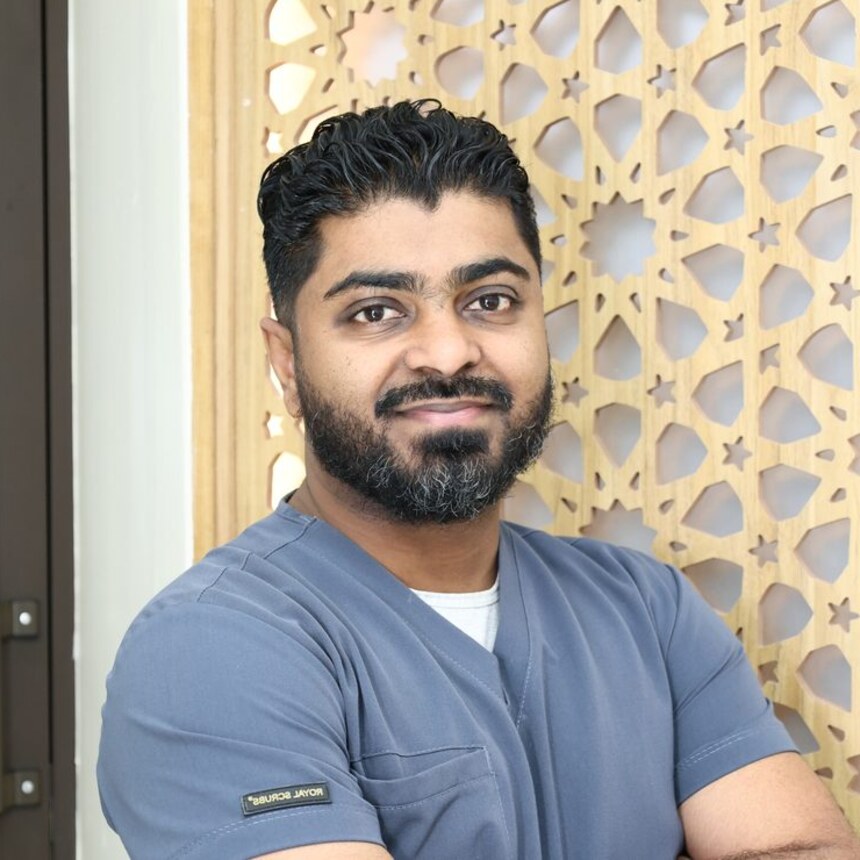
Dr. Ebrahim Yusuf Ebrahim
Consultant Physician · Interventional Endocrinologist & Diabetologist
One of the first doctors in Kenya to bring minimally invasive thermal ablation — microwave and radiofrequency — to the treatment of thyroid nodules and goitre, sparing patients from surgery. He assesses every patient personally before treatment — confirming the cause of the overactive thyroid and weighing radioiodine against medication, RFA and surgery, so the plan is genuinely matched to you.
- MMed, Internal Medicine — University of Nairobi
- PG Diploma, Endocrinology & Diabetes — Royal College of Physicians, Ireland
- Fellowship, Endocrinology & Diabetes — University of Alexandria, Egypt
- Certificate in Interventional Thyroidology — Mumbai, India
- Special focus: thermal ablation (RFA & microwave) for thyroid nodules
Refer a patient for radioiodine assessment
We welcome referrals from GPs, physicians, surgeons, cardiologists and nuclear medicine colleagues for the assessment and definitive treatment of hyperthyroidism. Your patient receives a full consultation, in-house imaging review and a clear, individualised treatment plan — and comes back to you with structured follow-up.
Complete assessment
Consultation, examination, thyroid function and antibody testing, ultrasound and radionuclide-scan interpretation to confirm the cause before treatment.
The full range of options
Radioiodine, antithyroid medication, radiofrequency ablation and referral for surgery — so the treatment is matched to the diagnosis, not to what's available.
Simple to refer
Share the clinical details or your patient's previous scans and bloods on WhatsApp or by email; we assess promptly and report back clearly.
Coordinated, shared care
We plan and deliver the treatment and its follow-up, and keep you informed throughout — your patient's ongoing care stays with you.
Book your radioiodine consultation
Considering radioiodine, or simply want to understand your options for an overactive thyroid? Book a consultation or message us on WhatsApp. Your assessment covers your history and examination, blood tests, an ultrasound and a review of any radionuclide scan, and a full discussion of medication, radioiodine, RFA and surgery.
Bring any previous thyroid blood results, scans or reports if you have them — they help us confirm the cause and plan accurately. Not sure whether radioiodine is right for you? Send us your results on WhatsApp and we'll advise honestly, with no obligation.
Where to find us
Doctors Park, 3rd Floor, 3rd Parklands Avenue, Nairobi
+254 706 651 416
+254 711 781 299
Languages: English · Kiswahili · Somali
Medically reviewed by Dr. Ebrahim Yusuf Ebrahim, Consultant Physician & Interventional Endocrinologist. Clinical figures are ranges from peer-reviewed studies, provided for general education — individual results vary and are confirmed at your review.
Related services
Wondering if radioiodine is right for you? Ask us
Send us your thyroid results on WhatsApp and a specialist will advise honestly on whether radioiodine, medication, RFA or surgery fits your diagnosis — with no obligation. Or book your consultation online.
