
Specialist care for Graves' disease in Nairobi
Graves' disease is the most common cause of an overactive thyroid. It's very treatable — and with the right diagnosis and a plan built around you, most people get their symptoms under control and their life back. We provide comprehensive diagnosis, specialist medical treatment and long-term follow-up, all in one place.
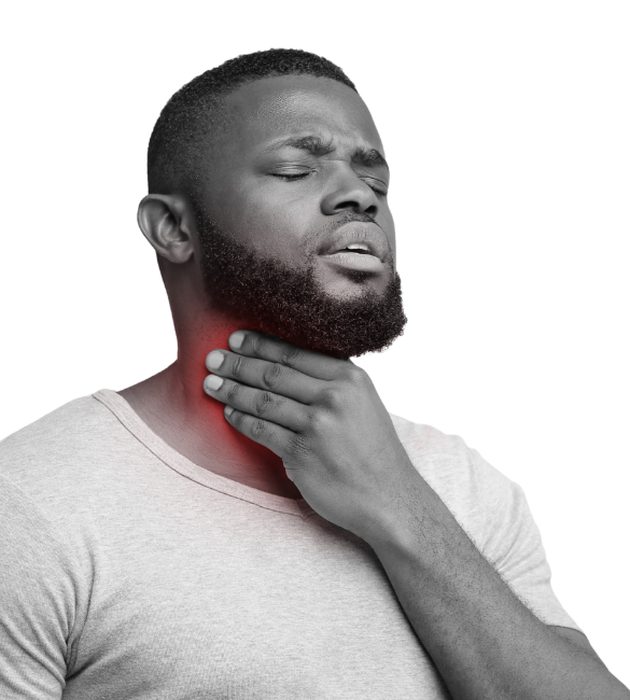
What is Graves' disease?
Graves' disease is an autoimmune condition in which the immune system produces an antibody — the TSH-receptor antibody, or TRAb — that switches the thyroid on and keeps it on. The gland is driven to make far more thyroid hormone than the body needs, and the result is hyperthyroidism: an overactive thyroid, with all the symptoms that follow from a metabolism running too fast.
It helps to separate two terms that are often confused. Hyperthyroidism simply means an overactive thyroid — a state that has several possible causes. Graves' disease is the specific autoimmune cause behind most of them. Getting that distinction right matters, because the treatment and the follow-up depend on why the thyroid is overactive, not just that it is.
Worth knowing
The good news worth hearing first: Graves' disease is one of the most treatable thyroid conditions. Effective options exist, and with proper specialist care the outlook is genuinely reassuring.
Why Graves' disease develops
- TSH-receptor antibodies (TRAb) that stimulate the thyroid — the direct mechanism of the disease
- A genetic predisposition — it often runs in families and alongside other autoimmune conditions
- Sex and age — it's far more common in women, typically appearing between about 30 and 50
- Smoking — a well-established trigger that also markedly worsens the associated eye disease
- Pregnancy and the postpartum period, which can unmask or trigger the condition
- Significant stress or illness, which can act as a trigger in susceptible people
- Other autoimmune disease — type 1 diabetes, vitiligo, coeliac disease and rheumatoid arthritis are associated
The one thing in your control
You cannot always prevent Graves' disease, but stopping smoking is the single most valuable thing you can do — both to help your thyroid and, crucially, to protect your eyes.
How an overactive thyroid shows itself
Heart & energy
- Palpitations or a racing heart
- An irregular heartbeat (atrial fibrillation)
- Tiredness and muscle weakness
- Breathlessness on exertion
Body & metabolism
- Weight loss despite a good appetite
- Feeling hot and sweating easily
- A fine trembling of the hands
- More frequent or looser bowel movements
Mind, mood & more
- Anxiety, irritability or restlessness
- Difficulty sleeping
- Changes to periods or fertility
- A swelling in the neck (goitre)
- Gritty, bulging or watering eyes
Symptoms often come on gradually and are easily mistaken for stress or 'just getting older'. If several of these ring true — especially a racing heart with unexplained weight loss — it's worth having your thyroid checked properly.
Confirming Graves' — and its cause
Diagnosing Graves' disease is usually straightforward with the right tests, and starts with a specialist assessment of your symptoms and history. A simple set of blood tests confirms an overactive thyroid, and testing for TRAb antibodies confirms that Graves' disease is the cause.
A high-resolution thyroid ultrasound adds valuable detail — showing the gland's size and, on colour Doppler, the markedly increased blood flow known as the 'thyroid inferno' that is characteristic of Graves'. Occasionally, where the picture is unclear, a radioactive-iodine uptake scan is used to distinguish Graves' from other causes of an overactive thyroid.
Answers in one visit
Because we perform the ultrasound ourselves at the same visit, we can often confirm the diagnosis and its cause together — and begin planning your treatment straight away.
What the thyroid blood tests mean
Four tests do most of the work in diagnosing and monitoring Graves' disease.
TSH
The pituitary's signal to the thyroid. In Graves' it is typically very low or undetectable, as the body tries to switch off a gland it can't control.
Free T4 (FT4)
The main thyroid hormone. It is usually raised in Graves', reflecting the gland's overactivity.
Free T3 (FT3)
The more active hormone, often disproportionately high in Graves' — sometimes the clearest sign of overactivity.
TRAb
The TSH-receptor antibody. A positive result confirms Graves' disease as the cause and helps guide treatment and monitoring.
When Graves' affects the eyes
Graves' disease can affect the eyes as well as the thyroid — a related condition called thyroid eye disease (Graves' orbitopathy). It's important to recognise, because early attention protects your sight and comfort.
Common eye symptoms
- Gritty, dry or watering eyes
- A staring or bulging appearance
- Redness or swelling around the eyes
- Puffy or retracted eyelids
- Double vision or difficulty moving the eyes
Most eye disease is mild and settles with simple measures: lubricating drops, stopping smoking and getting the thyroid levels stable. More active or severe cases are treated with immune-modulating therapy, and a small number need specialist surgery. Because smoking dramatically worsens eye disease, quitting is the most powerful single step you can take.
Urgent warning signs
- A noticeable loss or dimming of vision
- Colours appearing washed out
- New or worsening double vision
- Severe eye pain or pressure
Any sudden change in your vision — loss of sharpness, colours looking faded, or severe eye pain — needs urgent same-day medical attention. Don't wait for a routine appointment.
How Graves' disease is treated
Graves' disease is very treatable, and there are three well-established routes to control it. The right choice depends on your circumstances, your preferences and how your disease behaves — and we decide it together.
Beta-blockers
Not a cure, but fast relief. They calm a racing heart, tremor and anxiety within days while the main treatment takes effect — a bridge, not the destination.
Antithyroid medication
Carbimazole (or propylthiouracil in specific situations) reduces hormone production. Usually the first-line treatment, taken for 12–18 months, after which many people achieve lasting remission.
Radioactive iodine
A capsule that gradually and permanently reduces the overactive gland. Highly effective; it commonly leads to an underactive thyroid afterwards, easily managed with a daily tablet.
Surgery (thyroidectomy)
Removing the thyroid gives a definitive cure. Chosen for large goitres, significant eye disease, or when other treatments aren't suitable — followed by lifelong hormone replacement.
About half of people treated with antithyroid tablets stay in remission long-term; others relapse and move to a definitive treatment. Relapse isn't a failure — it simply guides the next, more permanent step. Every plan is individualised and reviewed as you go.
Living with Graves' disease
Alongside medical treatment, some practical habits genuinely help — both in feeling better day to day and in protecting your long-term health.
- Stop smoking — the single most important step, especially for your eyes
- Avoid excess iodine — including kelp, seaweed and high-dose iodine supplements, which can worsen overactivity
- Keep active gently, but ease off intense exercise until your heart rate and levels are stable
- Look after your mental wellbeing — anxiety and low mood are part of the illness, not a personal failing
- Plan pregnancy in advance with your specialist, so treatment is optimised beforehand
- Learn the signs of relapse — a returning racing heart, weight loss or tremor — and get checked promptly
The one habit that matters most
If you take just one thing from this page: stopping smoking helps your thyroid settle and protects your eyes more than any supplement or diet. It's the highest-value change you can make.
Graves' disease and pregnancy
Graves' disease needs careful, specialist-guided management around pregnancy — but with proper planning, the great majority of women have healthy pregnancies and babies. The key is to have your thyroid well controlled before you conceive, and closely monitored throughout.
Medication is chosen with pregnancy in mind: propylthiouracil is generally preferred in the first trimester, with a switch considered afterwards, and doses are kept to the lowest that keeps you well. TRAb antibodies are checked because they can cross the placenta and affect the baby's thyroid, so monitoring continues after delivery. Breastfeeding is usually possible on appropriate doses.
Plan ahead
If you have Graves' disease and are planning a pregnancy, arrange a pre-conception review. Getting your treatment right beforehand is the single best thing you can do for a smooth pregnancy.
Monitoring Graves' over time
Graves' disease is a long-term condition, and follow-up matters as much as the initial treatment — whether you've had medication, radioactive iodine or surgery.
- Regular blood tests to keep your thyroid levels in the right range and adjust treatment
- Symptom review, so returning overactivity — or a swing into underactivity — is caught early
- Watching for relapse after antithyroid medication is stopped, when it's most likely
- Checking thyroid levels after radioactive iodine or surgery, as an underactive thyroid commonly follows and needs replacement
- Assessment of the eyes where thyroid eye disease is present or develops
- Clear advice on when to seek urgent review — for eye changes, a very fast or irregular heartbeat, or severe symptoms
With structured follow-up, Graves' disease is very manageable — and most people go on to live full, normal lives.
Graves' disease — your questions answered
It can be very effectively controlled, and often cured. Around half of people treated with antithyroid tablets achieve lasting remission; radioactive iodine and surgery offer a definitive cure by permanently reducing or removing the overactive gland. Either way, the condition is very manageable.
Not always. Many people take antithyroid medication for 12–18 months and then stop, staying in remission. If the disease relapses or you choose radioactive iodine or surgery, you may need a daily thyroid-replacement tablet afterwards — simple, safe and lifelong, but easy to manage.
There is a genetic component — it often runs in families and alongside other autoimmune conditions — but genes are only part of the story. Having a relative with Graves' raises your risk but by no means guarantees you'll develop it.
Hyperthyroidism means an overactive thyroid — a state with several possible causes. Graves' disease is the specific autoimmune condition that is the most common cause of it. Confirming Graves' (with a TRAb test) matters because it shapes the treatment and follow-up.
It can, in a related condition called thyroid eye disease. Symptoms range from gritty, dry or bulging eyes to double vision. Most cases are mild, but any sudden change in vision needs urgent attention — and stopping smoking dramatically reduces the risk and severity.
Gentle activity is fine, but it's wise to avoid intense exercise until your heart rate and thyroid levels are stable, as an overactive thyroid puts extra strain on the heart. Your specialist will advise when it's safe to build back up.
It's sensible to avoid excess iodine — such as kelp, seaweed and high-dose iodine supplements — as it can worsen an overactive thyroid. You don't need a special diet otherwise; normal dietary iodine from ordinary food is fine.
Untreated, it can cause a fast or irregular heartbeat (atrial fibrillation) and strain the heart, which is one reason not to delay treatment. Beta-blockers control these symptoms quickly, and treating the thyroid resolves the underlying problem. A very fast or irregular heartbeat needs prompt review.
It's common after radioactive iodine or surgery, and can occur with medication too. This isn't a setback — an underactive thyroid is easily and reliably treated with a daily replacement tablet, and is far simpler to manage than an overactive one.
Yes — the great majority of women do. The key is getting your thyroid well controlled before conceiving and monitored closely throughout, with pregnancy-appropriate medication. Arrange a pre-conception review so everything is optimised in advance.
Absolutely. With the right treatment and follow-up, the overwhelming majority of people with Graves' disease live full, normal lives. The condition is very treatable — the main thing is getting proper specialist care and staying with your monitoring.
No — you're welcome to book directly. If you have recent thyroid results, previous scans or a referral letter, bring them along, as they help us assess and plan quickly.
Specialist Graves' care, all in one place
- Consultant endocrinologist with dedicated thyroid expertise
- Full diagnostics in one place — TSH, FT4, FT3, TRAb and specialist ultrasound
- The 'thyroid inferno' confirmed on colour Doppler at the same visit
- All treatment routes explained honestly — medication, radioactive iodine and surgery
- Individualised plans, with pregnancy and eye disease managed proactively
- Structured long-term follow-up, so relapse or under-treatment is caught early
How your care works
Assess
A specialist review of your symptoms, history and risk.
Confirm
Blood tests and ultrasound confirm Graves' and its cause together.
Treat
An individualised plan — medication, radioactive iodine or surgery.
Follow up
Structured monitoring for relapse, thyroid levels and the eyes.
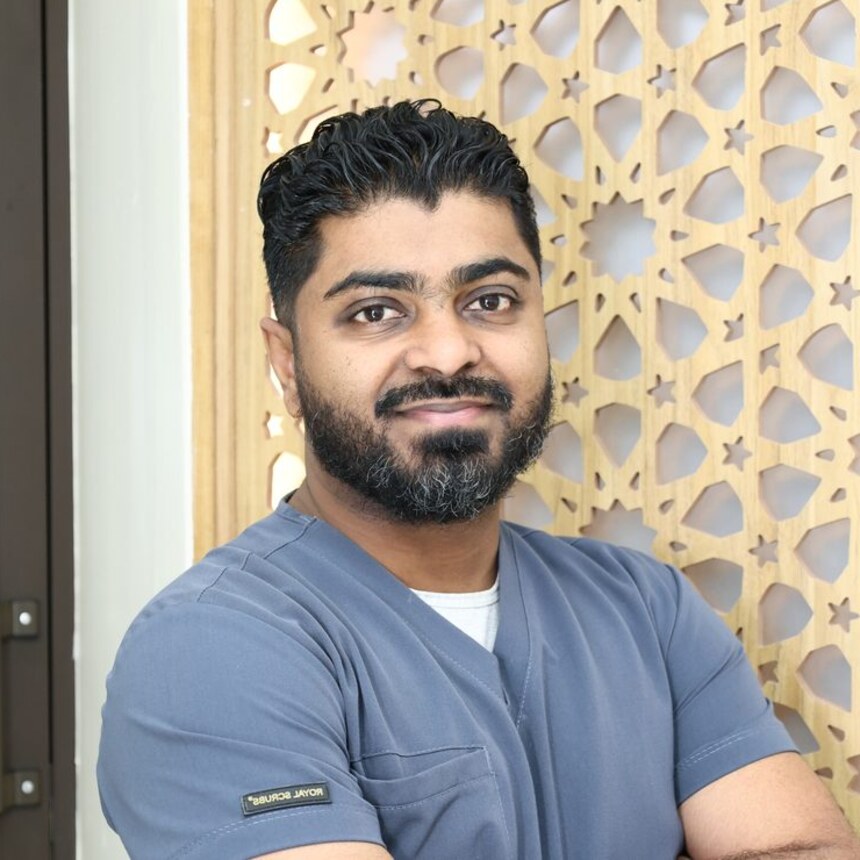
Dr. Ebrahim Yusuf Ebrahim
Consultant Physician · Interventional Endocrinologist & Diabetologist
One of the first doctors in Kenya to bring minimally invasive thermal ablation — microwave and radiofrequency — to the treatment of thyroid nodules and goitre, sparing patients from surgery. He provides consultant-led care for Graves' disease and hyperthyroidism — combining specialist assessment, thyroid ultrasound and individualised treatment.
- MMed, Internal Medicine — University of Nairobi
- PG Diploma, Endocrinology & Diabetes — Royal College of Physicians, Ireland
- Fellowship, Endocrinology & Diabetes — University of Alexandria, Egypt
- Certificate in Interventional Thyroidology — Mumbai, India
- Special focus: thermal ablation (RFA & microwave) for thyroid nodules
Refer a patient with Graves' disease
We welcome referrals of patients with suspected or confirmed Graves' disease from family physicians, ENT surgeons and other clinicians. Your patient receives consultant assessment, full diagnostics and an individualised treatment plan — with clear shared-care communication back to you.
Rapid specialist assessment
For a new thyrotoxic patient — clinical review, TSH/FT4/FT3/TRAb and same-visit ultrasound to confirm the cause quickly.
Full treatment pathway
Antithyroid medication, referral for radioactive iodine, or surgical referral — all coordinated, with eye disease flagged early.
Simple to refer
Share the clinical details and any recent thyroid results on WhatsApp or email; we assess promptly and report back clearly.
Shared, ongoing care
We provide specialist management and return your patient to you with a clear plan for the monitoring that continues in primary care.
Book your Graves' disease consultation
If you have symptoms of an overactive thyroid, or a diagnosis of Graves' disease and want specialist care, booking is simple. Message us on WhatsApp or book online, and we'll arrange an assessment — often within a few days.
Bring any recent thyroid blood tests, previous scans or a referral letter if you have them; they help us move quickly. If you're unsure whether your symptoms need review, message us and we'll advise honestly — no obligation.
Where to find us
Doctors Park, 3rd Floor, 3rd Parklands Avenue, Nairobi
+254 706 651 416
+254 711 781 299
Languages: English · Kiswahili · Somali
Medically reviewed by Dr. Ebrahim Yusuf Ebrahim, Consultant Physician & Interventional Endocrinologist. Clinical figures are ranges from peer-reviewed studies, provided for general education — individual results vary and are confirmed at your review.
Related conditions & services
Get your overactive thyroid under control
Graves' disease is very treatable with the right specialist care. Book a consultation online, or send us your recent thyroid results on WhatsApp and we'll advise on the next step.
