
Can a Thyroid Nodule Shrink Without Surgery?
10 October 2026 · Reviewed by Dr. Ebrahim Yusuf Ebrahim
It's the question behind almost every enquiry we receive. For many people with a benign nodule, the answer is yes — here is what the evidence shows, which nodules respond, and how to find out about yours.
The short answer
Yes — many benign thyroid nodules can be shrunk without surgery. Radiofrequency ablation (RFA) treats the nodule with controlled heat through a fine needle under local anaesthetic; the body then clears the treated tissue, and in published studies benign nodules typically lose around half their volume within about six months, with reductions of up to roughly 90% reported over several years. It is only for nodules confirmed to be benign. At Thyroid Care Kenya in Nairobi it is a same-day procedure with no scar.
Will a nodule shrink on its own?
Usually not by much. Most benign solid nodules stay about the same size or grow slowly over years, which is why small nodules causing no symptoms are simply watched with ultrasound. Fluid-filled (cystic) nodules can sometimes shrink or be drained, but they often refill. Thyroid tablets are no longer recommended to shrink benign nodules in people with normal thyroid function. So if a nodule is causing a visible swelling or pressure, waiting rarely solves the problem — treating it does.
How RFA shrinks a nodule
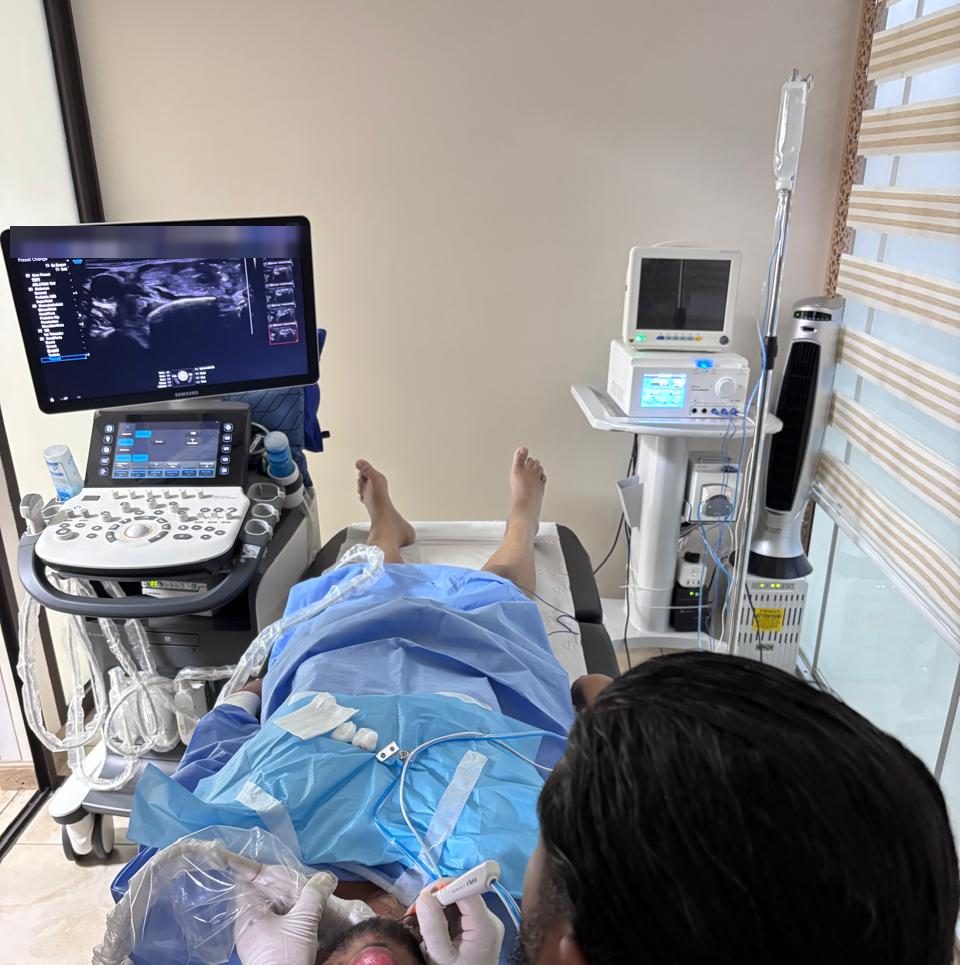
Under live ultrasound guidance, a fine electrode is placed inside the nodule and radiofrequency energy heats it in small, controlled zones — the 'moving-shot' technique. The heated tissue dies and is gradually broken down and absorbed by the body over the following months, so the nodule shrinks steadily. Because only the nodule is treated, the healthy thyroid is preserved. See how thyroid RFA works, step by step.
How much, and how fast?
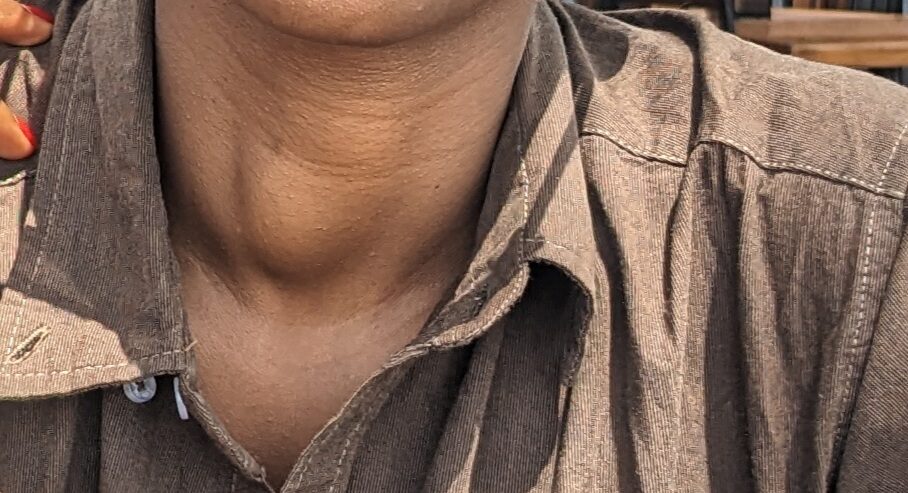
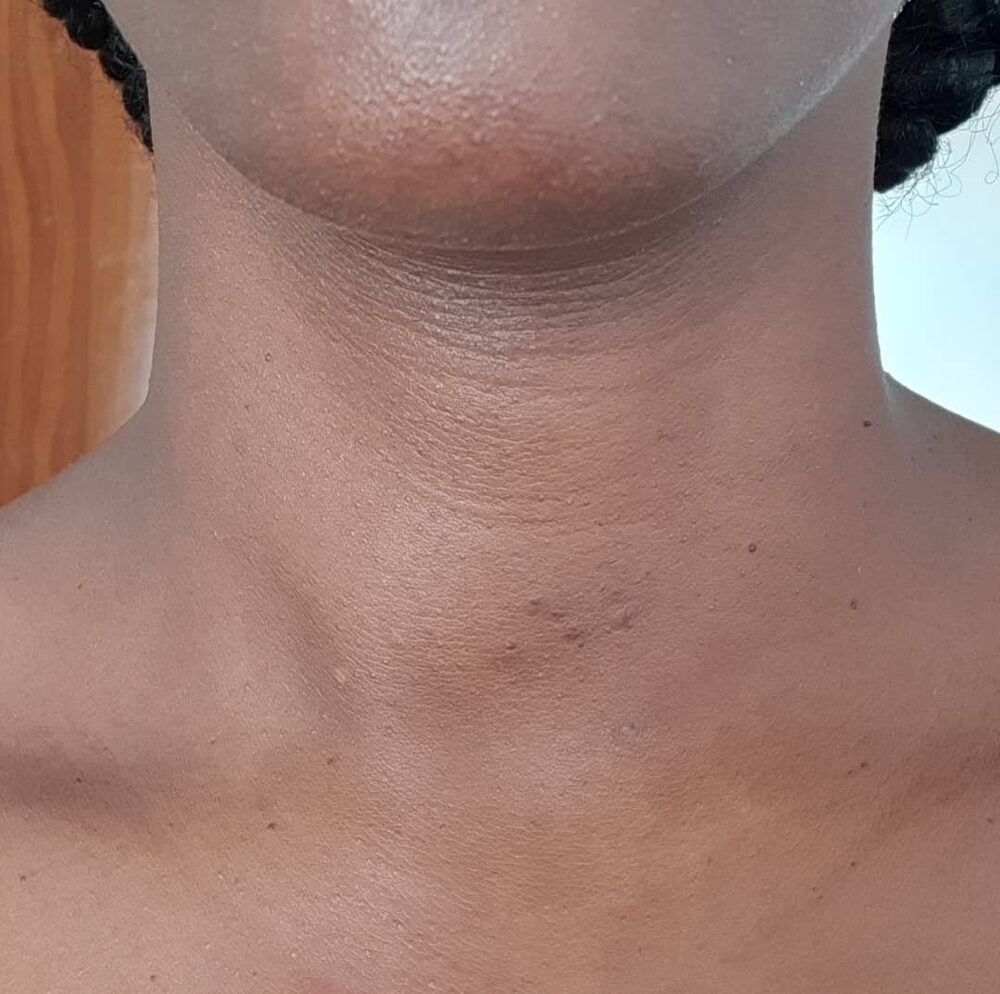
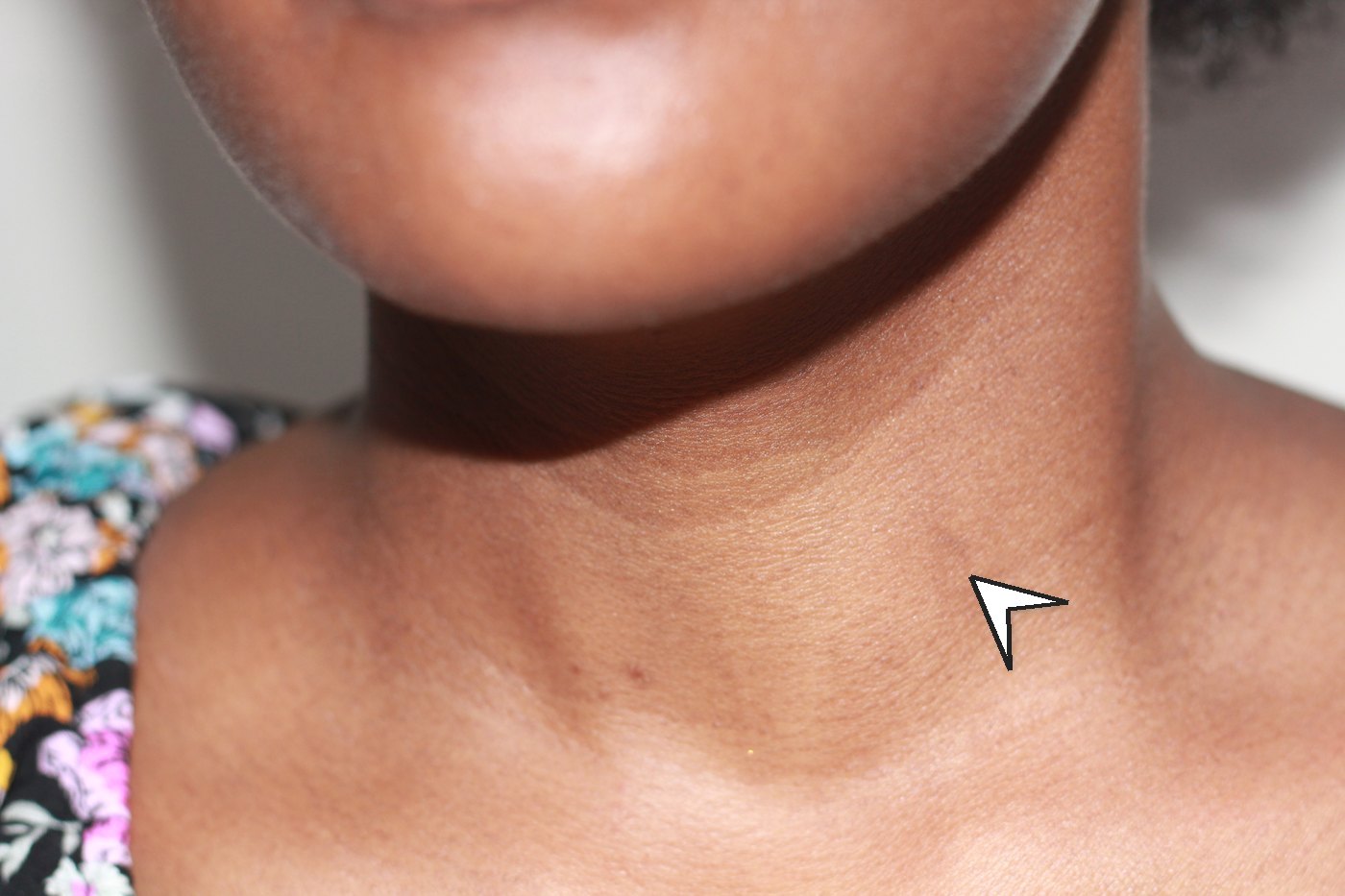
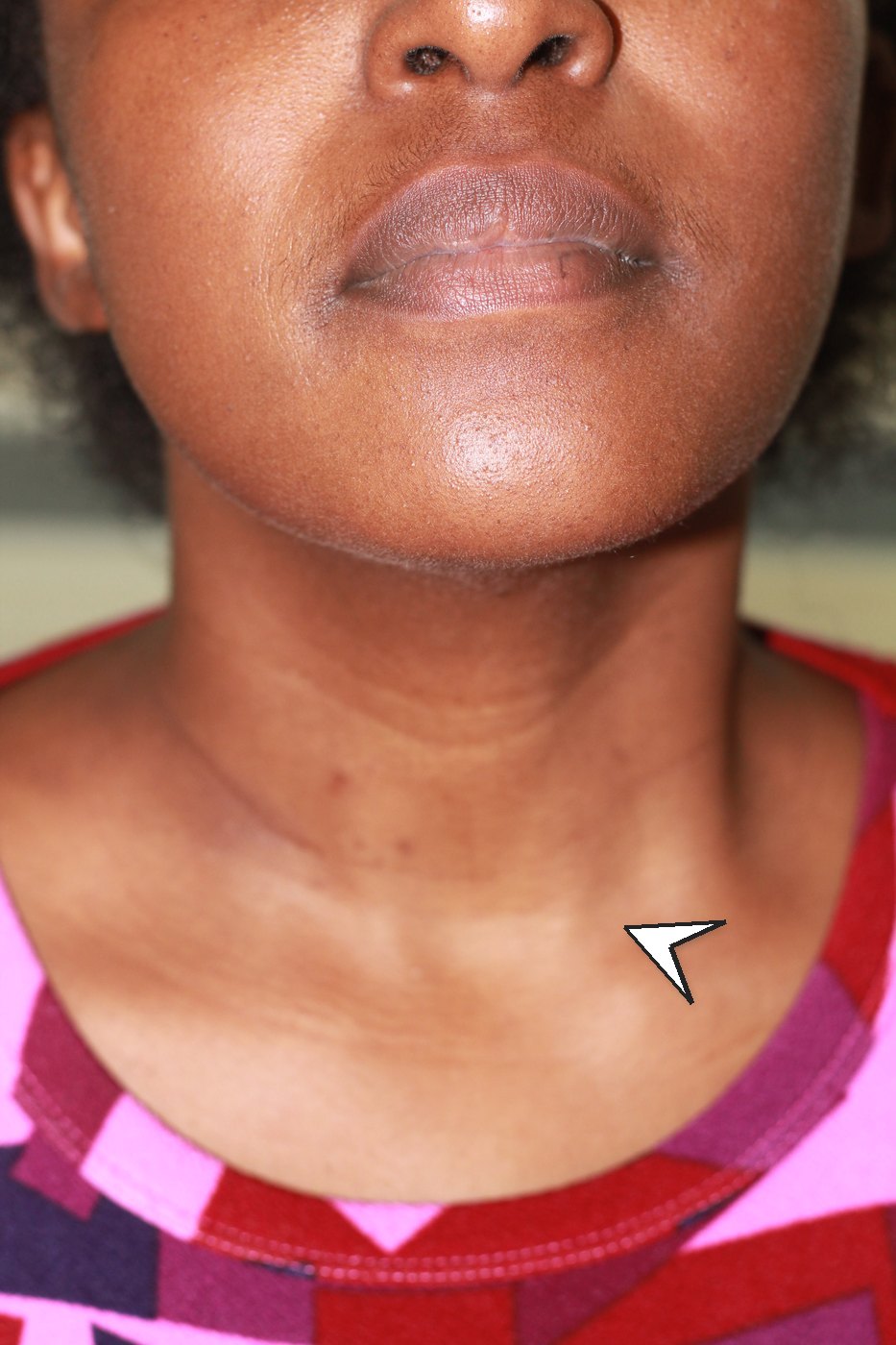
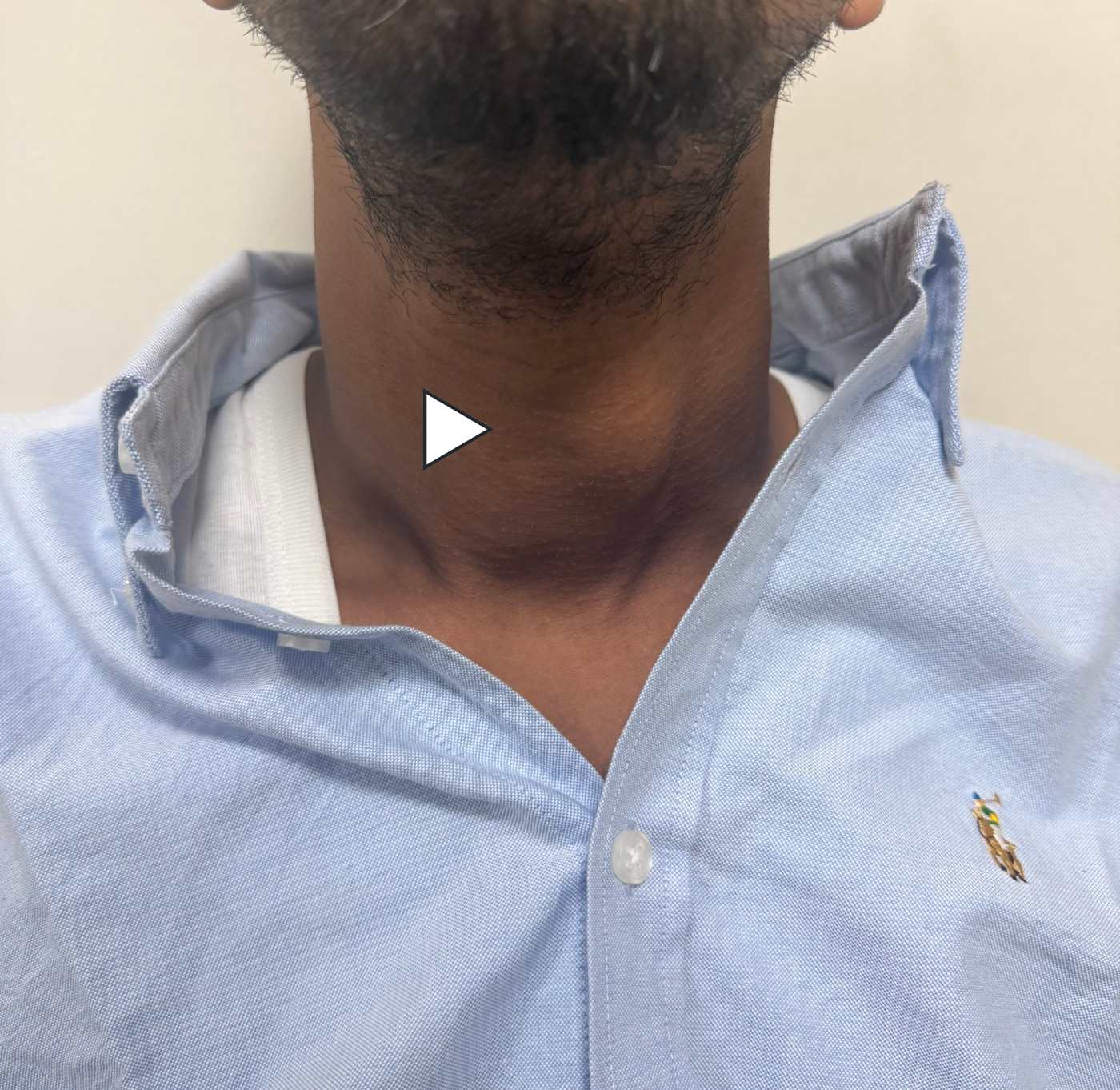
Shrinkage is measured as the volume reduction ratio (VRR) — the percentage of the original volume that has gone. Typical ranges in the published literature for benign nodules are: 1 month — often a visible change and easing of pressure; 6 months — around 50% smaller; 12 months — commonly 60–80% smaller; 2–5 years — up to roughly 90% in long-term studies. Individual results vary with the nodule's size and make-up and are confirmed on your follow-up ultrasound. One of our own patients, advised to have surgery, had a 54% reduction just one month after RFA.
Which nodules shrink best
Smaller-to-moderate solid or mixed nodules tend to reach the largest percentage reductions, and the body clears them steadily. Very large nodules shrink substantially but may leave more residual tissue, and occasionally benefit from a second session. Mostly fluid-filled nodules respond quickly once drained; overactive ('hot' or toxic) nodules can also be treated, often allowing thyroid medication to be stopped — as for our patient from Kigali. See toxic thyroid adenoma and toxic multinodular goitre.
Which nodules should NOT be treated this way
Nodules that are cancerous or suspicious for cancer need surgery, not RFA. That is why international guidance asks for at least two benign biopsy results — by fine needle aspiration (FNAC) or core needle biopsy — before ablation. A very large goitre extending down into the chest is also usually better managed surgically. See when thyroid surgery is the right choice.
Do the results last?
For most patients, yes. Long-term studies report that the reduction achieved after a single session is usually maintained for years. A small proportion of nodules — mostly very large ones — show some regrowth of untreated edges over time; this is picked up on follow-up ultrasound and can be treated again if needed.
Without surgery — compared side by side
Compared with an operation, RFA needs no general anaesthetic, leaves no scar, usually means home the same day and back to normal within one to two days, and preserves thyroid function. Surgery remains the right treatment for cancer and some very large goitres. See the full RFA vs surgery vs watchful-waiting comparison, or read about what thyroid RFA costs in Kenya.
Find out whether your nodule can shrink
Send your thyroid ultrasound, any biopsy report and your thyroid blood tests on WhatsApp or through our reports form. A specialist will tell you honestly whether your nodule is suitable for RFA — usually within 24 hours. Patients from across East Africa use this route before travelling; see international patients. This article is general education; individual results vary and are confirmed at your review.
Frequently asked questions
Yes. Benign thyroid nodules can be shrunk without surgery using radiofrequency ablation (RFA), a same-day procedure under local anaesthetic. In published studies they typically lose around half their volume within six months, with up to roughly 90% reduction reported over several years.
Benign solid nodules rarely disappear on their own; most stay the same size or grow slowly. Cystic nodules can shrink but often refill. Small nodules without symptoms are usually just monitored.
Thyroid hormone tablets are no longer recommended to shrink benign nodules in people with normal thyroid function, because the benefit is small and the side effects can outweigh it.
Change is often visible within a few weeks; around half the volume has typically gone by six months, and shrinkage continues for a year or more.
Cancerous or suspicious nodules, which need surgery, and some very large goitres extending into the chest. At least two benign biopsy results are required before RFA.
Thyroid Care Kenya in Nairobi offers radiofrequency ablation for benign thyroid nodules and cares for patients from across East Africa, most of whom complete treatment in a single 2–3 day visit.
References
- Kim JH, Baek JH, Lim HK, et al. 2017 Thyroid Radiofrequency Ablation Guideline: Korean Society of Thyroid Radiology. Korean Journal of Radiology, 2018;19(4).
- Papini E, Monpeyssen H, Frasoldati A, Hegedüs L. 2020 European Thyroid Association Clinical Practice Guideline for the Use of Image-Guided Ablation in Benign Thyroid Nodules. European Thyroid Journal, 2020;9(4).
- Jung SL, Baek JH, et al. Efficacy and safety of radiofrequency ablation for benign thyroid nodules: a prospective multicenter study. Korean Journal of Radiology, 2018.
- Deandrea M, et al. Long-term efficacy of a single session of radiofrequency ablation for benign thyroid nodules. Journal of Clinical Endocrinology & Metabolism, 2019.
